Professional Rugby Ball Manufacturer - Premium Quality Sports Equipment Solutions

Get a Free Quote

Our representative will contact you soon.
Email
Name
Company Name
Message
0/1000

rugby ball manufacturer

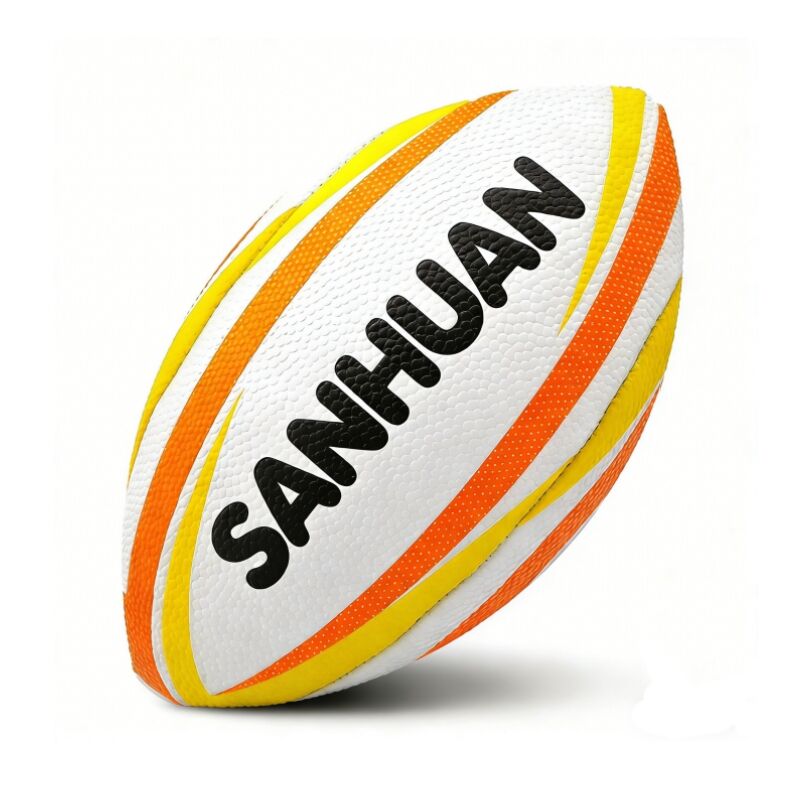
A rugby ball manufacturer represents a specialized production entity dedicated to creating high-quality oval-shaped balls designed specifically for rugby union and rugby league sports. These manufacturers combine traditional craftsmanship with modern production techniques to deliver products that meet international sporting standards. The primary function of a rugby ball manufacturer involves designing, developing, and producing rugby balls that satisfy the demanding requirements of professional players, amateur enthusiasts, and training institutions worldwide. These companies employ skilled technicians who understand the intricate balance between grip, flight characteristics, durability, and player safety. The manufacturing process encompasses multiple stages, from initial material selection through quality control testing, ensuring each ball performs consistently under various playing conditions. A professional rugby ball manufacturer utilizes advanced materials such as synthetic rubber bladders, premium leather or synthetic leather panels, and reinforced stitching to create products that withstand the physical demands of intense gameplay. The technological features integrated into modern rugby ball production include precision-molded construction, hand-stitched or machine-stitched panel assembly, latex or butyl bladder systems for optimal air retention, and surface texturing that enhances grip in wet conditions. These manufacturers serve diverse markets including professional rugby clubs, national teams, educational institutions, recreational leagues, and retail consumers. Application scenarios range from championship tournaments and international competitions to grassroots development programs and casual backyard games. The rugby ball manufacturer must comply with specifications set by governing bodies such as World Rugby, ensuring dimensional accuracy, weight consistency, and performance characteristics that maintain the integrity of the sport. Beyond basic production, these manufacturers often provide customization services, allowing teams and organizations to brand balls with logos, colors, and specific design elements that reflect their identity and values.

New Products

Choosing an established rugby ball manufacturer offers numerous practical benefits that directly impact your playing experience and investment value. First and foremost, quality assurance stands as a paramount advantage, as reputable manufacturers implement rigorous testing protocols that verify each ball meets performance standards before reaching your hands. This attention to detail means you receive a product that flies true, maintains consistent shape throughout its lifespan, and responds predictably during passes and kicks. The durability factor cannot be overstated, as professional-grade construction techniques ensure your rugby ball withstands thousands of impacts, ground contact instances, and weather exposure without premature deterioration. This longevity translates to better value for money, reducing replacement frequency and lowering your overall equipment costs. Another significant advantage involves the grip technology that manufacturers incorporate into their designs, featuring textured surfaces and specialized panel configurations that enhance ball control in both dry and wet conditions. This improved handling capability elevates player confidence and reduces handling errors during crucial game moments. Temperature stability represents another practical benefit, as quality manufacturers use materials that maintain consistent performance characteristics across varying climate conditions, from cold winter matches to hot summer training sessions. The reliable air retention properties of professionally manufactured rugby balls mean less time spent inflating and more time devoted to actual play or practice. Manufacturers with established reputations also provide access to balls that comply with official regulations, ensuring your equipment is suitable for competitive play at all levels. Customization options offered by leading rugby ball manufacturers allow teams, schools, and clubs to create unique branded products that foster team identity and pride. The availability of different models tailored to specific skill levels ensures beginners can learn with appropriately sized and weighted balls, while advanced players access equipment that matches their technical capabilities. Professional manufacturers maintain consistent supply chains, ensuring product availability when you need replacement balls or bulk orders for tournaments and training camps. Technical support and product warranties provided by established manufacturers offer peace of mind, knowing you have recourse if manufacturing defects occur. The innovation investment these companies make in research and development ultimately benefits customers through continuous product improvements that enhance playing characteristics and extend product lifespan. Finally, supporting quality rugby ball manufacturers helps sustain the sport's ecosystem, contributing to employment, innovation, and the continued growth of rugby worldwide.

Latest News

Which factors determine rugby ball durability for training?

18

May

Which factors determine rugby ball durability for training?

When selecting equipment for intensive training programs, understanding which factors determine rugby ball durability becomes essential for coaches, club managers, and training coordinators who need to balance performance quality with long-term inves...
View More
Why does rugby ball grip matter for handling performance?

11

May

Why does rugby ball grip matter for handling performance?

The grip quality of a rugby ball fundamentally determines whether players can execute clean catches, accurate passes, and secure carries under match pressure. Unlike sports equipment where surface texture serves primarily aesthetic purposes, the grip...
View More
How does rugby ball size vary across different game levels?

04

May

How does rugby ball size vary across different game levels?

Understanding how rugby ball size varies across different game levels is essential for players, coaches, and equipment managers who want to ensure optimal performance and safety. The dimensions and weight of a rugby ball are not arbitrary—they ...
View More
What is a rugby ball and how does its shape affect play?

01

May

What is a rugby ball and how does its shape affect play?

The rugby ball stands as one of the most distinctive sporting objects in the world, instantly recognizable by its unique prolate spheroid shape. Unlike the perfectly round balls used in soccer or basketball, the rugby ball features an elongated oval ...
View More

Get a Free Quote

Our representative will contact you soon.
Email
Name
Company Name
Message
0/1000

rugby ball manufacturer

Advanced Material Engineering and Construction Excellence

Advanced Material Engineering and Construction Excellence

The cornerstone of any reputable rugby ball manufacturer lies in their commitment to advanced material engineering and construction excellence, which fundamentally determines the performance, durability, and player satisfaction associated with their products. Modern rugby ball manufacturers invest significantly in researching and sourcing premium materials that can withstand the extreme physical demands placed on these sporting goods during intense gameplay. The outer casing typically features either genuine leather or high-grade synthetic materials, each offering distinct advantages depending on intended use and playing conditions. Genuine leather provides an authentic feel and exceptional grip that many professional players prefer, developing a unique patina over time that enhances handling characteristics. Conversely, synthetic materials offer superior weather resistance, maintaining consistent performance in rain-soaked conditions where traditional leather might absorb moisture and become heavy. The panel construction methodology represents another critical aspect of manufacturing excellence, with precision-cut panels assembled through either hand-stitching or advanced machine-stitching techniques that create robust seams capable of enduring repeated impacts. Hand-stitched rugby balls, often considered the premium option, involve skilled artisans carefully joining panels with reinforced thread, creating seams that distribute stress evenly and resist separation even after thousands of passes and kicks. The internal bladder system, typically constructed from either latex or butyl rubber, plays an essential role in air retention and shape maintenance, with butyl bladders offering superior air-holding properties that reduce inflation frequency, while latex bladders provide a softer feel preferred by some players. Surface texturing technology has evolved considerably, with manufacturers implementing specialized pimpling patterns, grip-enhancing ridges, and strategic panel placement that optimize ball control during handling and kicking. The adhesive bonding systems used in laminated construction rugby balls ensure permanent panel attachment without the bulk of traditional stitching, creating a more aerodynamic profile that flies truer through the air. Quality control processes embedded throughout the manufacturing workflow include dimensional verification, weight consistency checks, bounce testing, water absorption measurements, and flight characteristic evaluations that guarantee each ball leaving the factory meets exacting standards. The rugby ball manufacturer that excels in material engineering and construction excellence delivers products that perform reliably across diverse conditions, from professional stadium pitches to muddy community fields, ensuring players at all levels experience optimal equipment performance.
Customization Capabilities and Brand Partnership Solutions

Customization Capabilities and Brand Partnership Solutions

A distinguishing characteristic of leading rugby ball manufacturers involves their comprehensive customization capabilities and brand partnership solutions, which transform standard products into powerful marketing tools and team identity symbols that resonate with players and supporters alike. These manufacturers maintain dedicated design teams and production facilities equipped to handle custom orders ranging from single commemorative balls to bulk shipments for entire leagues or tournament events. The customization process typically begins with consultation services where manufacturers work closely with clients to understand their specific requirements, brand guidelines, color preferences, and intended applications. Digital printing technologies employed by modern rugby ball manufacturers enable photographic-quality reproduction of logos, crests, sponsor brands, and complex graphics directly onto ball surfaces, creating visually striking products that maintain durability through protective coating applications. Embroidery services offer an alternative decorative approach, adding raised thread designs that provide tactile dimension and premium aesthetics particularly valued for presentation balls and commemorative editions. Color customization extends beyond simple panel selection, with manufacturers capable of producing balls in virtually any color combination through specialized dyeing processes and material sourcing that accommodate specific Pantone matches and brand color standards. Panel configuration customization allows clients to specify unique geometric patterns that differentiate their balls while maintaining regulatory compliance for official play. Size variations represent another customization dimension, with rugby ball manufacturers producing balls scaled appropriately for different age groups and skill development stages, from miniature promotional items through youth training sizes to full regulation dimensions. Prototype development services enable organizations to evaluate physical samples before committing to large production runs, ensuring final products precisely match expectations and requirements. Rush production capabilities offered by responsive manufacturers accommodate time-sensitive needs such as championship tournament preparations or special event commemorations where standard lead times prove inadequate. The value proposition of customization extends beyond aesthetics, creating emotional connections between players and their equipment while reinforcing organizational identity during matches and training sessions. Schools and youth programs particularly benefit from customized rugby balls that display institutional branding, creating pride and ownership among young players while providing promotional visibility during community events. Corporate clients leverage customized rugby balls as unique marketing premiums that engage target audiences in memorable ways, with practical utility ensuring prolonged brand exposure beyond typical promotional items. Tournament organizers utilize custom-branded balls to create cohesive event identities and generate additional revenue through commemorative sales to participants and spectators.
Regulatory Compliance and Performance Certification Standards

Regulatory Compliance and Performance Certification Standards

The commitment to regulatory compliance and performance certification standards distinguishes professional rugby ball manufacturers from casual producers, ensuring their products meet the exacting specifications established by international governing bodies and deliver consistent performance characteristics essential for fair competition and player development. World Rugby, the sport's global governing organization, publishes detailed technical specifications that define acceptable parameters for dimensions, weight, air pressure, rebound characteristics, water absorption, and shape retention that any ball used in sanctioned competition must satisfy. A serious rugby ball manufacturer invests in testing equipment and quality assurance protocols that verify compliance with these standards throughout the production process, not merely as a final checkpoint but as an integrated quality management system that identifies and corrects deviations before products reach completion. The dimensional specifications prove particularly critical, with official regulations stipulating precise measurements for length, circumference at various points, and the oval profile that defines rugby ball geometry, ensuring consistent handling characteristics regardless of which approved ball is used during matches. Weight requirements establish tight tolerance ranges that rugby ball manufacturers must achieve through precise material selection and construction techniques, as even minor deviations can significantly impact flight characteristics, kicking distance, and passing accuracy. Air pressure specifications and bladder performance standards ensure balls maintain appropriate firmness throughout matches without requiring frequent re-inflation that would disrupt gameplay and create competitive inconsistencies. Water absorption testing evaluates how ball materials respond to wet conditions, with acceptable products maintaining minimal weight increase and preserving grip characteristics despite moisture exposure during rain-affected matches. Shape retention assessments subject balls to repeated impact testing that simulates thousands of passes, kicks, and ground contacts, verifying that construction integrity remains intact and the ball maintains its specified oval profile rather than deforming into irregular shapes that would compromise performance. Independent certification from recognized testing laboratories provides third-party validation of compliance, giving purchasers confidence that rugby ball manufacturer claims reflect objective reality rather than marketing exaggeration. The benefits of regulatory compliance extend beyond official competition requirements, as balls meeting these rigorous standards inherently possess the quality characteristics that enhance player experience across all skill levels and playing contexts. Youth development programs particularly benefit from certified balls, as young players learning fundamental skills deserve equipment that behaves predictably and builds proper technique rather than compensating for substandard products. The traceability systems maintained by compliant rugby ball manufacturers enable batch identification and quality tracking that supports continuous improvement initiatives and rapid response if any issues emerge post-production. Insurance and liability considerations favor purchasing from manufacturers who demonstrate regulatory compliance, as certified products reduce risk exposure for organizations hosting matches and training sessions.

Get a Free Quote

Our representative will contact you soon.
Email
Name
Company Name
Message
0/1000