
 EN
EN



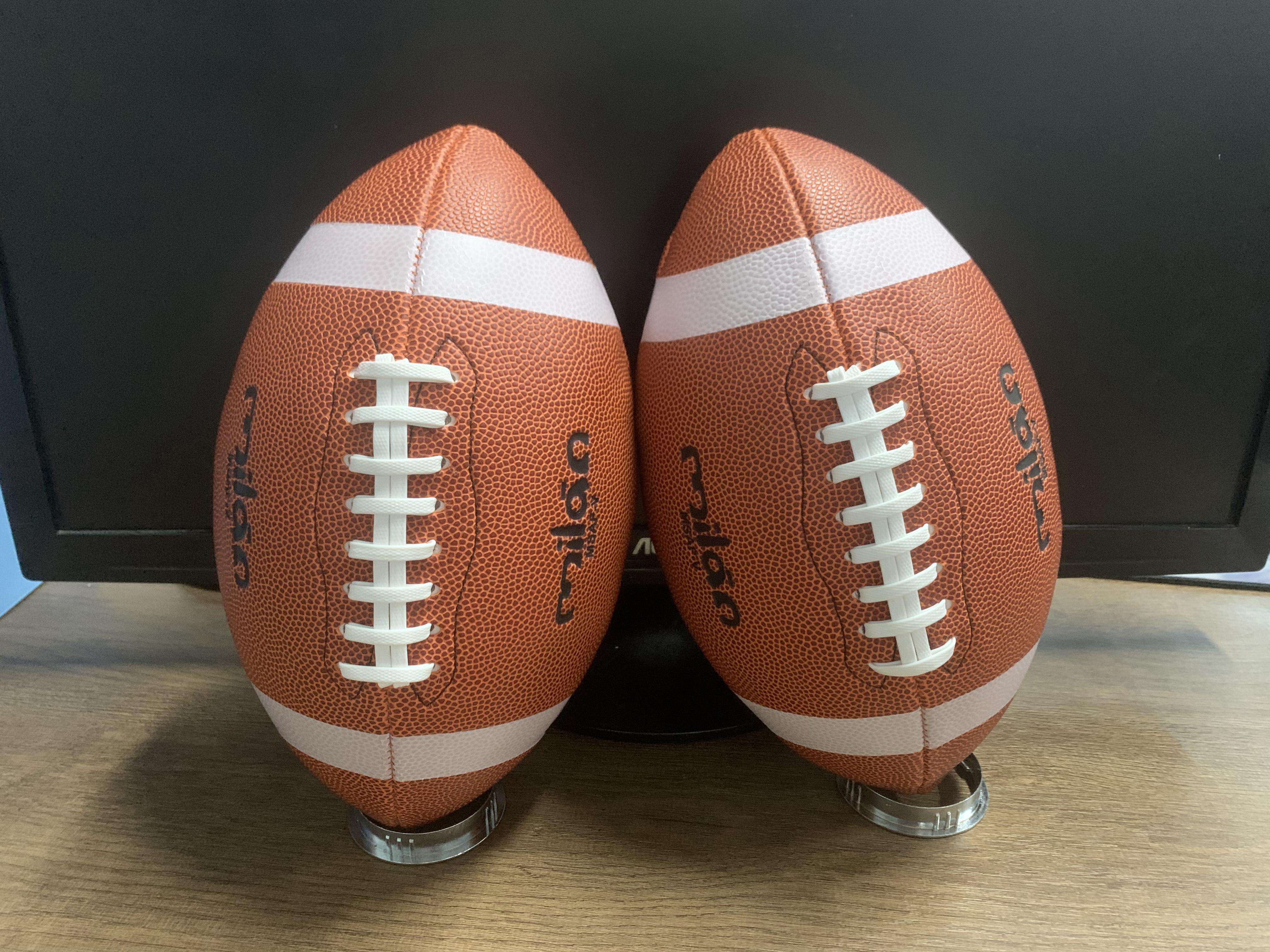
The rugby ball stands as one of the most distinctive sporting objects in the world, instantly recognizable by its unique prolate spheroid shape. Unlike the perfectly round balls used in soccer or basketball, the rugby ball features an elongated oval form that fundamentally influences every aspect of the game. Understanding what defines a rugby ball and how its distinctive geometry affects play provides essential insight into why rugby has evolved as a sport demanding exceptional handling skills, tactical awareness, and strategic kicking techniques. The relationship between ball shape and gameplay mechanics represents a fascinating intersection of physics, design, and athletic performance that separates rugby from nearly every other team sport.

The construction and shape of a rugby ball directly determine how players can pass, kick, catch, and carry the ball during competitive play. This oval configuration creates unpredictable bounces that add an element of uncertainty to the game, while simultaneously enabling the spiral passes and torpedo kicks that have become hallmarks of skilled rugby performance. The physical characteristics of the rugby ball influence tactical decisions at every level, from grassroots youth competitions to professional international matches. By examining the specific design elements of the rugby ball and analyzing how its shape impacts movement patterns, bounce behavior, and handling requirements, players and coaches can develop more effective training approaches and game strategies that leverage the ball's unique properties.
Defining the Rugby Ball and Its Physical Characteristics
Core Construction Elements and Materials
A rugby ball is fundamentally defined as an inflatable prolate spheroid designed specifically for rugby football codes including rugby union and rugby league. The standard construction consists of an inflatable rubber bladder encased within multiple layers of synthetic or leather panels that are precision-stitched together to create the characteristic oval shape. Modern rugby balls typically measure approximately 280-300 millimeters in length and 580-620 millimeters in circumference at the widest point, though exact dimensions vary slightly between different competition levels and codes. The outer casing material has evolved significantly over the decades, transitioning from traditional leather to advanced synthetic compounds that offer superior grip, water resistance, and durability under varied weather conditions.
The internal bladder of a rugby ball serves as the pneumatic core that gives the ball its essential firmness and rebound characteristics. Manufacturers use latex or butyl rubber to create bladders that maintain consistent air pressure throughout extended play periods. The inflation pressure typically ranges between 9.5 and 10 pounds per square inch, creating a firm yet slightly yielding surface that allows players to grip and control the ball effectively. The panel configuration on the outer surface varies by manufacturer, with traditional four-panel designs remaining popular alongside more modern multi-panel constructions that distribute stress more evenly across the ball's surface. This panel arrangement directly affects the ball's aerodynamic properties and the tactile feedback players receive when handling the rugby ball during open play.
Official Size and Weight Specifications
Regulatory bodies have established precise specifications that define what constitutes an official match-grade rugby ball for competitive play. According to World Rugby standards, a regulation rugby ball must weigh between 410 and 460 grams when dry, ensuring consistency across all professional and amateur competitions worldwide. The length dimension must fall between 280 and 300 millimeters, while the circumference measurements are strictly controlled at 580 to 620 millimeters around the widest point and 740 to 770 millimeters along the length. These standardized dimensions ensure that players across different teams and competitions handle rugby balls with consistent physical properties, maintaining fairness and allowing skills to transfer reliably between different match environments.
Beyond the basic size and weight parameters, official specifications also govern the shape profile and surface texture of the rugby ball. The elongation ratio between the ball's length and width creates the distinctive oval appearance that differentiates rugby from spherical ball sports. This ratio typically produces a ball that is approximately 1.6 to 1.7 times longer than its maximum diameter, creating an optimal balance between handling convenience and aerodynamic performance. Surface grip patterns, including raised pimples or textured panels, must meet specific standards to provide adequate friction for handling in both dry and wet conditions. Quality assurance testing ensures each rugby ball maintains consistent bounce characteristics, air retention capacity, and structural integrity under the physical stresses of competitive play.
How the Oval Shape Influences Ball Movement and Trajectory
Aerodynamic Properties During Flight
The prolate spheroid geometry of the rugby ball creates fundamentally different aerodynamic behavior compared to spherical sporting balls. When a rugby ball travels through the air, its elongated shape generates asymmetric air resistance patterns that vary dramatically depending on the ball's orientation relative to its direction of travel. A rugby ball flying nose-first in a tight spiral experiences minimal drag and can travel impressive distances with relatively modest initial velocity. Conversely, the same rugby ball tumbling end-over-end encounters significantly greater air resistance, resulting in shorter flight distance and less predictable trajectory. This shape-dependent aerodynamic performance requires players to master specific release techniques that impart stabilizing rotation to the ball during passes and kicks.
The physics of spiral flight illustrates how the rugby ball shape enables skilled players to achieve remarkable precision and distance. When kicked or passed with appropriate spin around the longitudinal axis, gyroscopic stability keeps the ball oriented in a nose-forward position throughout its flight path. This orientation minimizes the cross-sectional area exposed to oncoming air, reducing drag forces and allowing the rugby ball to maintain velocity over longer distances. Professional players exploit this aerodynamic principle to execute tactical kicks that cover 50 meters or more, positioning teammates advantageously or finding touch to gain territorial advantage. The relationship between spin rate, release angle, and ball orientation determines whether a kick achieves optimal distance and accuracy or falls short due to excessive tumbling and drag.
Spiral Passing Mechanics and Ball Rotation
The distinctive shape of the rugby ball necessitates the development of specialized passing techniques that differ fundamentally from throwing mechanics in other sports. A properly executed spiral pass involves gripping the ball near one end and releasing it with a flicking motion of the wrists that imparts rapid rotation around the ball's long axis. This rotational momentum stabilizes the rugby ball during flight, keeping the pointed ends aligned with the direction of travel and creating a tight spiral trajectory. The oval shape provides natural gripping points at the tapered ends that facilitate this spin-inducing release, allowing players to generate passes that travel flat and fast to teammates positioned across the field.
Mastering the spiral pass requires players to understand how the rugby ball geometry affects grip position, hand placement, and follow-through motion. The elongated shape means that finger placement must be precise to achieve optimal control during the release phase. Players typically position their hands near the midpoint of the ball with fingers spread across adjacent panels, creating multiple contact points that enable fine control over rotation rate and release angle. The oval profile also influences the optimal passing motion, as players must align their arm swing with the ball's long axis to minimize wobble and maximize spiral stability. Training programs emphasize repetitive practice of these shape-specific handling techniques to develop the muscle memory necessary for consistent passing accuracy under match pressure.
Impact of Ball Shape on Bounce Behavior and Ground Interaction
Unpredictable Bounce Patterns
Perhaps the most game-defining characteristic resulting from the rugby ball shape is the inherently unpredictable nature of its bounce when contacting the ground. Unlike spherical balls that bounce in relatively predictable vertical patterns, the oval rugby ball can ricochet in virtually any direction depending on which portion of its surface strikes the ground first and at what angle. When the pointed end contacts the turf, the rugby ball typically bounces at acute angles relative to its incoming trajectory, sometimes even reversing direction entirely. This unpredictability creates both strategic opportunities and risks, as players attempting to gather a loose ball must read the bounce quickly and adjust their positioning in real-time to secure possession.
The elongated geometry produces bounce variability that increases proportionally with the angle at which the rugby ball contacts the playing surface. A ball landing flat on its side generates more predictable bounces than one striking the ground end-first at a steep angle. Surface conditions further complicate bounce behavior, as wet grass, firm ground, or artificial turf each interact differently with the ball's oval profile. Experienced players develop an intuitive understanding of how different impact angles and surface conditions affect rugby ball bounce patterns, allowing them to anticipate the ball's movement and position themselves advantageously. This skill differentiation rewards players who invest time in studying ball physics and practicing ball-gathering techniques under varied conditions.
Ground Contact During Kicks and Placement
The rugby ball shape presents unique challenges and opportunities during kicking situations where the ball must be positioned on the ground. For place kicks, including conversions and penalty attempts, players must balance the ball on its end or use a kicking tee designed to accommodate the oval profile. The pointed ends of the rugby ball create a small contact patch with the ground, making the ball inherently unstable when placed vertically without support. Kicking tees feature shaped cradles that hold the ball at optimal angles for striking, though the oval geometry still requires precise alignment to ensure the kicker's boot contacts the ball's sweet spot for maximum distance and accuracy.
Drop kicks, where players intentionally bounce the rugby ball before striking it, demonstrate another way the oval shape influences kicking technique. The player must release the ball so it lands on a specific portion of its surface to produce a favorable bounce trajectory that rises into the optimal striking zone. Because the rugby ball bounces unpredictably, drop kick execution demands exceptional timing and touch to coordinate the bounce height with the kicking motion. Historical records show that drop kicks were once more common in rugby, but the unpredictability introduced by the ball's shape has led to decreased usage in modern professional play, with players preferring more controllable punt kicks for most tactical kicking situations.
Handling Techniques Required by the Rugby Ball Configuration
Grip Methods and Catching Fundamentals
The oval profile of the rugby ball dictates specific gripping and catching techniques that players must master to maintain secure possession during dynamic play. When catching high kicks or receiving passes, players use the ball's elongated shape to their advantage by creating a secure cradle with their hands positioned at opposite ends of the ball. This end-to-end grip distributes control across the maximum dimension of the rugby ball, preventing it from squirting free on impact. The tapered ends fit naturally into the palms and allow fingers to wrap around the surface, creating multiple points of friction that resist the forces generated during running, contact, and directional changes.
Carrying technique also reflects adaptations to the rugby ball geometry, as players tuck the ball tightly against their body using one or both arms to secure it during runs through traffic. The oval shape allows the ball to nestle into the space between forearm and torso, with the pointed end protruding forward or backward depending on the player's preference and body position. This carrying method minimizes the ball's profile, reducing the target area for defending players attempting to dislodge possession. Advanced ball carriers develop the ability to transfer the rugby ball rapidly between hands while maintaining secure contact, using the ball's shape to facilitate quick transfers that enable side-steps, fends, and evasive movements without compromising possession security.
One-Handed Control and Offload Skills
Elite rugby players exploit the rugby ball shape to execute one-handed offloads that maintain attacking momentum even while being tackled. The elongated geometry provides sufficient length for a single hand to control the ball momentarily while the player identifies a supporting teammate and executes a release pass. Players grip the ball near one end, using the oval profile to lever it away from defenders and flick it toward teammates with wrist and finger control alone. This advanced skill requires exceptional hand strength and proprioceptive awareness, as the irregular shape makes one-handed control inherently less stable than two-handed grips.
Training programs designed to develop one-handed rugby ball control incorporate specialized drills that challenge players to manipulate the oval shape under progressively difficult conditions. Athletes practice transferring the ball between hands while running at speed, catching and releasing with a single hand, and executing offloads from various body positions including low tackles and high contact situations. The rugby ball configuration rewards players with larger hands who can span a greater portion of the ball's circumference, though proper technique allows even smaller-handed players to develop effective one-handed skills through correct finger placement and grip pressure modulation.
Strategic and Tactical Implications of Ball Shape in Match Play
Kicking Strategy and Territorial Control
The aerodynamic properties of the rugby ball fundamentally shape kicking strategies that teams employ to gain territorial advantage and create scoring opportunities. Tactical kickers must select appropriate kick types based on how the ball's oval shape will behave under different flight conditions. Spiral punts that exploit the ball's streamlined profile allow teams to gain maximum distance when clearing from their own territory, while high contestable kicks utilize the ball's tendency to tumble during descent to create catching difficulty for opponents. The rugby ball shape makes it possible to execute grubber kicks that bounce erratically along the ground, chip kicks over defensive lines, and cross-field kicks that hang in the air long enough for chasers to compete for possession.
Weather conditions interact with rugby ball aerodynamics to influence tactical kicking decisions throughout a match. Wind affects the oval ball's flight path more dramatically than it would a spherical object, as the irregular shape creates variable drag forces depending on orientation. Kickers must account for crosswinds by adjusting aim points and accepting reduced accuracy compared to calm conditions. Rain adds complexity by making the rugby ball surface slippery and heavier, reducing kicking distance and making spiral technique more critical for maintaining control. Strategic teams adapt their game plans to exploit or mitigate the effects of ball shape under prevailing conditions, potentially favoring short passing sequences over long kicking exchanges when weather compromises aerodynamic predictability.
Risk-Reward Calculations in Open Play
Coaches and players constantly evaluate risk-reward balances that stem directly from rugby ball bounce unpredictability and handling characteristics. The decision to attempt an intercept, compete for a loose ball, or kick ahead into space all involve calculations about how the ball's shape will affect outcomes. A loose rugby ball on the ground represents both opportunity and danger, as the player who reaches it first may secure possession or knock it forward into a worse position depending on how the oval surface interacts with their hands and the ground. This uncertainty creates tactical situations where conservative ball retention may prove wiser than aggressive contestation, particularly in defensive zones where turnovers could yield opponent scoring opportunities.
Attack structures must accommodate the limitations the rugby ball shape imposes on passing accuracy and catching reliability. While spiral passes can travel long distances, the oval profile makes pinpoint accuracy more difficult than with spherical balls, particularly for less skilled players or in adverse conditions. Teams therefore design attacking patterns that position receivers in larger target zones rather than expecting thread-the-needle precision. The rugby ball configuration also influences support running patterns, as players must position themselves to receive passes that may arrive with variable rotation or trajectory due to shape-induced flight characteristics. Understanding these shape-driven constraints allows teams to develop realistic tactical frameworks that maximize scoring probability while minimizing turnover risk.
FAQ
Why is a rugby ball oval instead of round?
The rugby ball evolved into its distinctive oval shape through the historical development of the sport and the practical advantages this geometry provides. The elongated prolate spheroid design enables players to carry the ball more securely under one arm while running, facilitating the ball-carrying and contact elements central to rugby gameplay. The oval shape also creates the aerodynamic properties necessary for spiral passes and long-distance tactical kicks that define rugby's strategic complexity. Additionally, the unpredictable bounce patterns resulting from the oval geometry add an element of skill differentiation that rewards players with superior ball-handling abilities and reading of the game. The shape has become integral to rugby's identity, influencing every technical and tactical aspect of how the sport is played at all competitive levels.
How does the rugby ball shape affect passing technique?
The oval configuration of the rugby ball requires players to master specialized passing mechanics that generate stabilizing spin to maintain accuracy over distance. Players must grip the ball near one end and release it with a wrist-flicking motion that imparts rapid rotation around the long axis, creating a spiral trajectory that minimizes air resistance and wobble. The elongated shape provides natural gripping points at the tapered ends that facilitate this spin-inducing release technique. Without proper spin generated through shape-specific handling, the rugby ball tumbles erratically through the air, making passes difficult to catch and reducing effective passing range. This relationship between ball geometry and passing technique means that skill development in rugby places heavy emphasis on repetitive practice of spiral passing mechanics that leverage the ball's unique physical properties.
Can the unpredictable bounce of a rugby ball be anticipated?
While the oval shape of the rugby ball creates inherently unpredictable bounce behavior, experienced players develop the ability to read certain cues that improve their anticipation of bounce direction and height. Factors including the angle at which the ball contacts the ground, which portion of the oval surface makes first contact, the ball's rotation during flight, and surface conditions all influence bounce outcomes in ways that skilled players learn to interpret. Through extensive match experience and dedicated practice gathering loose balls under varied conditions, elite players build pattern recognition abilities that allow them to position themselves advantageously even when dealing with irregular bounces. However, the physics of the oval rugby ball means that complete predictability remains impossible, and even professional players occasionally misread bounces due to the complex interaction between ball shape and ground contact dynamics.
Does the rugby ball shape provide any advantages for kicking?
The elongated oval shape of the rugby ball creates significant advantages for tactical kicking when players apply proper technique to exploit the ball's aerodynamic properties. By imparting spin that stabilizes the ball in a nose-forward orientation, kickers can achieve substantially greater distance and accuracy than would be possible with a tumbling ball. The streamlined profile reduces air resistance during spiral flight, allowing well-executed kicks to cover 50 meters or more while maintaining a relatively flat trajectory. The shape also enables diverse kicking styles including grubber kicks that bounce unpredictably along the ground, chip kicks over defenders, and high contestable kicks where the ball's tumbling descent creates catching difficulty for opponents. These tactical kicking options, made possible by the rugby ball geometry, add strategic depth to the game and reward players who invest in developing shape-specific kicking techniques.
Table of Contents
- Defining the Rugby Ball and Its Physical Characteristics
- How the Oval Shape Influences Ball Movement and Trajectory
- Impact of Ball Shape on Bounce Behavior and Ground Interaction
- Handling Techniques Required by the Rugby Ball Configuration
- Strategic and Tactical Implications of Ball Shape in Match Play
- FAQ