
 EN
EN



Futsal represents a dynamic and fast-paced variant of association football that has captivated millions of players and fans worldwide, yet many still confuse it with traditional outdoor soccer or indoor soccer formats. Understanding what futsal truly is requires examining its unique characteristics, official regulations, and the fundamental ways it diverges from conventional soccer both tactically and technically. This sport, recognized and governed by FIFA since the 1980s, operates under a distinct set of rules designed to emphasize skill development, quick decision-making, and continuous ball movement in a confined playing environment that challenges athletes in ways outdoor soccer cannot replicate.
The distinction between futsal and soccer extends far beyond merely playing on a smaller court or using a different ball, encompassing fundamental differences in game philosophy, player development pathways, and tactical approaches that have made futsal an essential training tool for professional soccer players across Europe and South America. From the specific ball construction that reduces bounce to the touchline rules that eliminate throw-ins, every aspect of futsal has been deliberately designed to maximize touches, enhance technical proficiency, and create a learning environment where players must think and execute faster than in traditional soccer settings. This comprehensive exploration will clarify the essential nature of futsal while systematically comparing it to soccer across multiple dimensions including playing surface, ball specifications, team composition, rule variations, and strategic considerations.
Defining Futsal as a Distinct Football Code
The Official Definition and Governing Structure
Futsal is officially defined as a variant of association football played on a hard court surface, typically indoors, with a smaller, low-bounce ball and teams of five players including the goalkeeper. The sport operates under the jurisdiction of FIFA, which publishes the official Laws of the Game for futsal that differ substantially from the outdoor soccer rulebook. Unlike informal indoor soccer variations that emerged in various countries, futsal follows a standardized international framework that ensures consistency in competition from local leagues to the FIFA Futsal World Cup. The governing structure mirrors that of outdoor soccer, with continental confederations organizing regional championships and national federations developing grassroots programs, but the technical specifications and tactical requirements remain distinctly adapted to the indoor environment.
The term futsal itself derives from the Portuguese and Spanish words for football and hall or room, reflecting its origins in Uruguay and Brazil during the 1930s when Juan Carlos Ceriani developed the sport as a solution for youth players seeking football activity during inclement weather. This historical foundation established futsal not as a mere recreational alternative but as a structured competitive sport with its own identity, championship structures, and professional leagues that now operate in over one hundred countries. The sport's recognition by FIFA in 1989 formalized its status as an official football discipline, leading to the establishment of world championships, continental tournaments, and professional futsal leagues that attract elite athletes who specialize exclusively in this format rather than treating it as off-season training for outdoor soccer.
Core Characteristics That Define Futsal Play
The defining characteristics of futsal center on maximizing ball contact frequency, technical skill execution, and tactical intelligence within spatial and temporal constraints that outdoor soccer cannot replicate. The hard court surface eliminates the variable bounce patterns of grass or artificial turf, creating predictable ball behavior that rewards precise technique and punishes technical errors more immediately than in outdoor formats. The smaller playing area, typically between twenty-five and forty-two meters in length and fifteen to twenty-five meters in width, compresses the action into a space roughly one-ninth the size of a standard soccer field, forcing players into constant pressure situations where decision-making speed becomes as critical as technical ability.
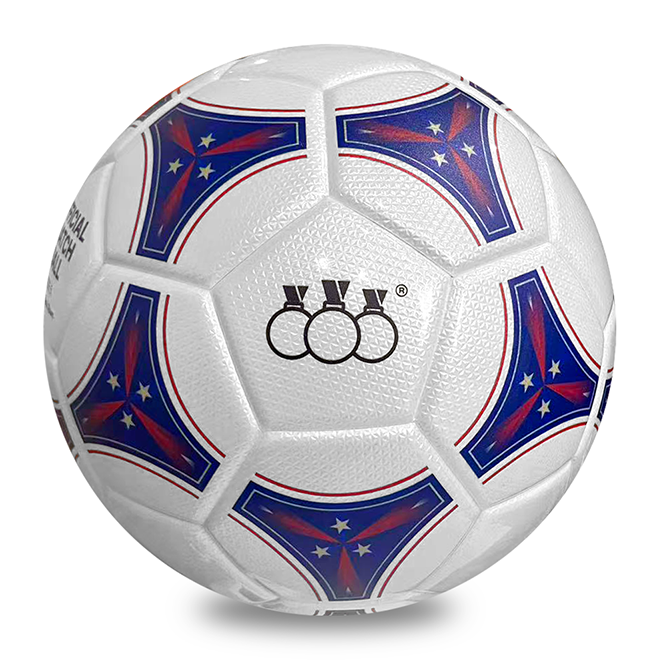
The specialized futsal ball represents another core defining element, constructed with a reduced bounce characteristic achieved through specific bladder construction and outer material composition that keeps the ball closer to the playing surface compared to traditional soccer balls. This low-bounce design fundamentally alters how players receive, control, and distribute the ball, emphasizing ground-based passing combinations and close control over aerial play and long-distance distribution. The ball's weight, typically between four hundred and four hundred forty grams, combined with its reduced circumference of sixty-two to sixty-four centimeters, creates a heavier feel that resists floating through the air and encourages the rapid passing sequences and intricate combination play that characterize high-level futsal competition.
Fundamental Differences in Playing Environment and Equipment
Playing Surface and Spatial Constraints
The most immediately apparent difference between futsal and soccer lies in the playing surface and spatial dimensions that fundamentally alter how the game unfolds. Futsal requires a hard, smooth surface such as wood, synthetic material, or polished concrete that provides consistent ball roll and allows for the quick changes of direction essential to the sport's tactical nature. This contrasts sharply with outdoor soccer played on natural grass or synthetic turf, where surface irregularities, weather conditions, and grass length create variable playing conditions that affect ball speed and bounce unpredictably. The indoor environment eliminates weather as a variable factor, ensuring consistent playing conditions that allow technical quality to determine outcomes rather than adaptation to environmental challenges.
The compressed spatial dimensions of futsal courts force a higher player density per square meter than soccer fields, creating constant numerical equality or advantage situations in small zones that require exceptional spatial awareness and rapid cognitive processing. Where outdoor soccer allows players several seconds to assess options and execute decisions across expansive spaces, futsal compresses this decision-making window to fractions of a second while simultaneously increasing the frequency of these high-pressure moments. The proximity of boundaries means players operate with limited escape routes, unable to use width and depth in the same manner as outdoor soccer, instead relying on rotation, third-man runs, and support angles that maintain possession under intense defensive pressure within confined quarters.
Ball Specifications and Handling Characteristics
The futsal ball's construction represents a deliberate engineering solution to the challenges of indoor play, designed specifically to reduce bounce and maintain ground-level play patterns that maximize skill development. The reduced bounce is achieved through specialized bladder technology and outer panel construction that absorbs impact energy rather than converting it to rebound force, keeping the ball from rising excessively when struck against the hard court surface. This characteristic eliminates the high-bouncing scenarios common in indoor soccer played with standard outdoor balls, which can lead to unpredictable rebounds and disrupt the flow of play that futsal emphasizes through its rule structure and cultural approach.
The weight differential between futsal balls and standard soccer balls, with futsal balls typically thirty to fifty grams heavier, creates distinct handling properties that influence shooting technique, passing weight, and receiving skills. The additional mass requires adjusted striking technique for shooting, with players developing specialized toe-poke and instep drives adapted to the ball's resistance to aerial flight, while passing demands precise weight distribution to maintain speed without overshooting targets in the compressed space. This heavier ball also affects goalkeeper technique, as the increased mass generates greater force on saves despite shorter shooting distances, requiring adapted hand positioning and body mechanics compared to outdoor soccer goalkeeping. The tactile feedback from controlling the heavier, lower-bouncing futsal ball provides enhanced sensory information that accelerates technical development, particularly for youth players whose touch and control improve more rapidly through futsal training than equivalent time spent on outdoor soccer activities.
Rule Variations That Shape Futsal's Tactical Identity
Team Composition and Substitution Protocols
Futsal operates with five players per team including the goalkeeper on the court at any moment, exactly half the field player count of outdoor soccer's eleven-player format, creating fundamentally different spatial relationships and tactical responsibilities. This reduced player count eliminates specialized positional roles common in soccer such as dedicated wide midfielders or holding midfielders, instead requiring versatile athletes capable of functioning in multiple tactical roles as the game situation demands. The smaller roster means every player carries greater individual responsibility for both attacking progression and defensive coverage, with no opportunity to hide weaknesses through specialized positioning or limited tactical involvement as sometimes occurs in the larger team structures of outdoor soccer.
The substitution rules in futsal differ dramatically from soccer's limited change policy, allowing unlimited substitutions throughout the match through a designated substitution zone without requiring referee permission or stoppage in play. This flying substitution system, similar to ice hockey, transforms tactical management by enabling coaches to maintain high intensity throughout the forty-minute match duration through frequent player rotation that prevents fatigue-induced performance decline. The unlimited substitution capacity also facilitates specialized tactical adjustments, allowing coaches to insert defensive specialists during critical moments or offensive specialists when chasing goals, creating a dynamic tactical chess match unavailable in soccer where limited substitutions must be carefully rationed across the full ninety minutes.
Restart Procedures and Boundary Play
One of the most distinctive rule differences separating futsal from soccer involves the elimination of throw-ins, replaced by kick-ins taken from the touchline where the ball crossed the boundary. This seemingly minor modification profoundly impacts game flow and tactical approach, as kick-ins allow teams to maintain possession through precise passing rather than the aerial contest that typically follows throw-ins in outdoor soccer. The requirement that opponents remain five meters from the kick-in spot creates space for the attacking team to build from the touchline, encouraging continued possession rather than the territorial battle that characterizes throw-in situations in soccer where teams often concede possession through contested aerial duels.
The futsal rulebook also implements a four-second restriction on all restart situations including kick-ins, corner kicks, and goalkeeper restarts, preventing the time-wasting tactics common in soccer where teams protect leads by consuming time during set pieces and goalkeeper distribution. This time constraint maintains the sport's emphasis on continuous action and quick decision-making, aligning with futsal's developmental philosophy that players should face constant time pressure to accelerate their cognitive processing and technical execution speed. The goalkeeper distribution rules in futsal further emphasize quick play, limiting keepers to four seconds for releasing the ball after gaining possession and prohibiting them from touching the ball again with their hands after releasing it until an opponent has touched it, eliminating the repeated goalkeeper handling that can slow soccer matches during defensive periods.
Accumulated Fouls and Free Kick Progression
Futsal employs a unique accumulated fouls system that tracks direct free kick offenses by each team per half, with the fifth accumulated foul triggering a rule change that eliminates defensive walls on subsequent free kicks for the remainder of that half. This escalating consequence structure discourages persistent tactical fouling that can disrupt the flow of soccer matches, where teams sometimes accept yellow cards as acceptable costs for stopping dangerous attacks. The accumulated fouls rule encourages cleaner defensive technique focused on positioning and anticipation rather than physical intervention, aligning with futsal's technical development objectives by rewarding skillful defending over physical disruption.
Once a team reaches five accumulated fouls in a half, all subsequent direct free kick fouls result in a penalty-style free kick taken from the ten-meter mark, or from the spot of the foul if closer to goal, with only the goalkeeper defending and all other players positioned behind the ball. This rule creates powerful offensive opportunities from accumulated fouls, dramatically shifting the risk-reward calculation for defensive fouls compared to soccer where free kicks from similar distances typically face organized defensive walls that significantly reduce scoring probability. The futsal approach to accumulated fouls exemplifies how the sport's rule structure systematically encourages technical play and discourages the physical, disruptive tactics that sometimes dominate soccer matches, creating an environment where skill and speed prevail over size and strength.
Tactical and Strategic Divergence Between Futsal and Soccer
Defensive Organization and Pressing Systems
The tactical approach to defense in futsal differs fundamentally from soccer due to spatial constraints that make zonal defensive systems more effective than man-marking schemes common in outdoor play. The compressed space of futsal courts means gaps in defensive structure are immediately exploitable through quick passing combinations, making rigid man-marking vulnerable to third-man runs and rotation patterns that create temporary numerical advantages in attacking zones. Successful futsal defending relies on coordinated pressing in small groups, with defenders working in pairs or trios to force ball carriers toward boundaries or into congested central areas where support options become limited and turnover probability increases.
The pressing intensity sustainable in futsal exceeds what teams can maintain in soccer due to the smaller defensive area requiring coverage and the unlimited substitution rules that allow fresh legs to maintain pressure throughout matches. Where soccer teams must carefully manage pressing triggers and recovery periods to prevent exhaustion over ninety minutes across large spaces, futsal teams can implement full-court pressure systems with frequent rotation keeping intensity levels consistently high. This tactical reality makes possession security more challenging in futsal, requiring attacking teams to develop exceptional technical proficiency and spatial awareness to maintain the ball against relentless defensive pressure in confined quarters where a single errant touch can trigger immediate transition to defense.
Attacking Patterns and Possession Philosophy
Attacking organization in futsal emphasizes constant player movement and rotation to create passing angles and exploit the split-second advantages generated when defenders hesitate or commit incorrectly to pressure decisions. The sport's tactical culture prizes the concept of support positioning, with off-ball players maintaining specific angular and distance relationships to ball carriers that provide multiple passing options while positioning to receive in spaces where they can turn and face forward or continue combination play. This contrasts with soccer's greater reliance on individual skill in one-versus-one situations and the use of width to stretch defensive shapes, tactics that prove less effective in futsal's compressed space where width is limited and individual dribbling faces immediate double-team pressure.
The possession philosophy in futsal requires patience combined with explosive execution, as teams circulate the ball through multiple passing sequences waiting for defensive errors or created advantages before attacking with sudden directness. This patient-explosive rhythm differs from soccer's more varied tempo options, where teams can effectively slow play through back passes to defenders and goalkeepers or use long balls to bypass midfield pressure and create immediate attacking situations. The futsal environment makes such temporal manipulation less effective, as the four-second rule on goalkeeper restarts and the constant defensive pressure on back passes limit the ability to truly slow the game, instead requiring teams to maintain forward orientation even during possession-consolidation phases.
Player Development Benefits and Skill Transfer
Technical Proficiency Acceleration
The developmental benefits of futsal participation for young soccer players have been extensively documented by professional clubs and national federations, with many elite soccer players crediting futsal backgrounds for their exceptional technical abilities and decision-making speed. The increased touch frequency in futsal, with players contacting the ball six times more often per minute than in equivalent outdoor soccer activities, accelerates the repetition cycles necessary for motor pattern development and technical mastery. The constant pressure environment forces players to develop genuine technical proficiency rather than relying on physical advantages or spatial exploitation that may work in youth soccer but prove insufficient at higher competitive levels where technical quality becomes the primary differentiator.
The specific technical skills emphasized in futsal translate directly to improved soccer performance, particularly in tight spaces where receiving under pressure, quick turns, and one-touch passing determine possession outcomes. The futsal environment's unforgiving nature regarding technical errors, where a poor first touch immediately results in defensive pressure or possession loss, creates a learning environment with immediate feedback loops that accelerate skill acquisition compared to outdoor soccer where spatial advantages can compensate for technical deficiencies. Ball mastery skills developed through futsal practice, including sole-of-foot manipulations, quick direction changes, and body positioning to shield the ball, directly enhance a player's effectiveness in the congested central areas of soccer fields where modern tactics concentrate much of the decisive action.
Cognitive Development and Tactical Intelligence
Beyond technical benefits, futsal participation accelerates cognitive development related to game reading, anticipation, and decision-making under time pressure that transfers effectively to outdoor soccer contexts. The compressed decision-making windows in futsal, where players must process information and execute choices in fractions of the time available in soccer situations, train the rapid pattern recognition and option evaluation that characterize elite players across both sports. Young players who develop through futsal learn to scan constantly, recognize developing situations earlier, and commit to decisions with confidence rather than hesitating in possession, habits that prove invaluable when transitioning to the larger spaces and longer time frames of outdoor soccer where decisive action creates advantages over tentative play.
The tactical principles learned in futsal, particularly regarding support positioning, passing angles, and third-man movement, apply directly to soccer's build-up play and possession maintenance in compressed spaces. Players who understand how to create and exploit numerical advantages in futsal's confined environment develop tactical sophistication that enhances their effectiveness in soccer situations where multiple opponents converge in limited space, such as playing out of high presses or maintaining possession in the attacking third. The futsal emphasis on collective problem-solving rather than individual dominance also develops team-oriented thinking patterns that benefit soccer players, teaching them to recognize when to combine with teammates rather than attempting individual solutions that may work at lower competitive levels but become inefficient against sophisticated defensive organization.
FAQ
What size is a futsal court compared to a soccer field?
A regulation futsal court measures between twenty-five and forty-two meters in length and fifteen to twenty-five meters in width, making it approximately one-ninth the area of a standard soccer field which measures between ninety and one hundred twenty meters long and forty-five to ninety meters wide. This dramatic size difference fundamentally alters the game's spatial dynamics, creating much higher player density and forcing more frequent decision-making under pressure. The smaller dimensions also mean boundary lines are constantly in play, limiting the escape routes available to ball carriers and increasing the importance of technical precision in tight spaces.
Can you use a regular soccer ball for futsal?
Using a standard soccer ball for futsal is technically possible but strongly discouraged because the regular ball's bounce characteristics will fundamentally alter the game experience and eliminate many of the developmental benefits that futsal provides. Standard soccer balls bounce significantly higher on hard court surfaces compared to specialized futsal balls, leading to unpredictable play patterns and frequent stoppages that disrupt the continuous flow central to futsal's identity. The futsal ball's specific low-bounce construction and heavier weight are essential for maintaining ground-based play and developing the precise ball control that makes the sport such an effective training tool. Organizations and programs seeking authentic futsal experiences should invest in proper futsal balls to ensure players develop appropriate technique and experience the sport as designed by its governing regulations.
How long is a futsal match compared to soccer?
A standard futsal match consists of two twenty-minute halves with a running clock that stops for timeouts and certain dead-ball situations, resulting in actual playing time of approximately forty minutes compared to soccer's two forty-five-minute halves totaling ninety minutes of running time. Despite the shorter overall duration, futsal's actual ball-in-play time often exceeds soccer due to the reduced stoppage frequency and the four-second rule on restarts that keeps play moving continuously. The shorter match length reflects the higher intensity demands of futsal, where the constant pressure, rapid transitions, and smaller playing area create cardiovascular and cognitive loads that would be difficult to sustain over soccer's longer duration even with the unlimited substitution advantages that futsal provides.
Is futsal only played indoors or can it be played outdoors?
While futsal is predominantly played indoors on hard court surfaces as specified in FIFA regulations, the sport can technically be played outdoors provided the surface meets the required specifications of being hard, smooth, and non-abrasive with appropriate line markings and dimensional accuracy. Many futsal courts are constructed outdoors in regions with favorable climates, using concrete or synthetic sport court surfaces that provide the consistent ball roll and bounce characteristics essential to proper futsal play. However, outdoor futsal courts must still adhere to the same dimensional and surface requirements as indoor facilities, meaning they cannot simply be marked on existing soccer fields with grass or turf surfaces since these would alter the fundamental playing characteristics that define the sport. The key factor is surface type rather than whether a roof exists overhead, though indoor facilities offer the advantage of climate control and protection from weather that ensures consistent playing conditions year-round.