
 EN
EN




Understanding how rugby ball size varies across different game levels is essential for players, coaches, and equipment managers who want to ensure optimal performance and safety. The dimensions and weight of a rugby ball are not arbitrary—they are carefully regulated to match the physical capabilities, skill development stages, and competitive requirements of players at each level. From youth training sessions to international championship matches, the rugby ball specifications change systematically to support proper technique development, reduce injury risk, and maintain fair play standards. This article explores the precise variations in rugby ball dimensions across age groups, competition levels, and rugby codes, providing practical guidance for selecting the appropriate ball for any playing context.
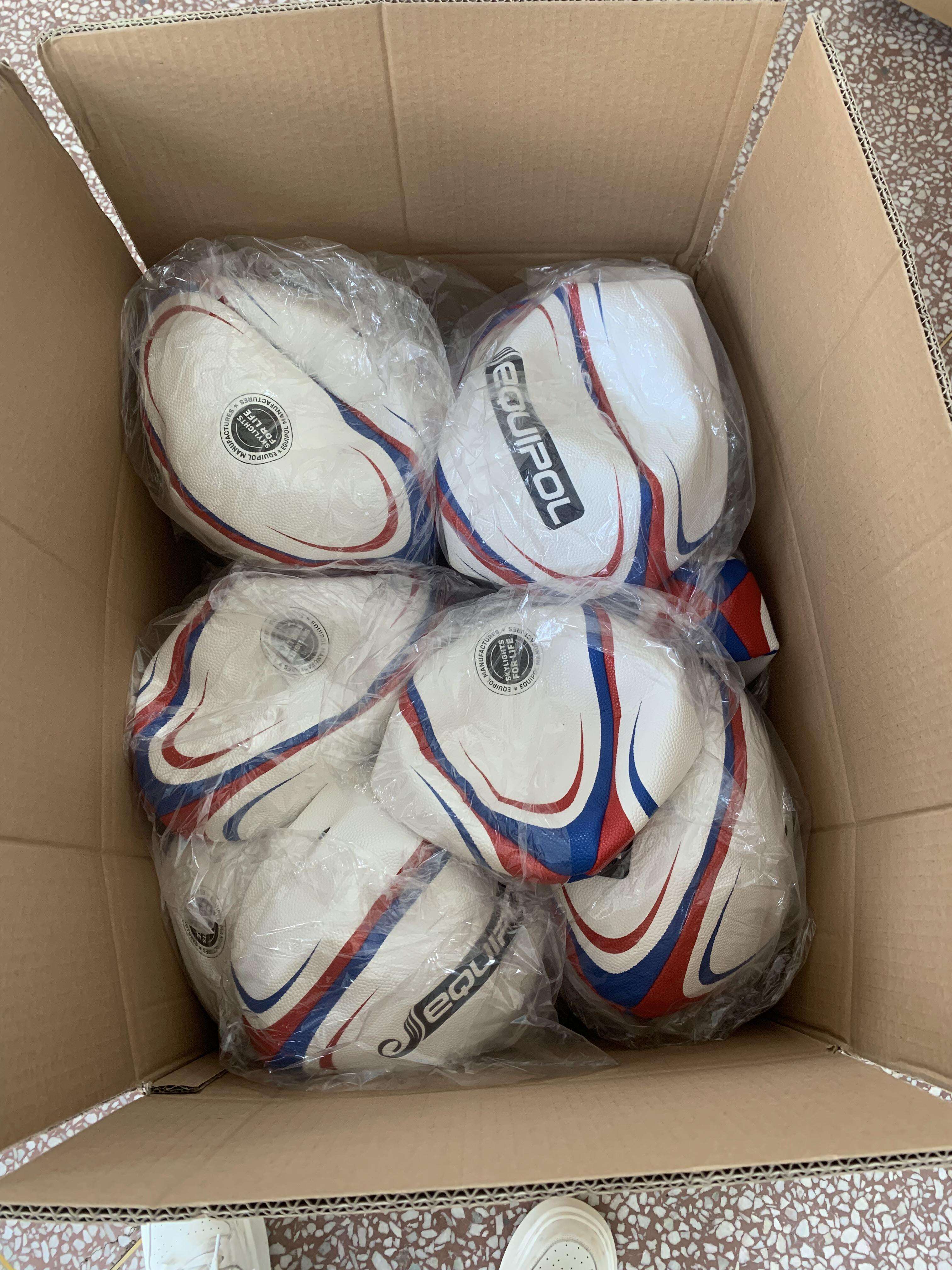
The standardization of rugby ball sizes represents a critical advancement in sport development, balancing tradition with scientific understanding of biomechanics and player safety. Governing bodies including World Rugby have established detailed specifications that categorize rugby balls into five distinct size grades, each corresponding to specific age ranges and developmental stages. These regulations ensure that young players handle equipment proportional to their hand size and strength, while senior athletes compete with standardized equipment that tests their skills under consistent conditions. The variation in rugby ball dimensions directly influences passing accuracy, kicking distance, handling confidence, and overall game dynamics, making size selection a fundamental consideration for anyone involved in rugby at any level.
Official Rugby Ball Size Classifications and Specifications
The Five Standard Rugby Ball Size Categories
World Rugby has established five official size categories for rugby balls, numbered from Size 3 to Size 5, with mini and midi variants serving the youngest players. Size 3 rugby balls are designed for children under six years old, featuring a length of approximately 255-265mm and a circumference of 540-560mm at the widest point. The weight ranges from 280-300 grams, making these balls manageable for small hands and developing motor skills. Size 4 rugby balls serve players aged seven to fourteen years, measuring 270-280mm in length with a circumference of 580-600mm and weighing 340-360 grams. This intermediate size bridges the gap between youth and adult equipment, allowing progressive skill development without overwhelming younger players with equipment designed for fully developed athletes.
The Size 5 rugby ball represents the official match ball for all players aged fifteen and above, including professional and international competitions. These regulation rugby balls measure 280-300mm in length, with an end-to-end circumference of 740-770mm and a width circumference of 580-620mm. The weight specification for a Size 5 rugby ball ranges from 410-460 grams when properly inflated to the prescribed pressure of 9.5-10.0 PSI. These precise measurements ensure consistency across all elite competitions, from domestic leagues to World Cup tournaments. The oval shape, technical specifications, and material composition of each rugby ball size category reflect decades of refinement based on player feedback, safety research, and performance optimization studies conducted by rugby governing bodies worldwide.
Dimensional Variations Between Rugby Union and Rugby League
While both rugby union and rugby league use the same fundamental size classifications, subtle variations exist in preferred specifications within the allowable ranges. Rugby union balls often feature slightly fuller dimensions within the specification range, measuring closer to 300mm in length and utilizing the upper circumference limits. This preference reflects the handling demands of rugby union, where the ball must be passed laterally across wider field positions and kicked for territorial advantage in open play. Rugby league balls, conversely, tend toward the lower end of dimensional specifications, measuring closer to 280mm in length, which some players find advantageous for the faster, more compact passing patterns characteristic of rugby league attack structures.
The material composition and panel construction also differ between rugby codes, though these variations fall within the technical standards for each rugby ball size category. Rugby union balls typically feature four-panel construction with deeper pimpling for enhanced grip in wet conditions, reflecting the year-round outdoor nature of union competitions. Rugby league balls increasingly utilize synthetic materials optimized for speed and precision passing, with surface treatments designed for consistent performance across varying weather conditions. Despite these nuanced differences, both codes adhere to the fundamental size classifications established by their respective governing bodies, ensuring that developmental progression through youth, amateur, and professional levels follows consistent equipment scaling principles.
Age-Appropriate Rugby Ball Sizing for Youth Development
Early Childhood Rugby Ball Selection
For children beginning rugby participation between ages three and six, mini rugby balls or Size 3 rugby balls provide the appropriate introduction to the sport. These smaller rugby balls measure approximately 250-265mm in length and weigh just 280-300 grams, allowing young children to develop fundamental catching, carrying, and passing skills without struggling with equipment too large for their physical capabilities. The reduced dimensions enable proper hand placement and grip formation, establishing correct technique patterns that will transfer as players progress to larger ball sizes. Coaches working with this age group should prioritize ball control activities, short-distance passing, and confidence-building exercises that leverage the appropriate rugby ball size to maximize engagement and skill acquisition.
The transition from mini rugby balls to Size 3 specifications typically occurs naturally as children develop hand size and grip strength. Parents and coaches should observe whether young players can comfortably hold the rugby ball with both hands, position fingers properly across the seams, and execute basic passes without strain or compromised technique. If a child consistently struggles to control the ball or demonstrates poor passing form despite adequate instruction, reverting to a smaller rugby ball size often resolves the issue and accelerates skill development. The primary objective at this developmental stage focuses on fostering enthusiasm for rugby while building foundational motor skills, making appropriate equipment sizing a critical factor in long-term player retention and development success.
Progressive Sizing Through Junior Rugby Levels
As players advance through junior rugby levels from ages seven to fourteen, the Size 4 rugby ball becomes the standard equipment choice. This intermediate size measures 270-280mm in length and weighs 340-360 grams, providing a meaningful progression from youth sizes while remaining manageable for developing athletes. The Size 4 rugby ball enables coaches to introduce more advanced technical elements including spiral passing, longer-distance kicking, and contested ball situations that would be inappropriate with smaller equipment. Players at this developmental stage experience rapid physical growth, and the Size 4 specification accommodates a wide range of hand sizes while maintaining appropriate weight for building passing strength and technique refinement.
The decision to transition from Size 4 to Size 5 rugby balls typically occurs around age fourteen or fifteen, though individual physical development should guide this progression. Some rugby programs implement graduated transition periods where players train with Size 5 balls while still competing with Size 4 equipment, allowing adaptation time before official competition with regulation-sized equipment. This approach recognizes that chronological age may not perfectly align with physical readiness for larger rugby ball dimensions. Coaches should assess whether players can execute full passing range, maintain passing accuracy under pressure, and kick effectively with proper technique before fully transitioning to adult-sized equipment. Premature progression to Size 5 rugby balls can compromise technique development and increase injury risk, particularly for smaller or less physically mature players.
Competition-Level Rugby Ball Requirements
Amateur and Club Rugby Ball Standards
Amateur rugby clubs and recreational leagues universally adopt Size 5 rugby ball specifications for all adult players, regardless of skill level or competitive tier. This standardization ensures that players developing their skills in amateur contexts train with equipment identical to professional standards, facilitating seamless progression through competition levels without equipment adjustment periods. Amateur rugby organizations typically require match balls to meet minimum quality standards regarding shape retention, water resistance, and durability, though the specific brand or model selection may vary based on budget considerations and supplier agreements. Training rugby balls used in amateur contexts often feature more durable construction materials designed to withstand frequent use on various surfaces, accepting minor performance trade-offs in exchange for extended lifespan and cost-effectiveness.
Club rugby programs serving mixed-age memberships maintain equipment inventories spanning multiple rugby ball sizes to accommodate junior development teams through senior men's and women's squads. Equipment managers at these organizations face the challenge of maintaining adequate supplies of Size 3, Size 4, and Size 5 rugby balls in sufficient quantities for concurrent training sessions across age groups. Budget allocation for rugby ball purchases represents a significant operational expense for amateur clubs, prompting many organizations to establish equipment replacement schedules based on usage patterns and condition assessments. The investment in properly sized rugby balls for each age group directly impacts player development quality and safety, making equipment budgeting a critical administrative responsibility for amateur rugby organizations.
Professional and International Rugby Ball Specifications
Professional rugby competitions operate under strict equipment regulations that specify not only rugby ball size but also performance characteristics including air retention, shape consistency, and grip properties. Major professional leagues and international tournaments designate official match ball suppliers whose products undergo rigorous testing and certification processes before approval for elite competition use. These match-quality rugby balls represent the pinnacle of sports equipment engineering, incorporating advanced materials, precision manufacturing techniques, and design innovations that optimize performance under the physical demands of professional rugby. The Size 5 rugby ball used in World Cup finals features identical dimensional specifications to training balls used in community clubs, yet the performance characteristics differ substantially due to material quality, construction precision, and manufacturing tolerances.
International rugby competitions implement additional quality control measures including pre-match ball inspection protocols, pressure verification procedures, and backup ball preparation to ensure consistent playing conditions throughout matches. Match officials verify that rugby balls meet specification requirements before kickoff, and multiple backup balls maintained at proper pressure stand ready for immediate deployment if match balls become damaged or unsuitable during play. Professional teams maintain extensive rugby ball inventories for training purposes, often using older match balls or training-grade equivalents of official match balls to simulate competition conditions while managing equipment costs. The consistency of Size 5 rugby ball dimensions across all professional levels allows players to develop precise muscle memory and technique patterns that transfer seamlessly between training environments and high-stakes competition settings.
Material and Construction Impact on Rugby Ball Size Perception
Grip Surface Technology and Handling Characteristics
The surface treatment and grip technology applied to rugby balls significantly influences how players perceive and handle equipment across different sizes. Modern rugby balls feature engineered grip patterns that may include raised pimples, textured panels, or specialized coatings designed to enhance friction between hand and ball surface. These grip enhancements become increasingly important as rugby ball size increases from youth to adult specifications, compensating for the greater surface area and weight that challenge secure handling. Size 5 rugby balls incorporate more aggressive grip technologies than smaller sizes because adult players generate greater throwing velocity and encounter more contested ball situations where secure handling proves critical for maintaining possession.
The material composition of rugby ball outer layers has evolved from traditional leather to synthetic materials that offer superior performance characteristics across varying weather conditions. Synthetic rugby balls maintain consistent grip properties in wet conditions, whereas leather balls become slippery when saturated, significantly altering handling characteristics. This material evolution particularly benefits players using Size 5 rugby balls in competitive contexts where weather conditions cannot delay or cancel matches. Youth players using Size 3 or Size 4 rugby balls also benefit from synthetic materials that provide consistent grip during skill development, preventing technique regression caused by equipment variability. The interaction between grip technology, material selection, and rugby ball size creates distinct handling characteristics that influence player equipment preferences across different game levels.
Shape Retention and Inflation Pressure Standards
Proper inflation pressure critically affects how rugby ball size translates into on-field performance characteristics. World Rugby specifies that Size 5 rugby balls should be inflated to 9.5-10.0 PSI, while smaller sizes require proportionally lower pressures to maintain appropriate firmness for their intended user groups. Under-inflated rugby balls feel larger and more difficult to handle because the soft structure deforms excessively during gripping and passing, while over-inflated balls feel smaller and harder but become more prone to erratic bounces and difficult to secure in contact situations. Equipment managers and coaches must regularly verify inflation pressure using accurate gauges, particularly for match-day preparation when performance consistency becomes paramount.
The bladder construction and panel stitching quality determine how effectively a rugby ball maintains its specified size and shape throughout its usable lifespan. Premium match-quality rugby balls utilize multi-layer bladder systems that resist pressure loss and maintain dimensional consistency across hundreds of uses, while economy training balls may feature single-layer bladders that require frequent re-inflation and gradually lose shape definition. As rugby balls age and accumulate use, the panels may separate slightly, seams may loosen, and overall shape integrity may diminish, effectively altering the practical size and handling characteristics even though nominal dimensions remain unchanged. Organizations managing rugby ball inventories across multiple size categories should implement regular equipment audits to identify balls that no longer meet performance standards, ensuring players at all levels train and compete with properly sized and maintained equipment.
Practical Selection Guidance for Rugby Ball Sizing
Assessment Criteria for Determining Appropriate Size
Selecting the correct rugby ball size requires evaluating multiple factors beyond simple age-based guidelines. The primary assessment criterion involves hand span measurement, where players should be able to comfortably grip the rugby ball with fingers spread across the upper panel while maintaining thumb contact with the lower panel. For Size 5 rugby balls, this typically requires a hand span of at least 180mm from thumb to little finger when fully extended. Players with smaller hands may struggle to execute proper passing technique with regulation-sized equipment, potentially justifying continued use of Size 4 rugby balls even beyond the typical age transition point. Coaches should prioritize technique quality and player confidence over strict adherence to age-based size recommendations when individual physical development varies from population norms.
Physical strength assessment complements hand size evaluation when determining rugby ball size readiness. Players should demonstrate the ability to execute full-distance passes with proper spiral technique without excessive physical strain or compromised accuracy. If advancing to the next rugby ball size causes noticeable deterioration in passing distance, accuracy, or technique quality, the player likely requires additional physical development before transitioning. The rugby ball should feel like a natural extension of the player's body during handling and passing movements rather than an oversized burden that demands excessive effort to control. Strength development through age-appropriate conditioning programs can accelerate readiness for larger rugby ball sizes, though coaches must balance development objectives with injury prevention priorities, particularly for younger athletes.
Training Versus Match Ball Considerations
Many rugby programs differentiate between training rugby balls and match balls, even when both conform to the same size specifications. Training balls typically feature more durable construction materials, reinforced stitching, and thicker panels designed to withstand repeated use on abrasive surfaces and in varied weather conditions. These durability enhancements may slightly alter the weight distribution and handling characteristics compared to premium match balls, though both maintain regulation rugby ball size dimensions. Players benefit from training with equipment that approximates match ball performance characteristics while organizations manage equipment replacement costs through strategic allocation of premium balls for competition use and training-grade balls for practice sessions.
The distinction between training and match rugby balls becomes particularly relevant for youth development programs where budget constraints limit equipment investment. Size 4 rugby balls used in junior programs may feature simpler construction and economy materials that prioritize affordability and durability over performance optimization. As players progress to senior levels and Size 5 rugby ball specifications, the performance gap between training and match balls typically widens, with match balls incorporating advanced technologies that significantly enhance grip, flight stability, and handling precision. Coaches working with players transitioning between competition levels should expose athletes to match-quality rugby balls during key training sessions to facilitate adaptation, even when routine practices utilize training-grade equipment. This exposure ensures players experience the handling characteristics and performance attributes they will encounter in competitive situations without requiring organizations to exclusively purchase premium equipment for all training purposes.
FAQ
What size rugby ball do professional players use?
Professional rugby players in both union and league codes use Size 5 rugby balls, which measure 280-300mm in length, weigh 410-460 grams, and conform to World Rugby specifications. This regulation size applies to all adult competitions including international test matches, World Cup tournaments, and professional league fixtures. The specific match ball model may vary based on tournament sponsorship agreements, but all approved balls meet the same dimensional and performance standards regardless of manufacturer.
When should youth players transition from Size 4 to Size 5 rugby balls?
Youth players typically transition from Size 4 to Size 5 rugby balls around age fourteen or fifteen, though individual physical development should guide this decision more than chronological age alone. The transition should occur when players demonstrate adequate hand span to properly grip the larger ball, sufficient strength to execute full-distance passes without technique compromise, and physical maturity to safely manage the increased weight during contact situations. Coaches may implement graduated transition periods where players train with Size 5 balls before competing with them officially.
Do men and women use different size rugby balls?
Men and women competing in adult rugby competitions use identical Size 5 rugby balls conforming to the same specifications for length, circumference, and weight. World Rugby maintains unified equipment standards across genders for all adult competitions, ensuring consistent playing conditions and skill development pathways. The same dimensional requirements apply whether players compete in men's, women's, or mixed-gender rugby formats at any competitive level from amateur clubs through international tournaments.
How does rugby ball size affect kicking distance and accuracy?
Rugby ball size directly influences kicking performance through its impact on foot contact area, weight distribution, and aerodynamic properties. Larger Size 5 rugby balls provide more surface area for boot contact, potentially generating greater power transfer for players with proper technique and sufficient leg strength. However, the increased weight and dimensions also require more precise foot positioning and greater physical power to achieve optimal flight trajectory. Younger players using appropriately sized rugby balls for their developmental stage achieve better kicking outcomes than those attempting to kick oversized equipment, as proper technique development depends on equipment proportional to physical capabilities.