
 EN
EN



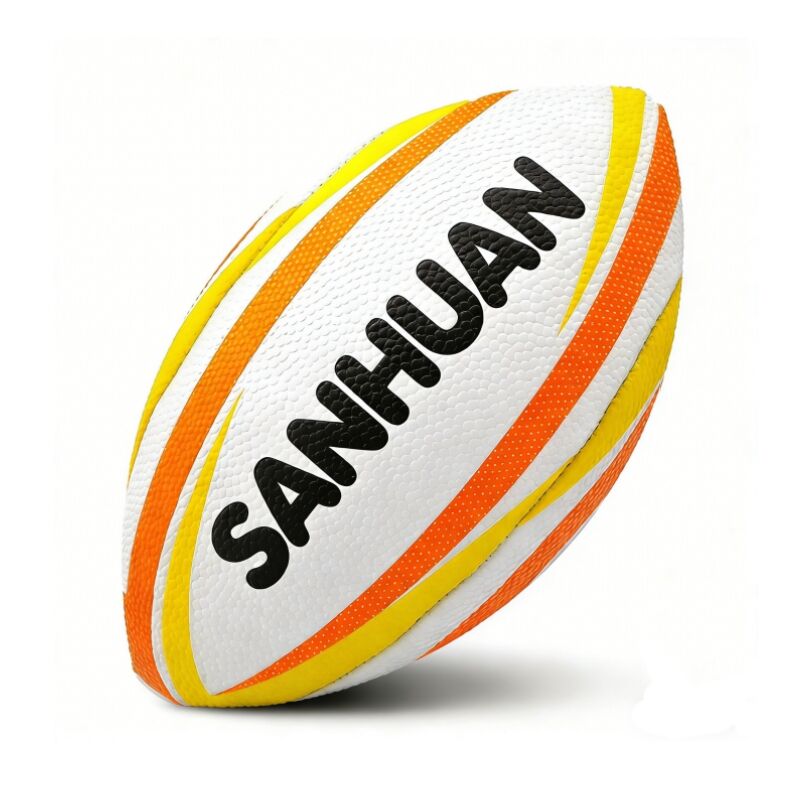
The grip quality of a rugby ball fundamentally determines whether players can execute clean catches, accurate passes, and secure carries under match pressure. Unlike sports equipment where surface texture serves primarily aesthetic purposes, the grip characteristics of a rugby ball directly influence technical execution, error rates, and overall team performance. Professional players understand that even minor variations in ball surface properties can create measurable differences in handling reliability across diverse weather conditions and game situations. The relationship between grip design and performance outcomes extends beyond simple friction coefficients to encompass texture geometry, material composition, moisture management properties, and tactile feedback mechanisms that enable split-second decision-making during competitive play.
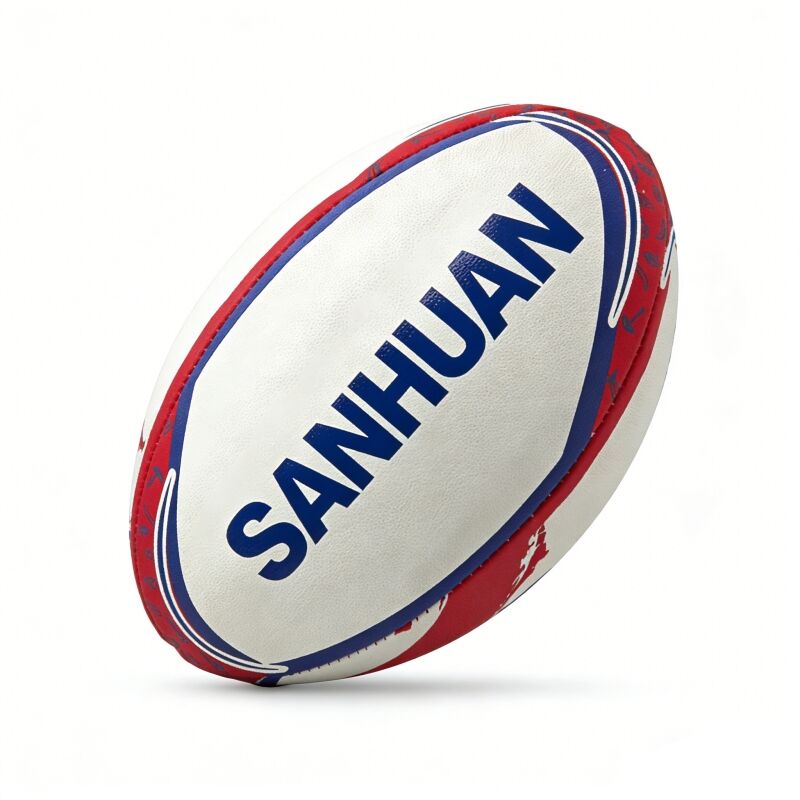
Examining why grip matters requires analyzing the biomechanical demands placed on players throughout matches, the environmental variables that compromise surface friction, and the physiological limitations of human hand function under fatigue. Contemporary rugby demands sustained handling precision across eighty minutes of play, where accumulated contact stresses, perspiration buildup, and changing atmospheric conditions progressively challenge grip effectiveness. Understanding these performance-critical factors explains why elite teams invest considerable attention in rugby ball selection criteria and why manufacturing innovations continue prioritizing surface technology advancement. This investigation clarifies the specific mechanisms through which grip properties influence technical outcomes and identifies the practical implications for player development and equipment specification decisions.
The Biomechanical Foundation of Ball Control
Hand-Ball Interface Mechanics During Dynamic Play
The physical interaction between player hands and rugby ball surfaces occurs across microsecond timeframes during catches and passes, creating biomechanical requirements that differ substantially from static holding situations. When a rugby ball arrives at speed, players must achieve sufficient friction coefficient between skin and ball surface to arrest momentum without requiring excessive grip force that would slow release mechanics. The texture pattern of the rugby ball directly influences this friction generation, with properly designed dimple arrays and pebble geometries creating multiple contact points that distribute pressure across the palm and fingers. This distributed contact prevents localized pressure peaks that cause premature grip fatigue while maintaining adequate shear resistance to prevent slippage during acceleration phases of passing motions.
Research into athletic performance demonstrates that optimal rugby ball grip enables players to maintain control authority with approximately thirty percent less muscular effort compared to smooth-surfaced alternatives. This efficiency gain becomes critically important during match situations when forearm fatigue accumulates and neurological control precision diminishes. The surface architecture of a quality rugby ball provides mechanical advantage through texture geometry that amplifies the normal forces generated by hand closure into proportionally greater tangential friction forces. Elite players develop sophisticated tactile sensitivity to these surface properties, adjusting grip pressure and hand positioning automatically based on immediate feedback from ball texture patterns. This neurological adaptation explains why consistent rugby ball specifications across training and competition environments significantly affect handling reliability under pressure.
Rotational Control Requirements in Passing Mechanics
Executing accurate spiral passes demands precise rotational control during the release phase, which fundamentally depends on asymmetric friction distribution across the rugby ball surface where fingers apply driving force. The grip characteristics at finger contact zones must provide sufficient traction to impart spin without causing irregular release timing that would compromise pass accuracy. Professional rugby ball designs incorporate strategically varied texture densities around the circumference, creating zones optimized for palm stability and separate zones engineered for fingertip control during spin application. This functional differentiation allows players to maintain core stability through palmar contact while simultaneously executing fine motor control through digital surfaces.
The physics of spiral passing reveals why rugby ball grip properties directly correlate with pass completion rates during competitive matches. Insufficient grip forces players to increase muscular effort during release, which introduces timing variability and reduces proprioceptive accuracy. Conversely, excessive friction can cause premature release or irregular spin impartation as fingers catch unexpectedly on aggressive texture patterns. The optimal rugby ball surface achieves balanced friction coefficients that match the force application profiles of trained players, enabling consistent release mechanics across repeated passing sequences. This performance requirement explains why professional teams conduct extensive testing to identify rugby ball specifications that complement their specific passing systems and player anthropometric profiles.
Impact Absorption and Secure Catching Under Pressure
Successful catching depends not only on initial contact friction but also on the rugby ball grip maintaining effectiveness throughout the compression and absorption phases as kinetic energy transfers into hand tissues. During high-speed catches, the ball surface must provide progressive grip engagement that prevents initial slippage while accommodating the natural compression of hand soft tissues under impact loading. Advanced rugby ball designs incorporate texture patterns with graduated depth profiles that maintain consistent friction coefficients across the range of compression states encountered during typical catching scenarios. This engineered compliance prevents the grip failure modes that occur when rigid texture elements lose effectiveness as hand surfaces deform under load.
Competitive match analysis demonstrates that handling errors cluster disproportionately during contested possession situations where players experience simultaneous ball arrival and physical contact from opponents. Under these demanding conditions, rugby ball grip becomes the critical variable determining possession outcomes, as players must secure control within milliseconds while managing destabilizing forces from tackles. The tactile feedback provided by effective grip textures enables players to confirm secure possession instantaneously, triggering the appropriate motor responses for protection or distribution. This neurological signaling function represents an often-overlooked dimension of rugby ball performance where surface properties directly influence decision-making speed and accuracy during critical game moments.
Environmental Challenge Factors and Performance Degradation
Moisture Management in Wet Weather Conditions
Water accumulation on rugby ball surfaces creates the most significant environmental challenge to grip performance, as liquid films dramatically reduce friction coefficients between skin and synthetic materials. Traditional smooth rubber compounds experience friction reductions exceeding seventy percent when wet, rendering handling extremely difficult and forcing players to compensate with excessive grip force that accelerates fatigue onset. Modern rugby ball designs address this challenge through hydrophobic surface treatments and texture geometries specifically engineered to channel water away from primary contact zones. The dimple patterns characteristic of premium rugby balls function as micro-drainage channels that prevent continuous water film formation, maintaining substantially higher friction levels compared to flat surface alternatives even during persistent rainfall.
The effectiveness of wet weather grip depends critically on texture depth and spacing parameters that must balance water displacement capability against the need for adequate contact surface area. Shallow texture patterns fill with water rapidly and lose effectiveness, while excessively deep patterns reduce the actual contact area available for friction generation. Optimal rugby ball designs employ multi-scale texture hierarchies where primary dimples provide bulk water management while secondary micro-textures maintain skin contact and friction generation. This sophisticated surface architecture explains the substantial performance differences observed between entry-level and professional-grade rugby balls during adverse weather conditions, where grip retention directly determines whether teams can maintain their preferred playing styles or must adapt to constrained handling capabilities.
Temperature Effects on Material Properties and Tactile Response
Ambient temperature significantly influences both the mechanical compliance of rugby ball surface materials and the physiological condition of player skin, creating temperature-dependent variations in grip effectiveness that require consideration in equipment selection. Cold conditions cause synthetic rubber compounds to stiffen, reducing their ability to conform to hand contours and decreasing the contact area available for friction generation. Simultaneously, cold weather reduces skin pliability and moisture content, further compromising the hand-ball interface. Quality rugby ball specifications account for these thermal effects through material formulations that maintain consistent compliance across typical playing temperature ranges, ensuring reliable handling characteristics whether matches occur in freezing conditions or summer heat.
Conversely, elevated temperatures soften rugby ball surface materials and increase perspiration rates, creating different but equally significant grip challenges. Excessive material compliance can cause texture elements to flatten under grip pressure, reducing their effectiveness for friction generation. Increased perspiration introduces moisture at the hand-ball interface despite dry atmospheric conditions, requiring surface designs capable of managing internally-generated moisture just as effectively as external precipitation. Elite rugby ball manufacturers conduct extensive testing across temperature ranges to validate consistent grip performance, recognizing that equipment reliability under diverse thermal conditions directly affects match outcomes and player confidence in handling situations.
Progressive Performance Degradation Through Use Cycles
The grip characteristics of any rugby ball inevitably degrade through accumulated use as surface textures wear, material properties change, and contamination accumulates in texture features. Understanding this performance degradation timeline enables appropriate equipment rotation strategies that maintain consistent handling characteristics throughout training and competition schedules. Initial wear typically occurs most rapidly at high-contact zones where fingers apply rotational forces during passing, with texture peaks gradually abrading and reducing effective friction coefficients. Professional teams monitor rugby ball condition systematically, retiring units from match use when grip performance falls below established thresholds even though general structural integrity remains acceptable.
The rate of grip degradation depends fundamentally on initial surface quality, with premium rugby ball designs incorporating abrasion-resistant compounds and optimized texture geometries that extend usable lifespan substantially compared to economy alternatives. This durability advantage compounds over team budgets and training program effectiveness, as consistent grip properties across equipment inventories enable players to develop reliable motor patterns without unconscious compensation for variable ball characteristics. The economic analysis of rugby ball procurement must therefore account for performance longevity rather than simply initial acquisition cost, as premature grip degradation necessitates more frequent replacement cycles and potentially compromises player development through exposure to inconsistent equipment specifications.
Performance Impact Mechanisms in Match Situations
Error Rate Correlation with Grip Effectiveness
Statistical analysis of professional match data reveals strong correlation between rugby ball grip characteristics and measurable handling error rates across teams and playing conditions. Teams using properly specified rugby balls with optimized grip properties demonstrate handling completion rates averaging eight to twelve percent higher compared to equivalent skill groups using suboptimal equipment. This performance differential translates directly into possession retention, territorial advantage, and ultimately scoring opportunities throughout competitive seasons. The mechanism underlying this correlation extends beyond simple catch success rates to encompass passing accuracy, offload completion in contact situations, and turnover prevention during ground phase play where secure ball retention determines possession outcomes.
The magnitude of grip-related performance impact escalates dramatically under pressure situations where cognitive load, physical fatigue, and opponent interference combine to challenge handling execution. Analysis of crucial match moments demonstrates that handling errors cluster disproportionately during final quarter play when physiological fatigue peaks and during adverse weather conditions when environmental factors compromise grip effectiveness. Teams equipped with superior rugby ball grip technology maintain more consistent error rates across these challenging scenarios, suggesting that equipment quality functions as a performance buffer that preserves technical execution capability when human factors would otherwise cause deterioration. This reliability advantage represents substantial competitive value that justifies premium equipment investment for serious programs.
Skill Development Acceleration Through Consistent Equipment
The neurological adaptation processes underlying skill acquisition require consistent sensory feedback to establish reliable motor patterns, making rugby ball grip consistency critically important for effective player development programs. When athletes train with equipment featuring variable grip characteristics, their neuromuscular systems must continuously recalibrate force application and timing parameters rather than refining execution precision within stable equipment constraints. This adaptation interference slows skill development rates and potentially establishes compensatory movement patterns that limit ultimate performance ceilings. Training programs utilizing rugby balls with consistent, high-quality grip properties enable faster progression through fundamental skill stages and support development of more refined technique adjustments that optimize individual playing styles.
Youth development contexts particularly benefit from appropriate rugby ball grip specifications, as younger players possess less developed grip strength and fine motor control compared to mature athletes. Equipment featuring optimized surface properties reduces the physical demands of secure handling, allowing developing players to focus cognitive resources on tactical decision-making and spatial awareness rather than compensating for inadequate grip. This developmental advantage accelerates the timeline for progressing from basic handling competency to advanced skills involving dynamic decision-making under pressure. Coaches implementing age-appropriate rugby ball specifications report measurably faster skill acquisition rates and higher player confidence levels during critical development phases when technical foundations become established.
Tactical System Enablement and Playing Style Flexibility
Modern rugby tactical systems increasingly emphasize ball movement, offloading in contact, and tempo manipulation through varied passing options, creating playing styles that place unprecedented demands on handling reliability. These sophisticated offensive schemes become viable only when rugby ball grip properties support consistent execution across the full range of required techniques including long passes, short tip-ons, offloads in traffic, and rapid recycling sequences. Teams constrained by suboptimal equipment must simplify their tactical approaches, reducing attacking variety and limiting their capacity to exploit opponent defensive vulnerabilities. The strategic value of superior rugby ball grip therefore extends beyond individual skill execution to enable entire system-level approaches that would otherwise carry prohibitive error risk.
Defensive systems similarly benefit from reliable rugby ball grip, as turnover creation increasingly depends on strip techniques and pressure application during tackle situations rather than solely forcing handling errors through physical intimidation. Defenders must secure possession during these chaotic moments where multiple players contest ball control simultaneously, requiring grip properties that function effectively despite compromised hand positioning and incomplete control establishment. The team possessing marginal advantages in rugby ball grip effectiveness gains measurably higher success rates in these crucial turnover situations, translating into additional possession cycles that accumulate into substantial territorial and scoring advantages across full match durations. This systemic impact explains why elite programs prioritize equipment specifications as integral components of comprehensive performance strategies rather than treating rugby ball selection as administrative procurement decisions.
Specification Criteria and Selection Frameworks
Texture Architecture Parameters and Performance Prediction
Evaluating rugby ball grip quality requires understanding the specific geometric parameters that determine surface effectiveness, including texture element height, spacing density, pattern symmetry, and edge geometry. Professional-grade rugby balls typically feature dimple depths ranging from 0.8 to 1.4 millimeters with center-to-center spacing between 4 and 7 millimeters, creating optimal balance between contact area and drainage capability. These dimensional specifications emerge from extensive testing across player populations and environmental conditions, representing engineering compromises that maximize average performance across diverse use contexts. Teams with specific prioritizations such as wet weather performance or youth player accommodation may select toward particular specification ranges within these general parameters based on detailed performance testing under relevant conditions.
Beyond basic dimensional specifications, texture geometry subtleties including sidewall angles, base fillet radii, and surface treatment characteristics substantially influence functional performance. Rugby ball designs featuring gradual sidewall transitions and rounded texture bases maintain effectiveness across broader compression ranges compared to sharp-edged alternatives that lose friction generation capability as hand tissues deform under grip pressure. Surface treatments including specialized coatings and material additives further modulate grip characteristics, with hydrophobic treatments proving particularly valuable for wet weather performance enhancement. Comprehensive rugby ball specification processes evaluate these multi-dimensional parameters through standardized testing protocols that measure friction coefficients under controlled moisture, temperature, and loading conditions, generating objective performance data that informs selection decisions.
Material Composition and Durability Considerations
The compound formulations underlying rugby ball surface layers determine both initial grip performance and degradation resistance throughout product lifespan. Premium rugby balls utilize proprietary synthetic rubber blends incorporating abrasion-resistant additives, plasticizers for compliance optimization, and stabilizers preventing ultraviolet degradation and oxidative hardening. These sophisticated formulations cost substantially more than basic rubber compounds but deliver extended performance life and more consistent grip characteristics across environmental variations. The material science underlying modern rugby ball development represents significant technological investment by leading manufacturers, creating performance differentiation that becomes apparent through extended use rather than initial handling impressions.
Evaluating material quality requires longitudinal testing that simulates accumulated match and training use, measuring grip coefficient retention after defined abrasion cycles and environmental exposure sequences. Quality rugby ball specifications maintain at least eighty-five percent of initial grip performance after one hundred hours of typical use, while economy alternatives may degrade below acceptable performance thresholds within forty to sixty hours. This durability differential justifies premium pricing through extended replacement intervals and consistent performance delivery that supports reliable skill development and match execution. Procurement decisions incorporating total cost of ownership analysis rather than simple unit price comparison consistently favor higher-specification rugby balls for serious training programs and competitive teams where performance consistency directly impacts player development outcomes and competitive results.
Size and Weight Interaction with Grip Requirements
Rugby ball grip requirements vary systematically across size categories, as the dimensional scaling from youth sizes through full adult specifications creates different biomechanical challenges for secure handling. Smaller rugby balls present relatively larger surface area to hand size ratios for youth players, potentially reducing grip security despite absolutely smaller masses requiring control. Conversely, full-size rugby balls challenge smaller-handed players with span requirements that limit finger wrap capability and reduce available contact area for friction generation. These anthropometric considerations necessitate size-specific grip optimization where texture designs and friction coefficients adapt to the distinct biomechanical contexts of each size category rather than simply scaling geometric patterns proportionally.
Weight specifications interact with grip requirements through the momentum and kinetic energy levels that must be controlled during catching and passing sequences. Heavier rugby balls generate proportionally greater inertial loads during direction changes, requiring higher grip forces to maintain control authority throughout acceleration and deceleration phases. Surface designs for heavier match balls therefore benefit from slightly more aggressive texture profiles compared to lighter training alternatives, providing the additional friction capacity needed for secure control without requiring excessive muscular effort that would accelerate fatigue. Comprehensive rugby ball selection processes account for these size-weight-grip interactions, ensuring equipment specifications appropriately match the physical capabilities and biomechanical constraints of intended user populations while supporting progressive skill development as players transition through age grade categories.
FAQ
How does rugby ball grip affect passing accuracy in wet conditions?
Wet conditions reduce friction coefficients between hands and ball surfaces, making it substantially more difficult to control release timing and spin impartation during passes. Quality rugby ball grip designs incorporate drainage geometries and hydrophobic treatments that maintain higher friction levels when wet, enabling players to execute accurate passes with more consistent mechanics despite moisture presence. The performance difference becomes most apparent during spiral passes where precise rotational control depends on reliable finger traction during the release phase. Teams using rugby balls with superior wet weather grip characteristics demonstrate measurably lower handling error rates during rain-affected matches compared to equivalent skill groups using standard equipment.
What grip characteristics should youth players prioritize in rugby ball selection?
Youth players benefit most from rugby ball grip featuring moderate texture depth with higher density patterns that provide generous contact area despite smaller hand sizes and less developed grip strength. Excessively aggressive textures can actually hinder young players by creating uncomfortable pressure points and requiring excessive grip force that causes premature fatigue. The optimal youth rugby ball balances adequate friction generation with comfortable tactile response, enabling developing players to focus on skill technique rather than compensating for equipment challenges. Size-appropriate specifications remain critically important, as oversized rugby balls compromise grip effectiveness regardless of surface quality by exceeding comfortable hand span capabilities.
How frequently should training rugby balls be replaced to maintain grip performance?
Training rugby ball replacement schedules depend on usage intensity and initial quality specifications, but general guidelines suggest retiring premium balls after 80-120 hours of active use and economy alternatives after 40-60 hours. Visible indicators including texture smoothing at high-wear zones, surface hardening, and reduced tackiness during handling all signal declining grip performance requiring replacement. Teams should implement systematic rotation schedules that retire oldest inventory units from match use to training contexts before final disposal, maximizing equipment value while maintaining consistent performance standards. Regular grip testing using standardized protocols provides objective replacement timing guidance superior to subjective assessments that may underestimate gradual performance degradation.
Can rugby ball grip design compensate for reduced hand strength in developing players?
Optimized rugby ball grip significantly reduces the absolute force requirements for secure handling, effectively compensating for developing hand strength in youth players. Well-designed texture patterns multiply applied normal forces into proportionally greater friction forces through mechanical advantage, enabling younger athletes to maintain control with less muscular effort compared to smooth or poorly textured alternatives. This compensation allows developing players to execute proper technique patterns without strength-based limitations forcing premature adaptation to compensatory movement strategies. However, grip optimization cannot entirely eliminate strength requirements, and age-appropriate progressive resistance training remains important for comprehensive player development alongside proper equipment selection that supports rather than hinders skill acquisition during critical formative stages.
Table of Contents
- The Biomechanical Foundation of Ball Control
- Environmental Challenge Factors and Performance Degradation
- Performance Impact Mechanisms in Match Situations
- Specification Criteria and Selection Frameworks
-
FAQ
- How does rugby ball grip affect passing accuracy in wet conditions?
- What grip characteristics should youth players prioritize in rugby ball selection?
- How frequently should training rugby balls be replaced to maintain grip performance?
- Can rugby ball grip design compensate for reduced hand strength in developing players?