×
×
Most buyers look at the material first when sourcing a soccer ball, also called a football in many markets.
PU, TPU, PVC… these terms are everywhere.
But in real production, the construction method changes the ball just as much as the material itself.
Two balls can share the same outer material and still feel completely different during play.
So what actually changes? Let’s break it down in a simple way.
Affordable & Fast to Produce
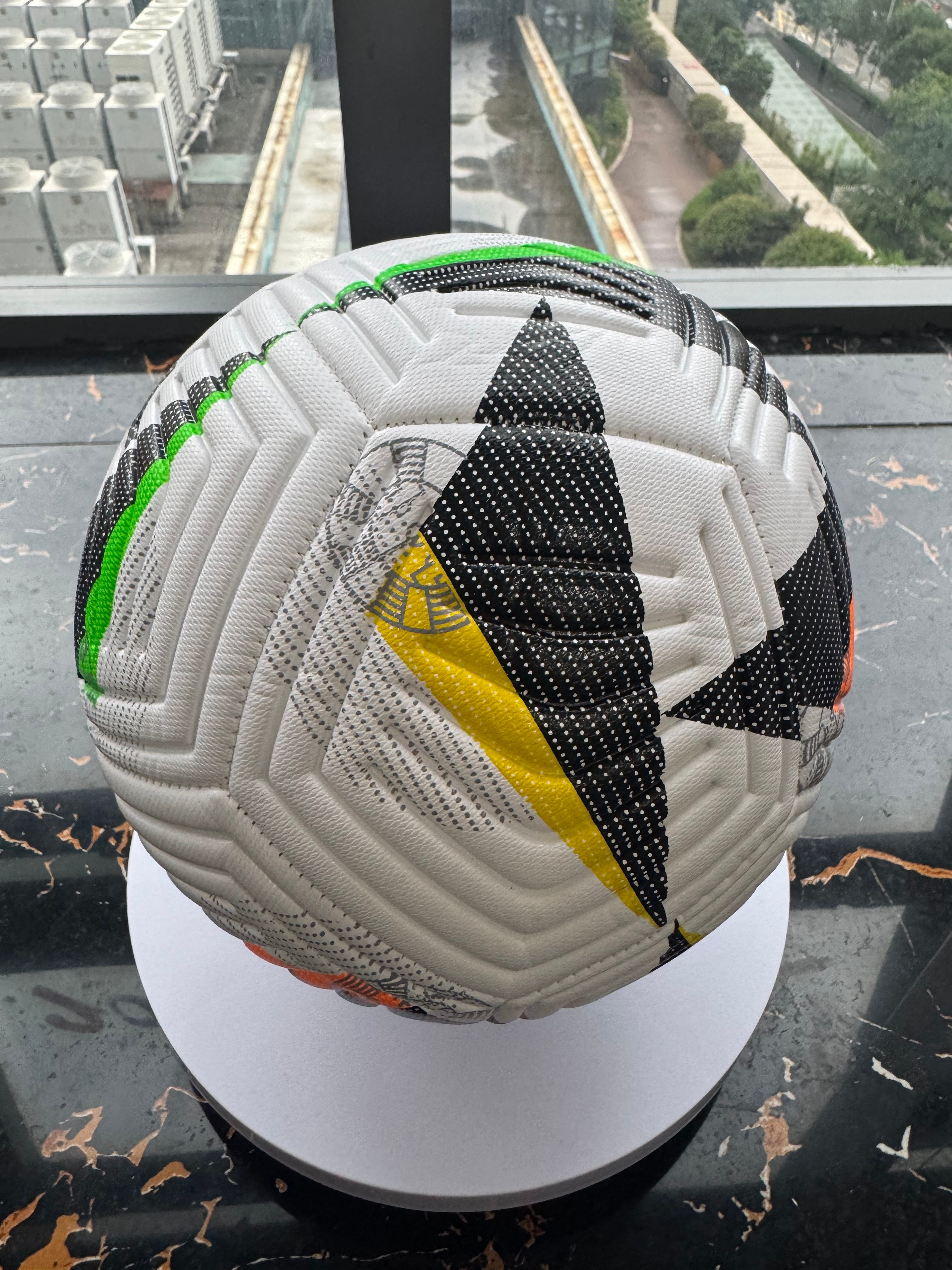
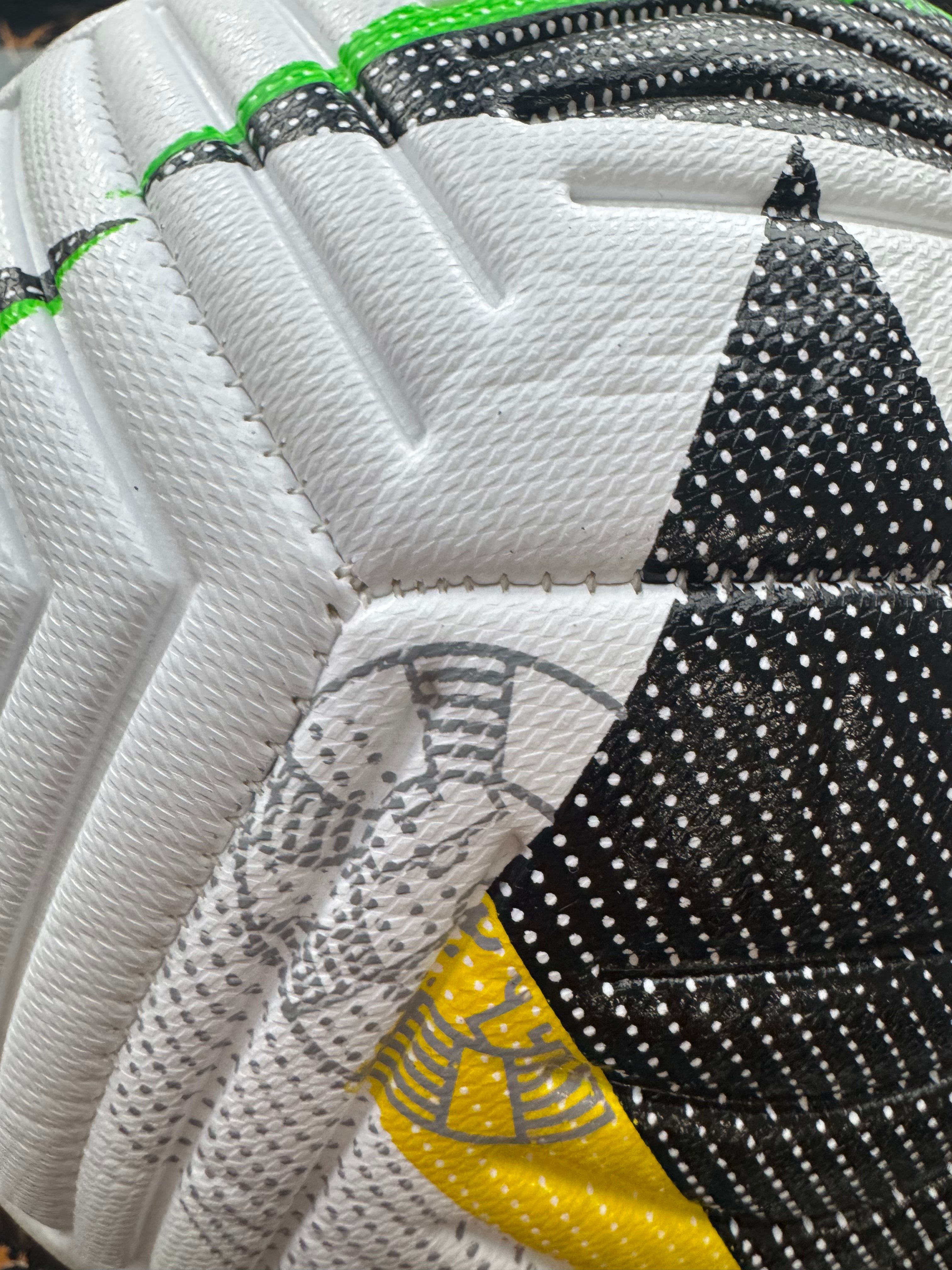
Machine stitched soccer balls are sewn by machine rather than by hand.
It’s one of the fastest and most costefficient production methods in the industry.
At first glance, they can look very similar to higherend balls.
But after longer use, the differences usually become more noticeable.
The biggest advantage is lower cost.
Because the stitching process is automated, factories can produce large quantities quickly—ideal for bulk orders and tight budgets.
In terms of stitch density, machine stitching usually falls between 2.0 mm and 3.5 mm per stitch, depending on the machine settings. This affects seam strength and overall durability.
However, the stitching is typically not as tight as hand stitching.
On hard surfaces or after heavy use, seams may loosen sooner. Shape consistency can also drift, which some players notice as unpredictable ball flight.
Another factor many buyers overlook is water resistance.
Due to the stitched seams, it cannot achieve the same level of water resistance as thermal bonded soccer balls..
Best fit: Machine-stitched soccer balls offer the most cost-effective solution for large-scale training and promotional projects. They are ideal for budget-conscious clients requiring high volumes for training, schools, promotions, or wholesale distribution.
However, if the client prioritizes premium match performance, water resistance, and professional touch, the currently most popular thermal bonded (heat-pressed) technology would be a more suitable choice.
 |
 |
Durable with a Softer Touch
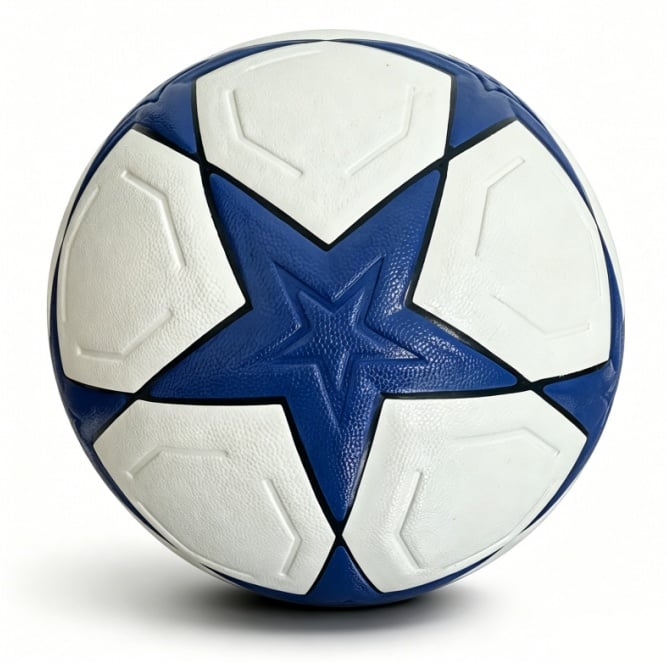
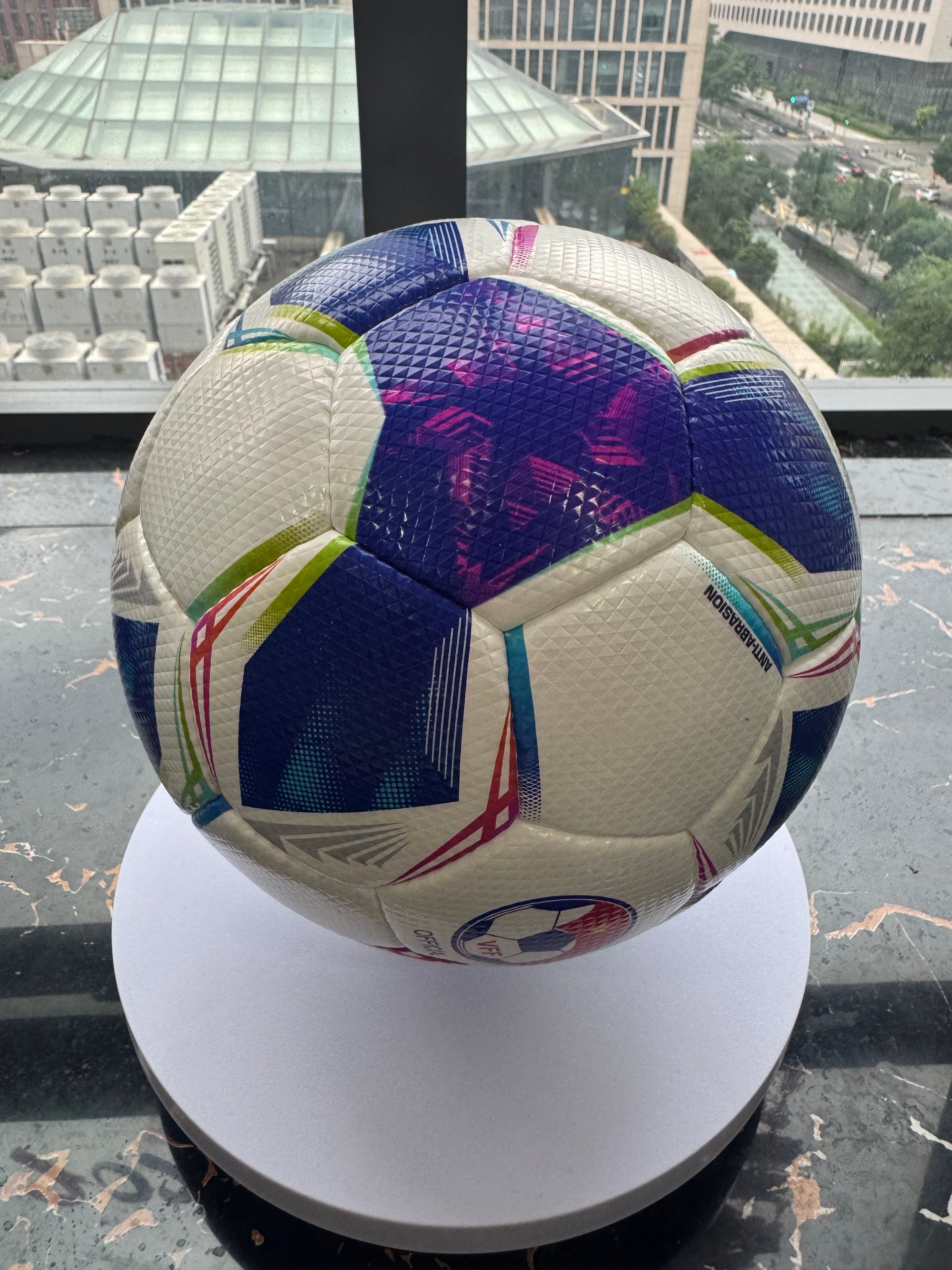
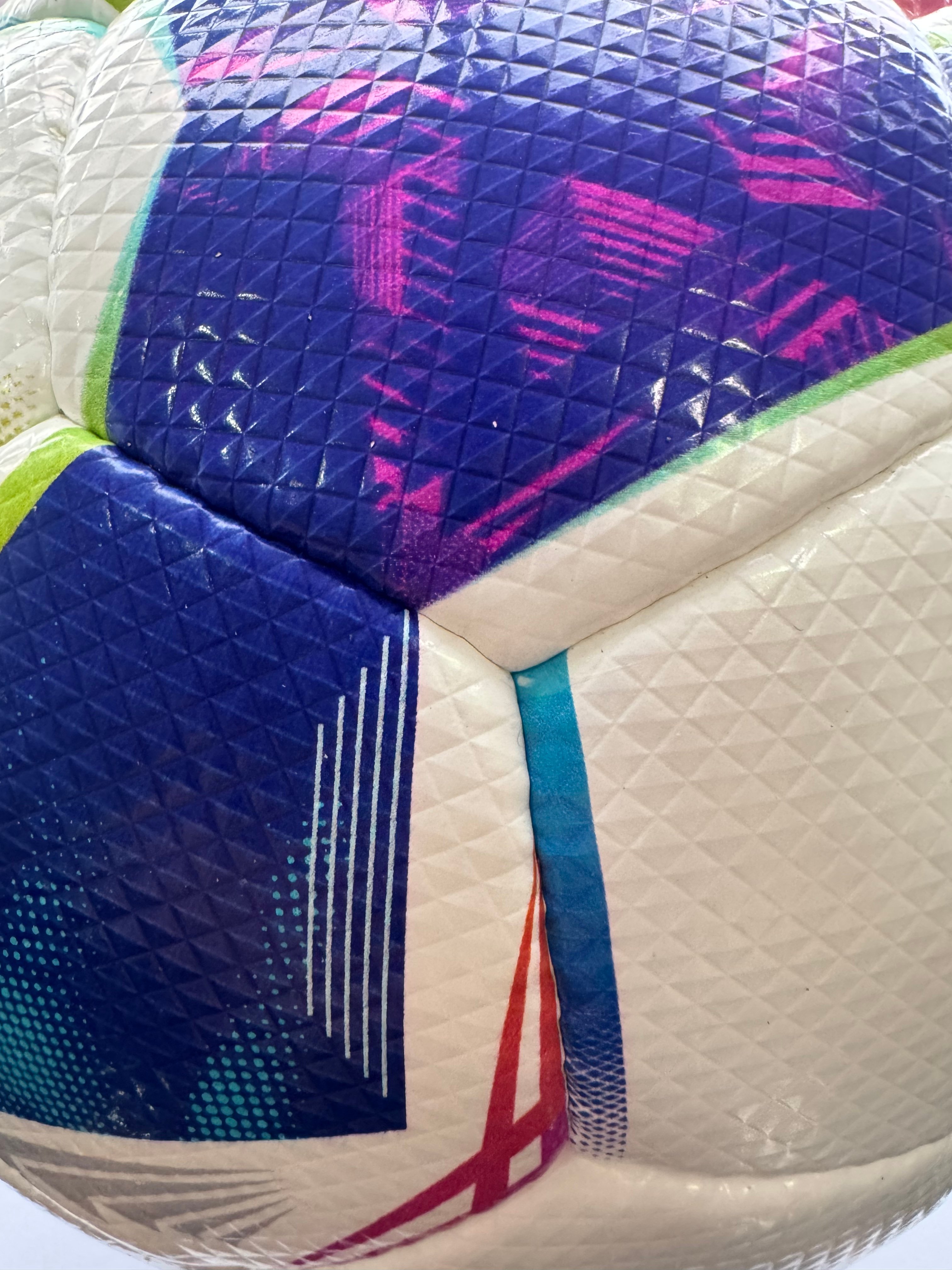
Hand stitched soccer balls are made the traditional way—panel by panel, by skilled workers.
The process is slower, but the stitching is tighter and more controlled.
Compared with machine-stitched soccer balls, hand-stitched soccer balls have a stronger and more durable structure, with a more solid touch and feel. They are suitable for serious training, clubs, schools, and mid-to-high-end match use.
However, compared with thermal bonded soccer balls, hand-stitched balls have weaker water resistance, and in terms of roundness and flight stability, they are not as suitable as high-end thermal bonded balls for top-level professional matches.
Hand stitching usually uses stronger thread and deeper seam construction, which helps protect the stitches from abrasion, with a stitch density often around 1.8–2.2 mm. This deeper stitch profile improves abrasion resistance, especially on rough surfaces like artificial turf or gravel pitches.
That said, hand stitched balls still have needle holes, so they can take in water during wet matches. The difference is they usually keep their structure longer than machine stitched models.
Because hand stitching relies entirely on manual labor, production speed is much lower. Factories need more time to complete an order, so it’s wise to plan ahead—especially for large volumes.
Best fit: Clubs and schools needing reliable, long-lasting training balls.
 |
 |
Stable Flight & Weather Ready
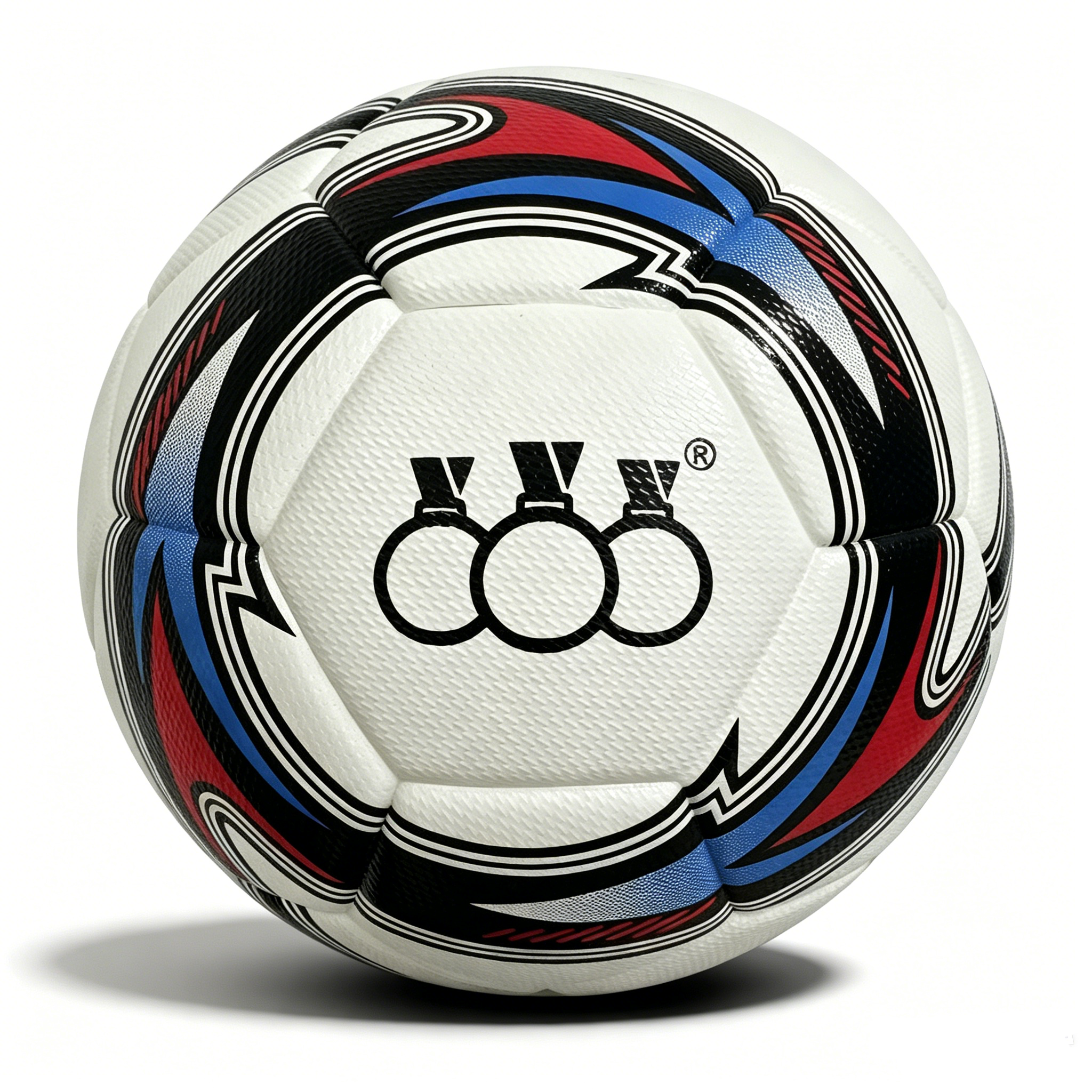
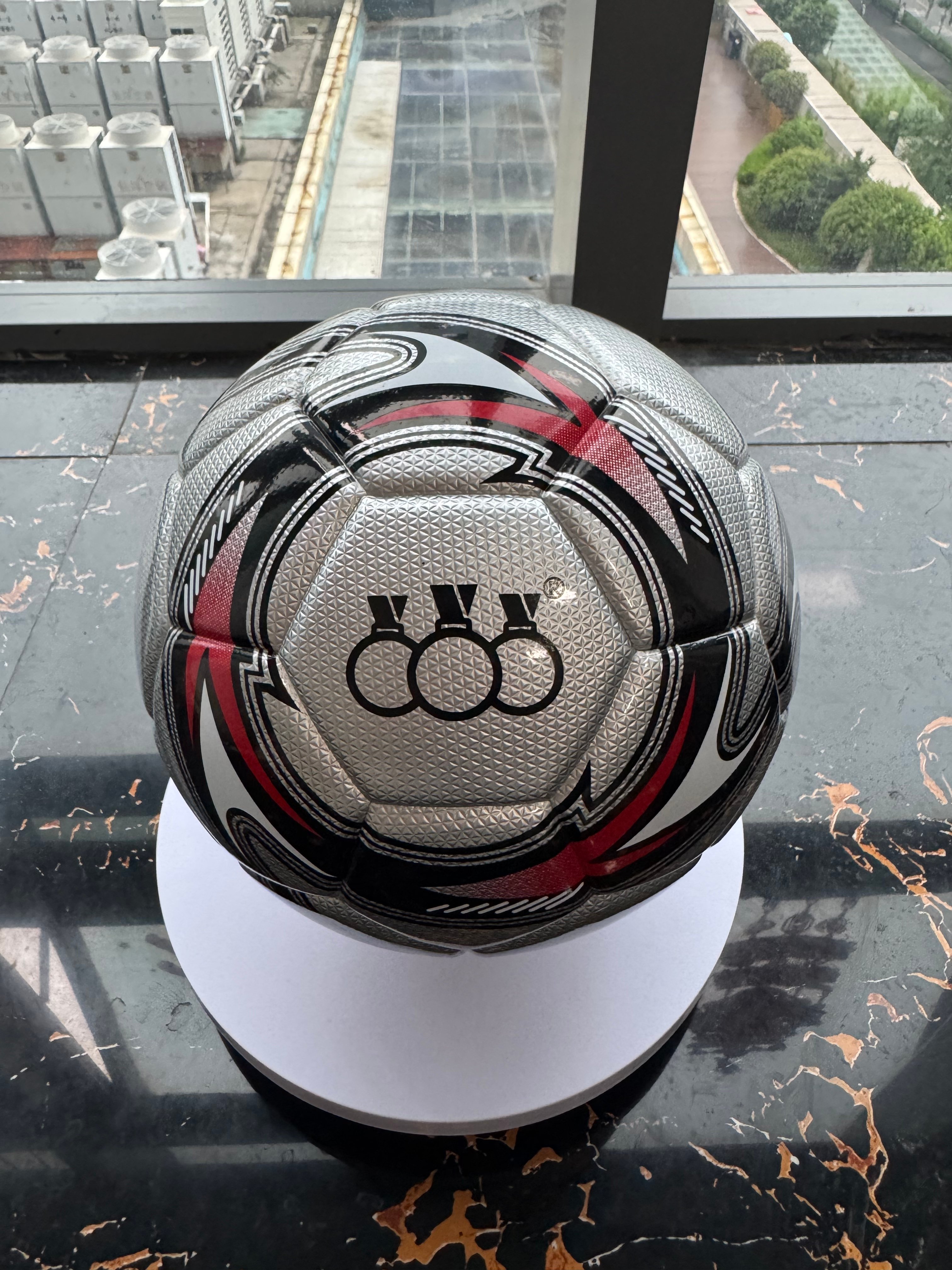
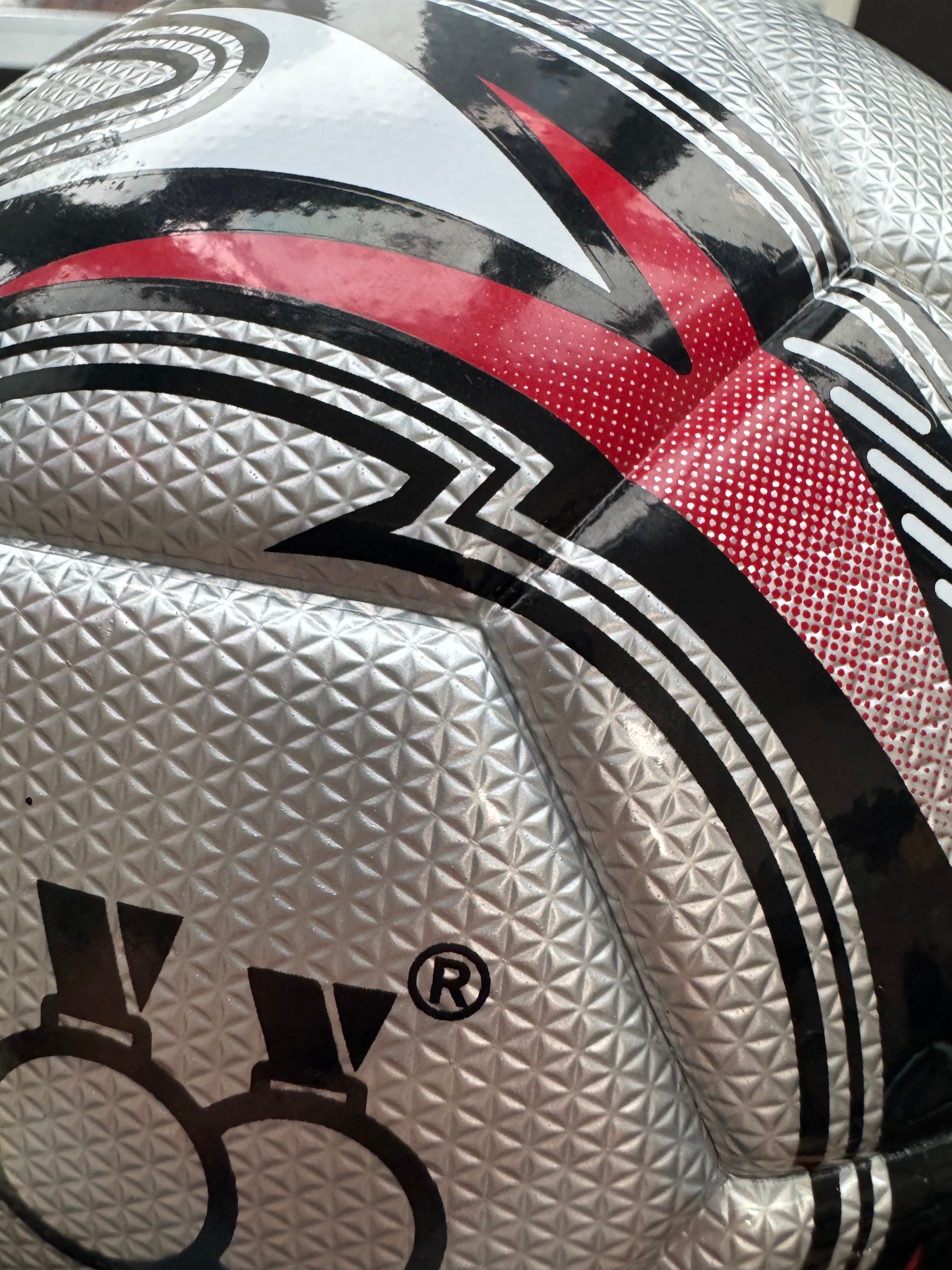
Thermal bonded soccer balls are made without stitching.
Panels are joined using heat and pressure, creating a smooth, near-seamless surface.
This changes more than just appearance.
Without needle holes, the ball stays lighter in the rain and keeps its shape more consistently. The flight feels cleaner, especially on long passes and shots.
Thermal bonding also allows better control over panel alignment and roundness consistency, helping each ball in a batch perform more uniformly — something match organizers and premium buyers value highly.
The trade-off is cost and production complexity. Thermal bonding requires advanced equipment and strict process control, and not every factory can deliver stable quality at scale.
Best fit: Professional matches, training balls for clubs or academies, branded retail product lines, and premium gift products suitable for real training use.
 |
 |
There’s no single “best” construction—only the right one for your market and usage.
Machine stitched: Lower cost, quicker production, good for budget programs.
Hand stitched: Stronger durability, softer touch, ideal for regular training—but allow extra lead time.
Thermal bonded: Consistent performance, excellent water resistance, suited for high-level play.
Understanding these differences helps you match the ball to your players, your climate, and your budget—before committing to a large order.
At Sanhuan Sports, we usually recommend construction based on target price, playing surface, climate, usage intensity, and expected order volume.
If you’d like to compare them in person, we can prepare a small sample set so your team can test each type side by side. It’s the easiest way to see which construction works best for your needs.
 Hot News
2026-08-10
2026-07-20
2026-06-08
2026-05-25
2026-05-21
2026-05-06
Leading manufacturer of custom basketballs, soccer balls, volleyballs & rugby balls. 56 countries served, 4000+ club partnerships. 24-hour samples, flexible MOQ.
Shandong Province Linyi City Yinan County Yuquan road
Copyright © 2026 Sanhuan Sports Co., Ltd. All Rights Reserved Privacy Policy

 EN
EN