×
×
When sourcing soccer balls, many buyers first focus on the construction method, such as machine-stitched, hand-stitched, or thermal-bonded structures.
While these construction methods are important, an equally critical factor is the outer material, which directly affects performance, feel, and market positioning.
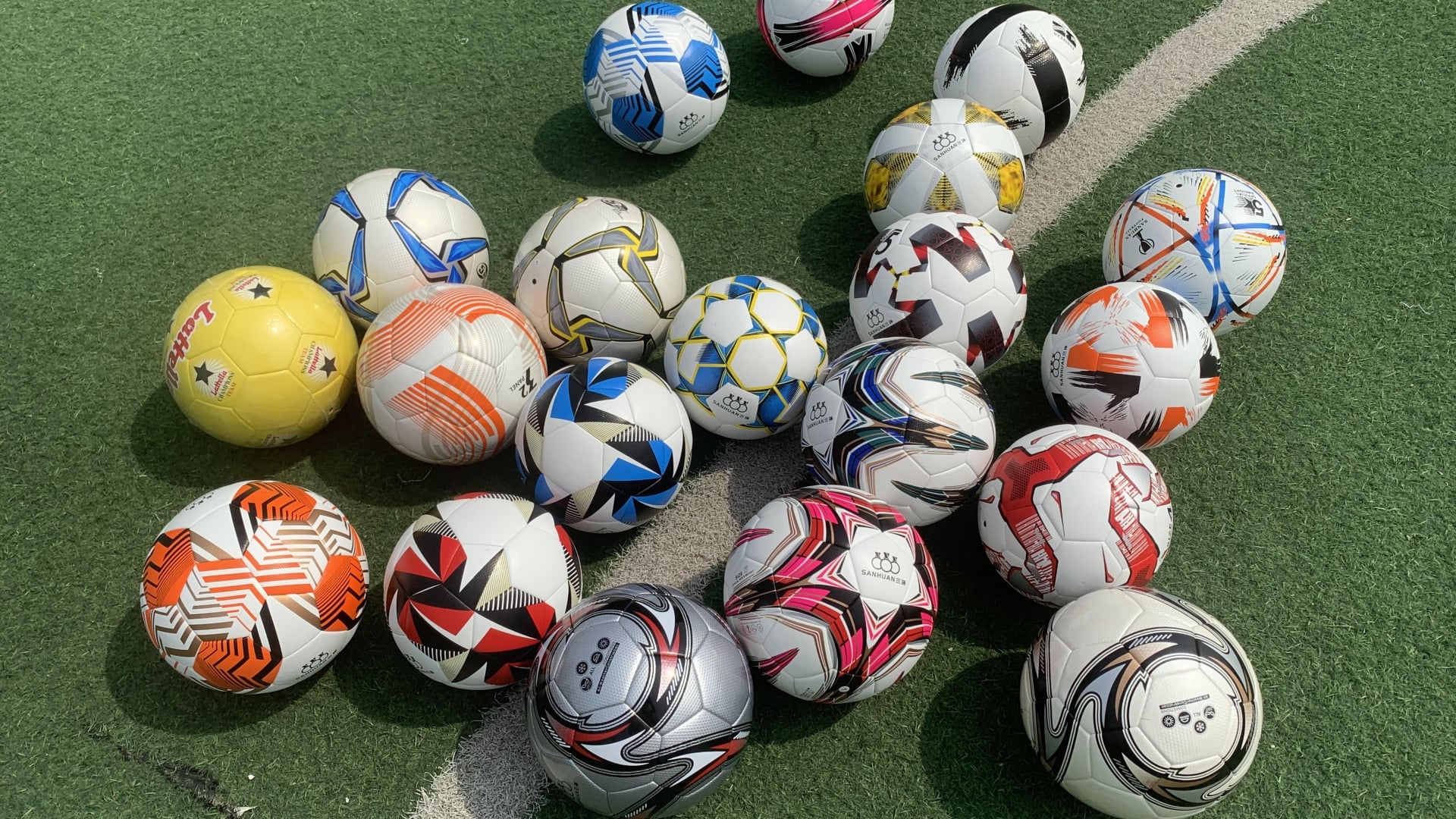
The three most commonly used outer materials are PU (Polyurethane), TPU (Thermoplastic Polyurethane), and PVC (Polyvinyl Chloride).
 |
 |
Economy products, promotional items, basic training, recreational use, and large-volume low-budget procurement projects.
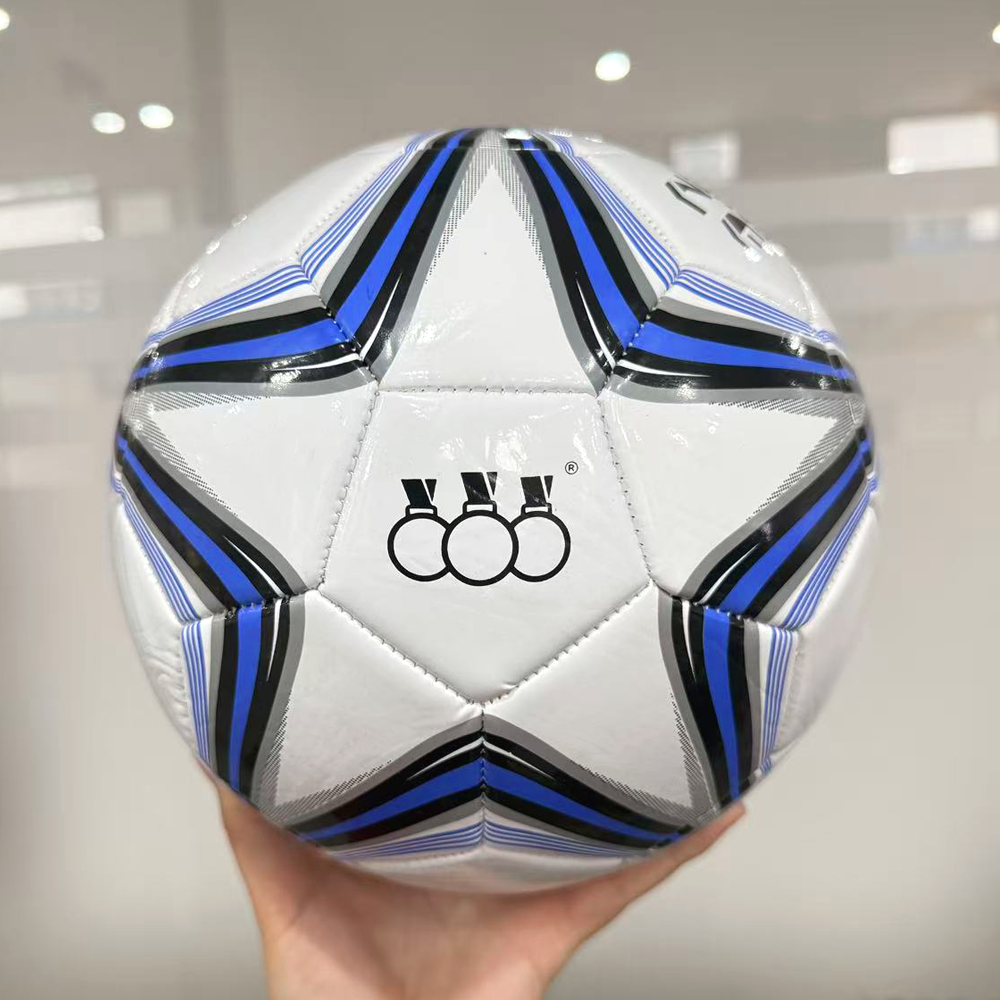
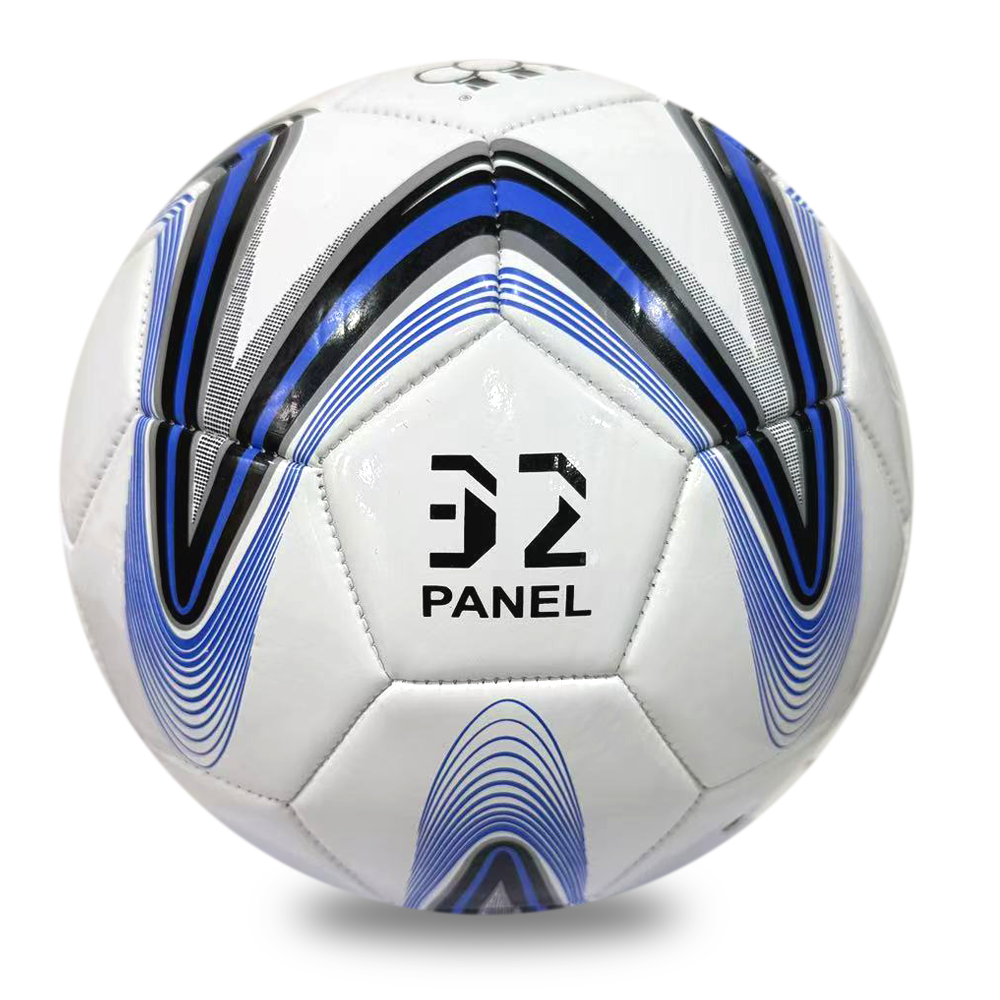
PVC is a material widely used in entry-level soccer balls. When combined with backing fabric layers, it provides a certain level of structural stability on concrete, asphalt, or rough artificial turf surfaces.
However, due to its material properties, PVC tends to become harder in low-temperature environments, which may affect the overall playing experience.
Its main advantage is cost efficiency, making it suitable for mass production, especially for machine-stitched soccer balls and entry-level machine-laminated soccer balls.
For PVC soccer balls, material thickness directly affects touch, cushioning, durability, cost, and market positioning. Thinner PVC is usually used for promotional products, while thicker versions are more suitable for recreational and school use, providing better cushioning and a fuller appearance. However, this also increases cost, weight, and production requirements.
 |
 |
Training use, youth programs, and selected mid-range market applications.
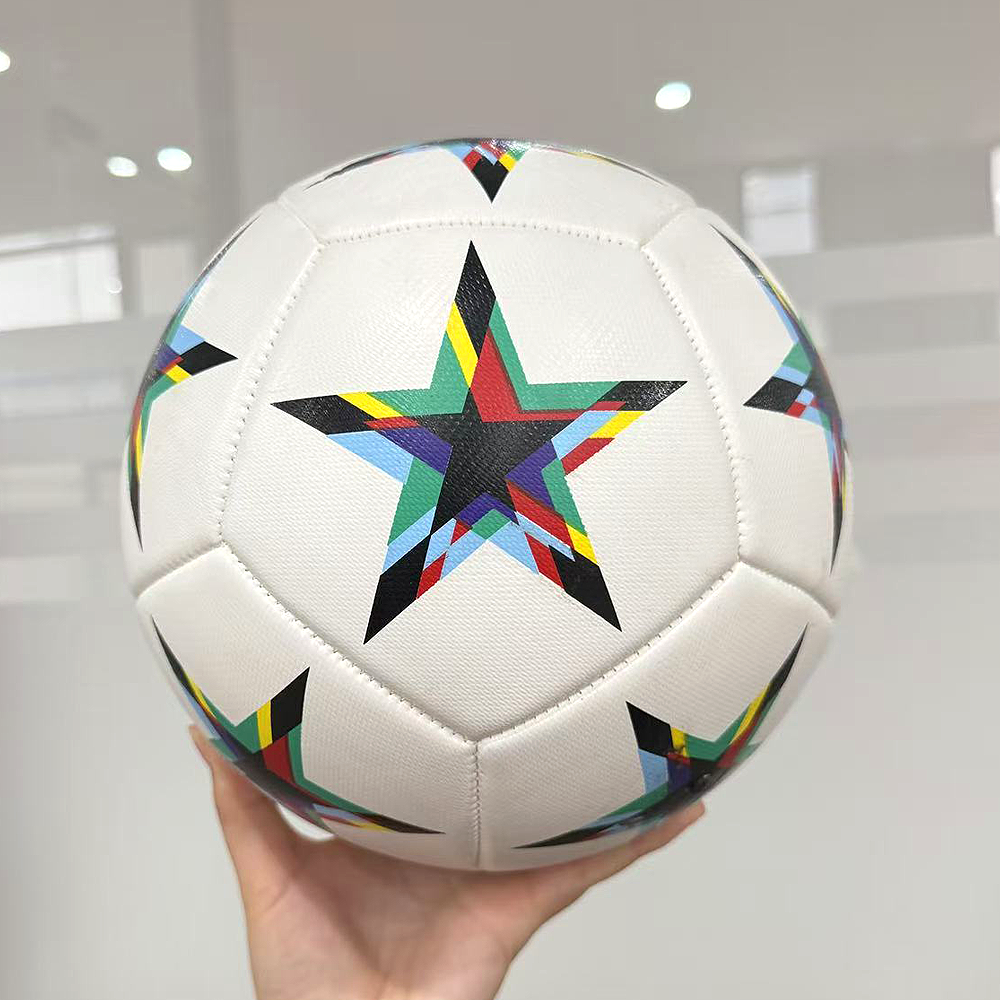
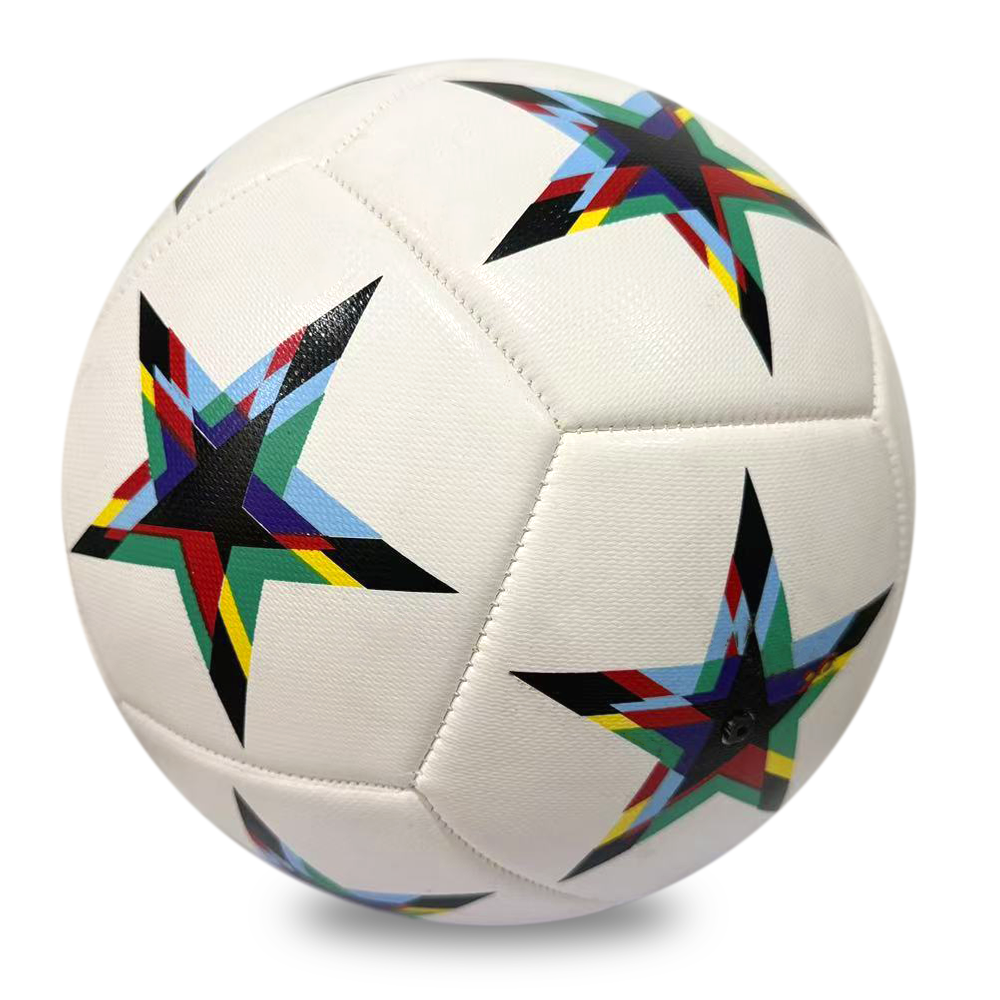
TPU is positioned between PVC and PU in terms of performance. Compared with PVC, it offers a softer touch and better elasticity, and it also provides better durability in training use.
In many markets, TPU is used as a transitional material, and its usage depends on pricing strategy and regional demand.
TPU soccer balls are mainly used in machine-stitched structures. Compared with PVC soccer balls, TPU machine-stitched products offer improved durability and appearance, while still maintaining relatively controlled cost levels.
 |
 |
Match balls, professional training, and high-end branded products.
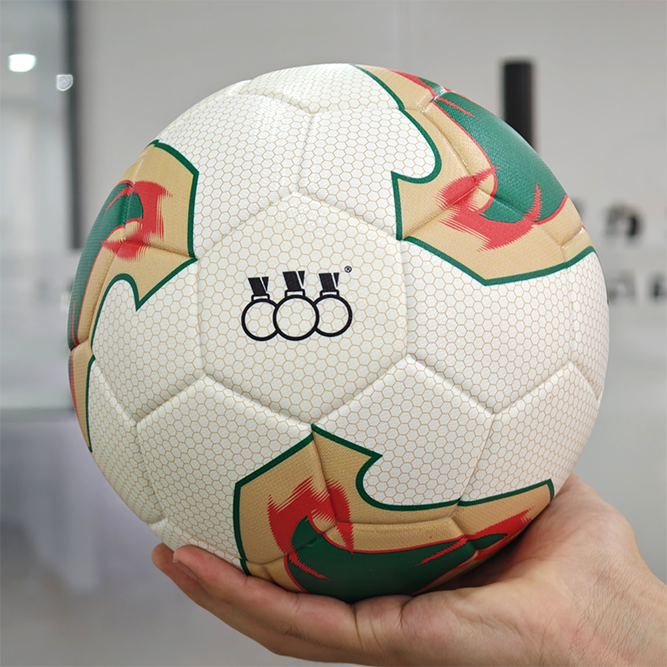
PU is the most commonly used material in mid-to-high-end soccer balls. Due to its finer surface structure, better elasticity, and improved energy rebound performance, it is widely adopted.
Compared with PVC and TPU, PU provides:
PU soccer balls are widely used in both machine-stitched and thermal-bonded constructions and can deliver stable performance under different playing conditions.
Therefore, PU is especially suitable for buyers who do not only focus on cost but also care about playing performance, product quality, and brand positioning.
Modern PU materials can closely replicate or even match the feel and performance of official match balls. At the same time, they provide more stable performance in different environments.
However, PU also requires higher production standards and stricter quality control.
There is no single “best” material, only the most suitable option based on your market and application:
In actual production, material is only one factor affecting soccer ball performance. Final product quality also depends on:
As customer expectations for feel, stability, and durability continue to rise, PU has become the dominant material in the mid-to-high-end soccer ball market, delivering consistent performance and a more premium playing experience.
 Hot News
2026-08-10
2026-07-20
2026-06-08
2026-05-25
2026-05-21
2026-05-06
Leading manufacturer of custom basketballs, soccer balls, volleyballs & rugby balls. 56 countries served, 4000+ club partnerships. 24-hour samples, flexible MOQ.
Shandong Province Linyi City Yinan County Yuquan road
Copyright © 2026 Sanhuan Sports Co., Ltd. All Rights Reserved Privacy Policy

 EN
EN