
 EN
EN



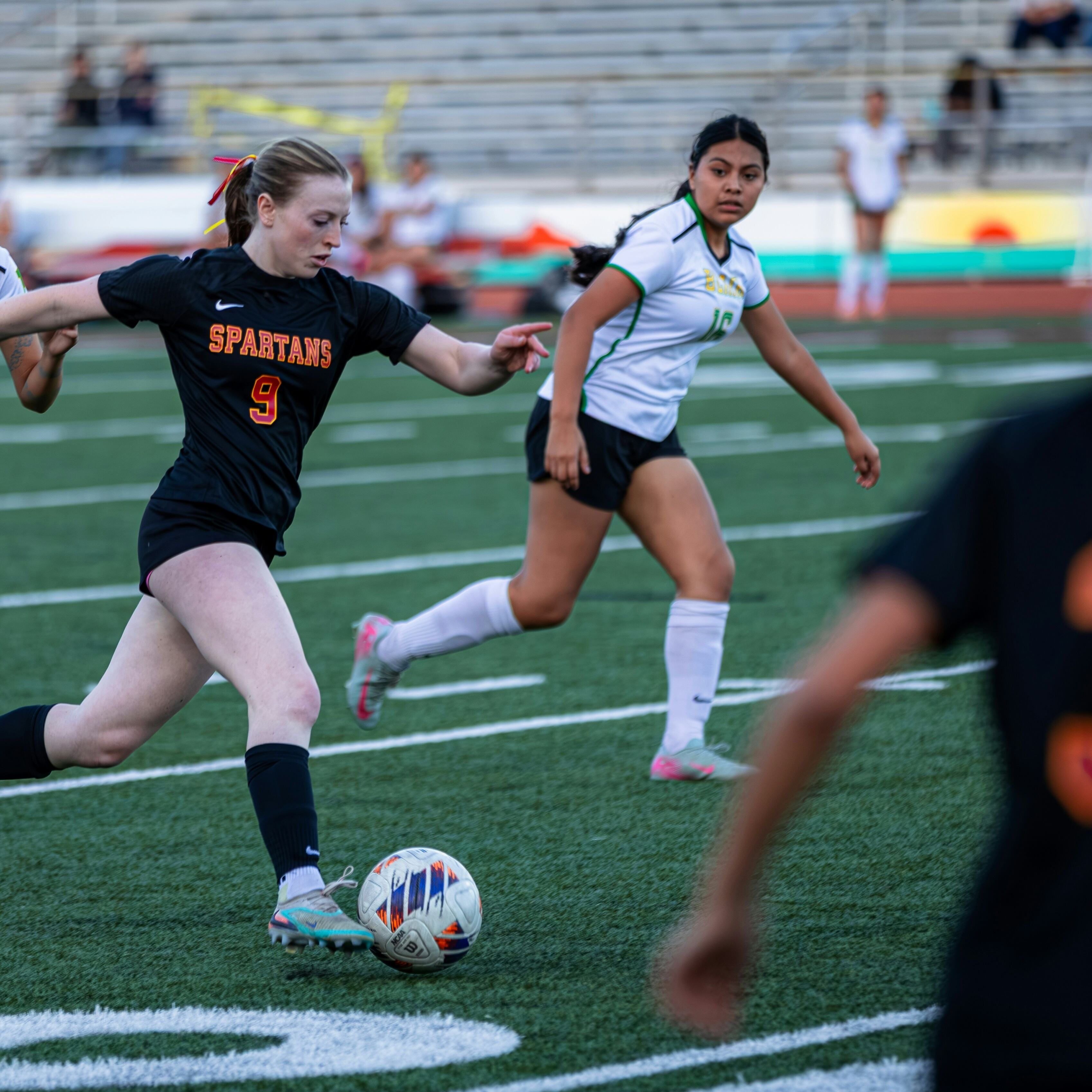
When coaches and parents look for training tools that genuinely develop youth soccer players, the size 3 soccer ball consistently stands out as one of the most effective instruments available. Designed specifically for younger players and technical skill-building sessions, this ball's compact dimensions and lighter weight create a training environment where players must engage more precisely with every touch, pass, and turn. Understanding exactly how this smaller ball improves ball control helps coaches make smarter equipment decisions and helps players and parents invest in the right tools from the start.
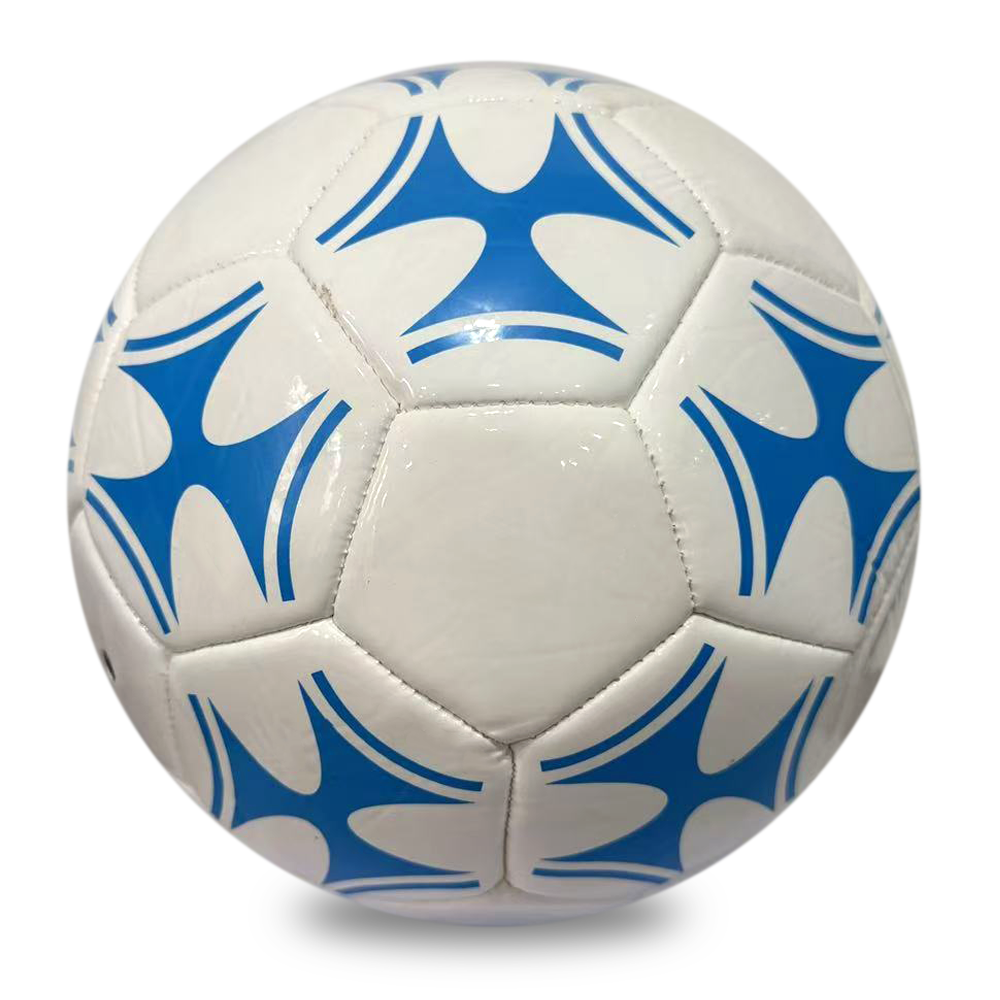
The size 3 soccer ball measures between 23 and 24 inches in circumference and weighs approximately 300 to 320 grams, making it notably smaller and lighter than the full-size 5 ball used in adult play. These physical characteristics are not arbitrary — they are intentionally calibrated to match the motor skill development stage of young players while simultaneously providing technical challenges that accelerate the learning process. From footwork drills to close-control patterns, the size 3 soccer ball creates a feedback-rich training experience that a larger ball simply cannot replicate.
The Physical Mechanics Behind Improved Ball Control
How a Smaller Ball Demands Greater Precision
One of the most immediate effects of training with a size 3 soccer ball is the heightened demand for precision in every single touch. Because the ball's surface area is smaller, the margin for error when striking, trapping, or receiving the ball is dramatically reduced. A player who might get away with a slightly mistimed or off-center touch on a full-size ball will immediately feel the consequences with the smaller version, as the ball will veer off course or bounce unpredictably.
This natural feedback mechanism is extraordinarily valuable during the formative stages of a player's development. Rather than requiring a coach to constantly correct technique, the size 3 soccer ball essentially teaches the player through repeated, honest feedback. Over time, players internalize the correct foot placement, the right angle of contact, and the appropriate amount of force to apply — all because the ball demands this precision on every repetition.
When these micro-corrections accumulate over hundreds of training sessions, the result is a player whose first touch is consistently cleaner and more controlled than peers who trained exclusively with larger equipment. The neural pathways built through size 3 soccer ball training are more refined, and they translate effectively when the player eventually transitions to a larger ball during match play.
The Role of Ball Weight in Developing Soft Touch
Ball weight plays a critical but often underappreciated role in developing soft touch and cushioning ability. The lighter mass of the size 3 soccer ball requires players to modulate their impact force with greater sensitivity. When receiving a pass or bringing a ball down from the air, players must apply just the right amount of give in their leg, foot, or chest to absorb the ball's momentum without letting it run away from them.
Training consistently with a lighter ball recalibrates the neuromuscular system to become more responsive and adaptive. Players develop an unconscious ability to read the ball's speed and trajectory earlier, adjusting their body position accordingly. This is sometimes described by experienced coaches as having a natural relationship with the ball — and much of that relationship is forged through repeated contact with the appropriate training equipment at the right stage of development.
The size 3 soccer ball essentially functions as a training tool that accelerates the development of proprioception, the body's awareness of its own position and movement in space. This is especially pronounced in players aged five to nine, whose nervous systems are in peak plasticity phases and respond most powerfully to consistent, varied physical challenges.
Foot Skill Development and Close Control Patterns
Building Dribbling Confidence Through Compact Dimensions
Close-control dribbling is one of the most visually exciting and tactically essential skills in soccer. Training this skill with a size 3 soccer ball accelerates development because the compact dimensions force the player to keep the ball tight to their feet during direction changes, step-overs, and speed variations. Any loose touch is immediately punished by the ball escaping too far ahead or to the side.
In contrast, dribbling with a full-size ball allows for slightly looser control without immediate consequences, which can inadvertently reinforce sloppy habits early in a player's development. The size 3 soccer ball eliminates this buffer, creating a more honest training environment. Young players who regularly practice dribbling patterns with the smaller ball tend to develop tighter touches, better weight distribution, and more instinctive use of both feet.
Coaches who design drills specifically around the size 3 soccer ball often notice that their players become comfortable making sharp changes of direction at speed much earlier than expected. This confidence in close quarters — the ability to protect the ball and move past opponents in tight spaces — is a direct product of the heightened demands that training with this ball places on foot-eye coordination and touch consistency.
Enhancing Weak Foot Development
One of the persistent challenges in youth soccer development is encouraging players to use their weaker foot with the same confidence as their dominant foot. The size 3 soccer ball is a particularly powerful tool in this context because its smaller size makes the technical deficit of using the weaker foot immediately apparent. There is nowhere to hide when using the non-dominant foot — every touch reveals exactly how much work still needs to be done.
This honest exposure to technical gaps, rather than being discouraging, actually accelerates correction when paired with deliberate practice. Because the ball responds so directly to the quality of the touch, players receive real-time feedback about whether their weaker foot technique is improving. Sessions dedicated to weak foot work with the size 3 soccer ball tend to produce measurable improvements faster than comparable sessions with larger equipment.
Academies and clubs that invest in size 3 soccer ball training as a formal component of their curriculum often find that their players reach technical parity between feet sooner than programs that rely solely on full-size balls. This two-footedness becomes a significant competitive advantage in match play, especially in tight spaces and during pressing situations.
Passing Accuracy and First Touch Under Pressure
How the Size 3 Ball Sharpens Passing Technique
Clean, accurate passing is the foundation of effective team play, and the size 3 soccer ball is one of the best tools available for developing this skill at the formative level. Because the target surface area of the ball is smaller, the contact zone on the foot must be more precise. Players quickly learn the importance of using the correct part of the foot — typically the inside for short passes and the instep for driven passes — because any deviation produces a noticeably inaccurate result.
Short passing exercises performed with a size 3 soccer ball train players to think about the geometry of their pass more carefully. The angle of the foot, the position of the knee over the ball, and the follow-through direction all become more consequential when working with a smaller ball. This enforced attention to technical detail during training carries over powerfully into match situations where passing decisions must be made quickly and automatically.
For rondos, positional games, and wall-pass exercises, the size 3 soccer ball creates a heightened level of technical engagement that makes these classic drill formats even more effective as development tools. Players in these scenarios are forced to control the ball quickly and release it accurately — both skills are intensified by the smaller dimensions of the size 3 soccer ball.
Developing First Touch in Receiving Situations
The first touch — the ability to receive a pass and immediately set oneself up in a position of advantage — is arguably the single most distinguishing skill between elite players and average ones at every level of the game. Training first touch with a size 3 soccer ball creates demanding conditions that build this skill faster than any other method at the youth level.
Because the ball is smaller, receiving it cleanly requires the player to be perfectly positioned before it arrives, with weight balanced and the controlling surface prepared. Players cannot rely on their body size or a large foot surface to simply catch the ball — they must actively shape their touch to direct the ball into space, to the correct side for their next move, or in front of them for a shot. Each receiving repetition with a size 3 soccer ball is a micro-lesson in spatial awareness, timing, and intent.
Over a sustained period of training, this becomes deeply ingrained. Players who have developed their first touch on a size 3 soccer ball tend to be noticeably cleaner and more intentional in their receiving habits when they transition to full-size balls in competitive play. The demands of the smaller ball have effectively over-prepared them for the more forgiving conditions of the regulation game.
Long-Term Skill Transfer and Age-Appropriate Training Logic
Why Developmental Stages Align With the Size 3 Ball
Child development research consistently supports the principle that physical tasks should be appropriately scaled to the learner's current stage of development. The size 3 soccer ball reflects this principle in a direct and practical way. For players between the ages of five and nine — the stage when foundational movement patterns, coordination, and motor skills are being established — the size 3 soccer ball provides a training stimulus that is proportional to body size and suited to developing neuromuscular systems.
Using full-size equipment too early in development is known to create compensatory habits that are difficult to unlearn. A young player struggling to control a ball that is too large for their current ability level will naturally adapt by using incorrect technique — leaning back, relying on power rather than touch, or avoiding challenging technical situations altogether. The size 3 soccer ball prevents these patterns from forming by aligning the difficulty of the task with the developmental capacity of the player.
This is why youth football federations and professional academy programs worldwide specify the size 3 soccer ball for their youngest age groups. It is not merely a matter of safety or convenience — it is a deliberate developmental decision supported by decades of coaching practice and sports science research.
Skill Transfer as Players Progress to Larger Balls
One of the most compelling arguments for structured size 3 soccer ball training is the quality of skill transfer that occurs when players eventually move on to larger equipment. Players who have spent their formative years developing touch, first control, passing accuracy, and dribbling precision on a smaller ball typically demonstrate a higher baseline technical level when they begin playing with the size 4 or size 5 ball.
The neural programming developed through thousands of repetitions with the size 3 soccer ball does not disappear — it forms the technical foundation upon which higher-level skills are built. The player's understanding of how to strike a ball, how to receive it, how to protect it, and how to move it effectively is more deeply ingrained because it was developed under more demanding, precision-focused conditions.
Academies and youth clubs that incorporate the size 3 soccer ball systematically into their training methodology report consistently better technical outcomes at the U10 and U12 levels compared to programs that skip or minimize dedicated small-ball training. The investment in appropriate equipment early pays dividends throughout the player's entire development pathway.
FAQ
At what age should players use a size 3 soccer ball?
The size 3 soccer ball is generally recommended for players between the ages of five and nine years old. This age range corresponds to the critical window of motor skill development when the smaller, lighter ball provides the most appropriate physical challenge and the greatest developmental benefit for building ball control and technical foundations.
Can older players benefit from training with a size 3 soccer ball?
Yes, older players and even experienced adults can benefit from technical sessions using the size 3 soccer ball as a deliberate training tool. Many professional and semi-professional players use smaller balls in warm-up rondos and close-control drills specifically because the heightened precision demands accelerate touch refinement and keep technical habits sharp between competitive matches.
How does the size 3 soccer ball differ from futsal balls in training effect?
While both the size 3 soccer ball and futsal balls are smaller than the standard outdoor game ball, they have different constructions and intended uses. The futsal ball is heavier and has a low-bounce design suited to hard indoor surfaces, while the size 3 soccer ball is designed for standard outdoor grass and artificial turf conditions. Each creates a distinct training stimulus, and both can complement each other within a comprehensive youth development program.
How many size 3 soccer balls does a youth training session typically require?
For effective individual and small-group training, a ratio of one size 3 soccer ball per player is ideal. This ensures maximum touch time and avoids the downtime associated with waiting to use shared equipment. For team sessions and club training environments, having one to two extra balls available per group helps maintain session flow and reduces interruptions caused by balls leaving the practice area.