
 EN
EN



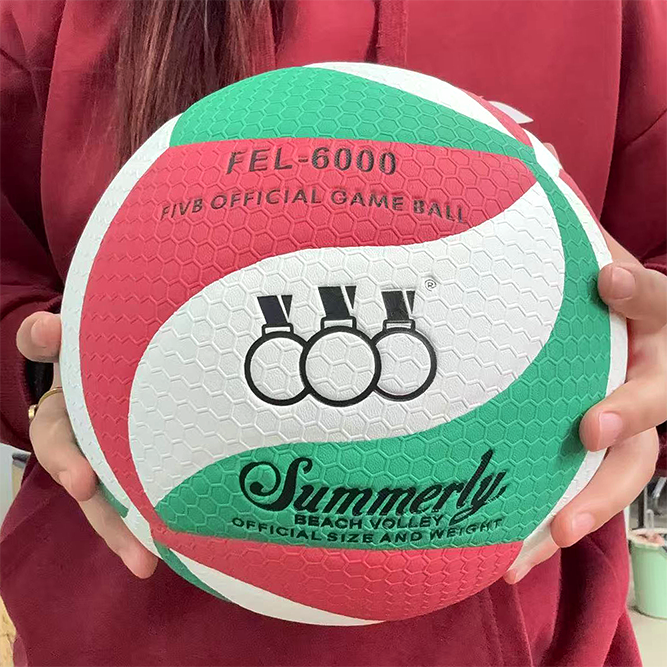
A volleyball ball is one of the most distinctively engineered pieces of sports equipment in the world of competitive and recreational athletics. Unlike many other balls used in popular sports, the volleyball ball is designed around a very specific set of physical and mechanical demands — it must be light enough to stay airborne through powerful spikes and serves, yet structured firmly enough to maintain consistent shape under rapid, repeated contact. Understanding what exactly defines a volleyball ball, and how its design philosophy separates it from basketballs, footballs, or soccer balls, is essential for coaches, players, procurement specialists, and sports brands looking to make informed decisions about equipment selection.
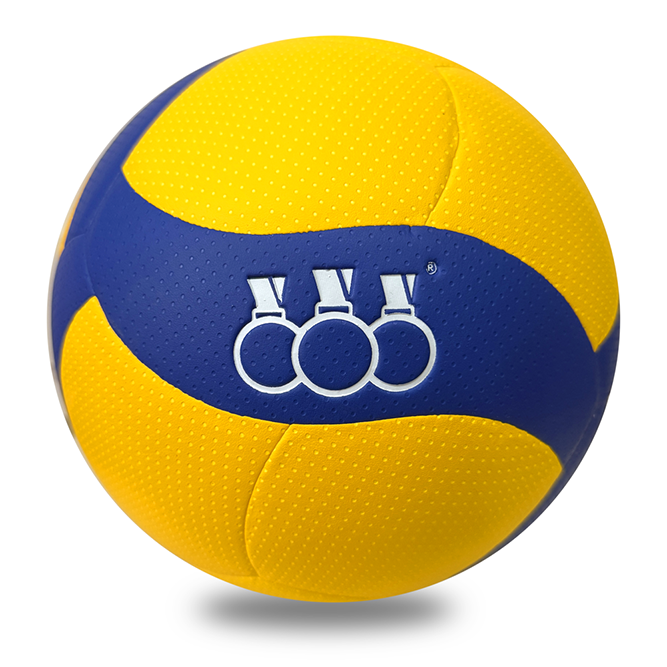
The volleyball ball occupies a unique category in sports equipment manufacturing. It sits at an intersection of aerodynamic performance, tactile feedback, and structural durability that few other balls need to balance simultaneously. From the official indoor competition version governed by international federations to the softer, more forgiving versions used in recreational beach settings, every variant of the volleyball ball tells a specific story about how design choices translate directly into gameplay outcomes. This article breaks down exactly what a volleyball ball is, what distinguishes its construction, and how it meaningfully differs from other popular sports balls.
Defining the Volleyball Ball: Core Characteristics
Official Dimensions and Weight Standards
The standard volleyball ball used in official indoor competition is spherical, with a circumference ranging from 65 to 67 centimeters and a weight between 260 and 280 grams. These measurements are governed by the Fédération Internationale de Volleyball (FIVB) and form the global baseline for competition-grade equipment. The internal pressure of a volleyball ball typically falls between 0.300 and 0.325 kg/cm², giving it a notably softer feel compared to balls in sports like basketball or soccer.
These specifications are not arbitrary. The relatively low weight allows the ball to travel quickly across the net when struck powerfully while also enabling precise setting and digging techniques that define volleyball strategy. A heavier ball would fundamentally alter the game's pace and the feasibility of the overhead pass. The volleyball ball's dimensions are also calibrated to fit comfortably within a player's hands during setting without requiring an awkward grip.
Beach volleyball introduces slight variations. The beach volleyball ball is generally slightly larger in circumference and inflated to lower pressure, accounting for the softer playing surface and the fact that players often compete barefoot on uneven sand. Despite these differences, both versions trace back to the same fundamental design philosophy: a lightweight, responsive sphere built for repeated airborne play.
Panel Construction and Surface Materials
Traditionally, the volleyball ball was constructed from 18 rectangular panels stitched together around a rubber bladder and textile lining. This panel count and layout affected how the ball rotated in the air and how evenly pressure was distributed across its surface during impact. Modern advancements have moved many high-performance models toward thermo-bonded construction, where panels are bonded using heat rather than thread, producing a smoother, more consistent surface with improved aerodynamic predictability.
The outer cover of a volleyball ball is typically made from synthetic leather, microfiber composite, or polyurethane-coated materials. These materials are chosen for their grip texture, durability under high-frequency play, and ability to maintain consistent tactile response across varying temperatures and humidity levels. Indoor volleyball balls tend to use smoother synthetic leather to allow precise ball control on hard courts, while outdoor models prioritize water resistance and abrasion durability.
The internal construction of a volleyball ball includes a rubber bladder at the core for air retention and pressure consistency, surrounded by multiple layers of wound textile or nylon for shape stability. This multi-layer engineering ensures the ball retains its spherical form even after thousands of impacts. For sports brands and procurement teams, understanding these construction layers is critical when evaluating product specifications for custom manufacturing or bulk ordering.
How the Volleyball Ball Differs from Other Sports Balls
Comparison with the Basketball
The volleyball ball and basketball are perhaps the two most frequently confused categories in sports equipment conversations, yet they differ significantly in virtually every measurable dimension. A standard basketball has a circumference of approximately 75 centimeters and weighs around 620 grams — more than twice the weight of a volleyball ball. This weight difference alone reflects fundamentally different gameplay mechanics. Basketball involves dribbling, carrying, and throwing a ball that players grip firmly with one or both hands. A volleyball ball, by contrast, is never carried or held during play; it is only struck or set.
The internal pressure of a basketball is also significantly higher, typically around 0.54 to 0.72 kg/cm², making it much firmer to the touch. This firmness enables the controlled bounce essential to dribbling. A volleyball ball with similarly high pressure would be excessively rigid for the open-palm striking techniques central to volleyball, increasing injury risk and disrupting ball flight mechanics. The two balls are products of entirely different gameplay environments despite both being used in court sports.
Surface texture also diverges sharply. Basketballs feature deep rubber pebbling across their entire surface to enhance grip and dribble response. A volleyball ball's surface is intentionally smoother, especially in indoor competition models, to reduce drag and allow the ball to respond predictably to topspin, float serves, and diving bumps. These are not minor aesthetic differences — they represent entirely distinct engineering priorities.
Comparison with the Soccer Ball and Football
A soccer ball shares a similar circumference range with the volleyball ball — between 68 and 70 centimeters — but is significantly heavier at 410 to 450 grams and inflated to higher pressure. Soccer balls are designed to withstand foot strikes of enormous force, travel long distances along the ground or through the air at high speed, and maintain aerodynamic stability through rain, mud, and grass. The volleyball ball, being lighter and lower in pressure, is not designed for these conditions and would deform under a powerful foot strike.
The American football presents an even more dramatic contrast. An NFL-regulation football is an oblate spheroid rather than a sphere, with a long axis designed to facilitate spiral passing and aerodynamic stability during forward throws. It weighs approximately 400 to 430 grams and is constructed with a pebbled leather exterior for passing grip. The volleyball ball's perfectly spherical form is essential to its function — any deviation from true spherical symmetry would create unpredictable flight paths during serves and spikes, making accurate play impossible.
Even a tennis ball, which shares the volleyball ball's relatively low weight, differs enormously in pressure, bounce coefficient, and application context. The volleyball ball is engineered around human hand contact, not racket impact or foot strike. This is a critical distinction that drives every aspect of its design from panel configuration to cover texture to bladder pressure.
Specialized Types of Volleyball Balls
Indoor Versus Beach Volleyball Balls
Within the volleyball ball category itself, indoor and beach versions represent two meaningfully different product profiles. The indoor volleyball ball is typically made with smoother synthetic leather panels, inflated to slightly higher pressure, and designed for play on hard gymnasium floors where precise passing and setting mechanics dominate. The hard court environment means the ball experiences faster, more forceful rebounds off surfaces, and its construction must accommodate this.
The beach volleyball ball, used on sand, is slightly larger and inflated to lower pressure to compensate for the slower surface and the different striking mechanics used by players in outdoor conditions. Beach models often feature water-resistant outer materials and brighter color schemes for visibility under outdoor sunlight. Some beach volleyball balls also incorporate additional texture patterns on panel surfaces to improve grip in humid or wet conditions.
A volleyball ball intended for training environments may differ further from competition-grade models, often using lower-cost materials that prioritize durability over elite performance characteristics. Training balls are subject to far higher usage volumes and need to withstand daily repetitive impact without rapid degradation. Procurement teams sourcing training inventory often weigh cost-per-use durability against upfront unit cost when selecting these products.
Youth, Recreational, and Custom Volleyball Balls
Youth volleyball balls are engineered with softer surface materials, reduced internal pressure, and slightly smaller circumferences to make the game accessible to younger or beginner players. A softer volleyball ball reduces the sting of contact for players who have not yet developed proper striking technique, lowering the barrier to participation and reducing minor injuries during learning phases. These balls are commonly used in school programs, community leagues, and introductory coaching contexts.
Recreational volleyball balls occupy a middle ground between youth and professional specifications. They are typically produced with more affordable synthetic materials, less precise panel bonding, and broader pressure tolerance ranges. While they do not meet FIVB competition standards, they perform adequately for casual play and are widely used in physical education, corporate recreation programs, and amateur club settings.
Custom volleyball balls have become an increasingly important category for sports brands, leagues, and event organizers. Thermo-bonded construction has made custom color schemes, logo placements, and branding applications more consistent and visually precise than older stitched manufacturing methods. Sports brands sourcing custom volleyball balls need to balance visual customization requirements with performance specification compliance to ensure the finished product meets the quality expectations of their target customer segments.
Why Construction Method Matters for the Volleyball Ball
Stitched Versus Thermo-Bonded Volleyball Balls
The manufacturing method used to assemble a volleyball ball has significant implications for its performance, durability, and visual quality. Traditional stitched volleyball balls use thread to join panels, a process that creates slight seam ridges along the ball's surface. These ridges can influence air resistance and ball flight in subtle but measurable ways, particularly during float serves where minimal spin is intentional and small aerodynamic irregularities can amplify flight unpredictability.
Thermo-bonded volleyball balls use heat and adhesive bonding to join panels without thread, resulting in a seamless or near-seamless surface. This construction method produces a more aerodynamically consistent volleyball ball with smoother surface geometry, which translates into more predictable flight trajectories. Many modern competition-grade and premium training volleyball balls now use thermo-bonded construction as the industry standard for high-performance applications.
For sports brands evaluating manufacturing partners for custom volleyball ball production, the choice between stitched and thermo-bonded construction impacts not only performance but also lead time, tooling costs, and minimum order quantities. Thermo-bonded processes typically require more specialized equipment but deliver superior consistency at scale, making them the preferred option for professional-grade runs intended for retail, team supply, or event use.
Bladder and Lining Quality in Volleyball Ball Performance
The internal bladder of a volleyball ball is responsible for maintaining consistent air pressure throughout the ball's lifespan. Lower-quality bladders made from butyl rubber may experience slower pressure loss than natural latex but tend to offer less responsive touch and feel during play. Higher-performance volleyball balls often use latex bladders or hybrid designs that prioritize responsive feedback at the expense of slightly faster natural pressure loss.
The winding layers between the bladder and outer cover also contribute significantly to how a volleyball ball behaves under impact. Tighter, more uniform winding produces a firmer, more consistent ball shape under repeated striking. Loosely wound or uneven internal layers can cause the ball to distort slightly under high-force impact, reducing the accuracy of powerful spikes and serves over time as the ball ages.
Procurement specialists and equipment managers evaluating volleyball ball quality should assess bladder and lining specifications alongside the more visible panel and surface characteristics. A ball with excellent outer surface quality but poor internal construction will degrade faster in high-usage environments, ultimately increasing replacement costs and reducing the performance consistency that teams or programs depend on.
FAQ
What makes a volleyball ball different from a basketball in terms of design?
A volleyball ball is significantly lighter, softer, and inflated to lower pressure than a basketball. While a basketball weighs over 600 grams with deep pebbled texture for dribbling, a volleyball ball weighs around 260 to 280 grams with a smoother surface optimized for open-palm striking. These differences reflect entirely different gameplay mechanics and physical demands in each sport.
Can a beach volleyball ball be used for indoor volleyball play?
A beach volleyball ball can technically be used indoors, but it is not recommended for competitive play. Beach volleyball balls are slightly larger, inflated to lower pressure, and made with materials designed for outdoor conditions. Using one in an indoor context would alter passing, setting, and serving mechanics in ways that do not align with official indoor competition standards or training objectives.
What does thermo-bonded construction mean for a volleyball ball?
Thermo-bonded construction refers to a manufacturing method where the panels of a volleyball ball are joined using heat and adhesive bonding rather than traditional stitching. This creates a smoother, more consistent surface with reduced seam ridges, improving aerodynamic predictability and overall performance. It is the preferred construction method for high-performance competition and premium training volleyball balls.
What should sports brands consider when ordering custom volleyball balls?
Sports brands sourcing custom volleyball balls should evaluate construction method (stitched versus thermo-bonded), cover material type, bladder quality, compliance with international size and weight specifications, and the manufacturer's ability to execute custom color and branding requirements consistently across production runs. Matching visual customization needs with performance specification compliance is essential to delivering a product that meets both brand expectations and end-user performance standards.