
 EN
EN



Selecting the right volleyball ball for your program, team, or distribution chain is not as simple as picking the most visually appealing option on a catalog page. Every specification embedded in a volleyball ball's construction has a direct influence on how the ball performs during play, how long it holds up under repeated use, and whether it meets the standards required by governing bodies. Buyers who overlook these technical details often end up with products that underperform, wear out prematurely, or fail official inspections — all costly outcomes that a careful specification review can prevent.
This article is designed to help procurement managers, sports retailers, club coaches, and brand owners understand exactly which specifications deserve close attention before finalizing a volleyball ball purchase. Rather than providing a broad overview of the volleyball industry, the focus here is practical: what the numbers and material descriptions on a product sheet actually mean, and how to use that information to make a confident, well-informed buying decision.
Panel Construction and Bonding Method
Number of Panels and Their Role in Flight Stability
Traditional volleyball balls were constructed from 18 panels stitched together, a design that remained the industry standard for decades. However, modern manufacturing has introduced 8-panel and even 6-panel designs using thermo-bonding technology. The panel count directly affects how the ball travels through the air — fewer seams typically result in more predictable, consistent flight trajectories that benefit players using advanced serving and spiking techniques.
When evaluating a volleyball ball for competitive or semi-professional use, understanding panel geometry matters beyond aesthetics. The shape uniformity of each panel influences where the ball's center of gravity sits and how spin interacts with airflow. A well-designed panel layout reduces wobble and makes it easier for players to read and react to the ball's movement, which directly impacts game quality.
For training environments where durability outweighs aerodynamic precision, higher panel counts with reinforced stitching may offer better longevity under high-volume use. The key is matching the panel design to the intended use case rather than assuming that fewer panels always means better performance.
Thermo-Bonded vs. Stitched Construction
The bonding method used to join panels is one of the most consequential specifications for a volleyball ball intended for indoor or beach play. Thermo-bonded construction uses heat and adhesive to fuse panels directly, eliminating the seam ridges created by thread stitching. This produces a smoother surface and a more uniform ball shape, which is critical for elite-level ball control.
Stitched volleyball balls, while traditional and still widely used in recreational settings, can develop uneven seam protrusions over time, especially under heavy use or in humid environments. The thread absorbs moisture, and the stitching can loosen, affecting the ball's roundness and feel. Buyers sourcing a volleyball ball for official competitions or high-frequency training should strongly consider thermo-bonded options for their dimensional consistency.
For brands and distributors seeking a volleyball ball that maintains shape integrity and surface uniformity across production batches, thermo-bonding offers a measurable quality advantage. It also allows for more diverse and vibrant panel colorways without stitching lines interrupting the design, which matters for custom branding projects.
Size, Weight, and Circumference Standards
Official Dimension Requirements
A regulation volleyball ball must conform to specific dimensional standards set by governing bodies. The standard circumference for an official indoor volleyball ball falls between 65 and 67 centimeters, while the weight range is typically 260 to 280 grams. Beach volleyball specifications differ slightly, generally allowing for a slightly larger circumference and a marginally lighter weight to account for outdoor playing conditions and wind resistance.
These dimensions are not arbitrary — they are calibrated to balance serve speed, passing accuracy, and net play dynamics. A volleyball ball that falls outside these tolerances, even marginally, can alter the feel of the game significantly. Buyers supplying official leagues or certified venues must confirm that products meet the exact standards of the relevant federation, whether that is FIVB, CEV, or a national equivalent.
For youth and junior programs, modified specifications are common. Lighter and slightly smaller volleyball ball options exist specifically for younger players whose physical development has not yet reached adult norms. Sourcing the correct size category is therefore not just a product preference — it is a player safety and skill development consideration.
Internal Pressure and Bladder Quality
Internal air pressure is a critical but often overlooked specification when purchasing a volleyball ball. The standard pressure range for an indoor volleyball ball is 0.300 to 0.325 kg/cm², while beach volleyball balls typically require slightly lower pressure due to their larger size and different performance requirements. A ball that cannot hold pressure within this range will feel unresponsive and flat during play.
The bladder — the internal component that holds air — is usually made from butyl rubber or latex. Butyl bladders retain air pressure more effectively over time and are the preferred choice for professional and training balls. Latex bladders offer a softer feel and more responsive touch, but they require more frequent inflation checks. Understanding this tradeoff helps buyers align bladder type with the usage context of their volleyball ball purchase.
Manufacturing consistency in bladder quality is particularly important for bulk purchases. A single shipment of volleyball balls with inconsistent bladder thickness or valve placement can result in a batch where different balls feel noticeably different from one another, creating frustration for coaches and players. Buyers should request quality control documentation confirming bladder uniformity across production lots.
Outer Cover Material and Surface Texture
Microfiber, Synthetic Leather, and PU Materials
The outer cover of a volleyball ball defines the tactile experience for players and determines how the ball behaves when struck. Microfiber composite materials have become the standard for top-tier indoor volleyball balls because they offer consistent surface friction, minimal moisture absorption, and excellent durability. This translates to reliable grip during passing, setting, and attacking actions across all stages of a match.
PU (polyurethane) leather covers are widely used in mid-range and training volleyball balls. PU offers a good balance between cost efficiency and performance, providing adequate grip and a decent lifespan under moderate use. However, PU surfaces can become slippery when wet, which limits their suitability for outdoor or humid environments. If a volleyball ball will be used in varied climate conditions, the cover material specification becomes especially important.
Synthetic leather is common in entry-level volleyball balls and provides acceptable performance for recreational and beginner-level play. It is less durable than microfiber and PU options but offers cost advantages that make it practical for large-volume purchases where budget constraints are significant. Matching the cover material to the expected intensity and frequency of use is essential for maximizing value per unit.
Surface Texture and Its Impact on Control
Beyond material type, the texture profile of a volleyball ball cover plays a role in player control. A textured surface increases friction between the hand and the ball, improving grip during passes and setting sequences. Overly smooth surfaces, while visually clean, can cause the ball to slip during fast, high-impact contacts — a problem that amplifies at the elite level where precision is paramount.
Manufacturers achieve surface texture through embossing patterns applied during panel forming or through the use of micro-granular materials embedded into the outer layer. Buyers sourcing a volleyball ball for competitive programs should request texture consistency data from suppliers, as batch-to-batch variation in surface texture is a known quality challenge in high-volume production.
For beach volleyball applications, the surface texture specification becomes even more critical. Sand particles interact differently with various cover textures, and a ball with inappropriate texture may either collect excessive sand or lose grip rapidly. Buyers evaluating a volleyball ball for outdoor use should review whether the cover material is specifically rated for sand contact and UV exposure over extended periods.
Color, Visibility, and Branding Specifications
Official Color Combinations and Visibility Standards
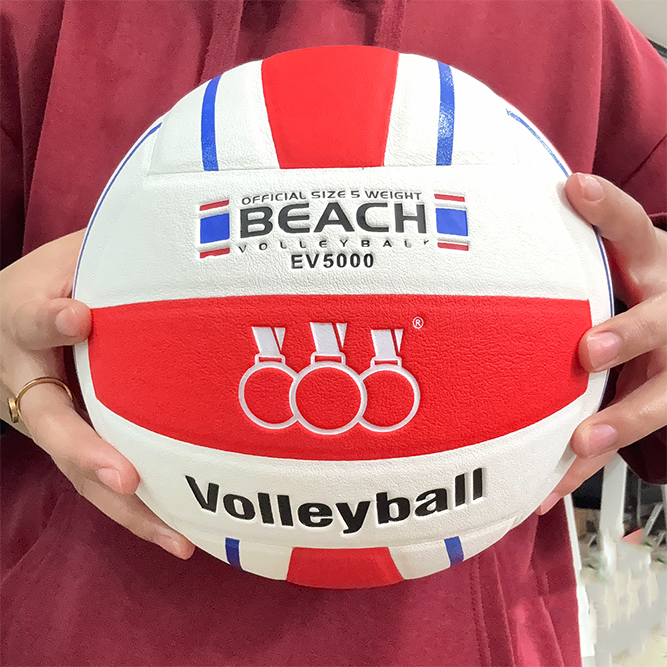
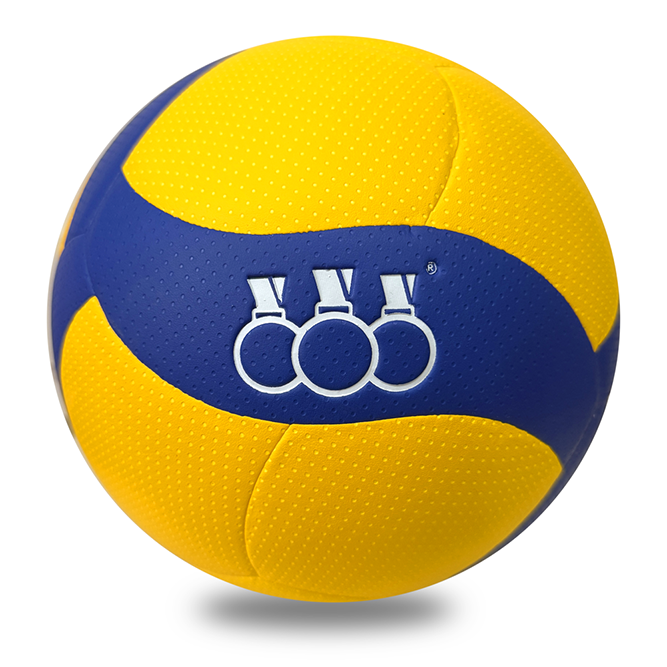
The color specification of a volleyball ball is more than a cosmetic decision — it directly affects visibility for players, officials, and spectators. Indoor volleyball balls traditionally feature yellow and blue panel combinations because this color scheme provides maximum contrast against the white court floor and gymnasium lighting conditions. Beach volleyball balls typically use brighter, more saturated color combinations to remain visible under direct sunlight.
Governing bodies have established approved color standards for competition use, and buyers sourcing a volleyball ball for official tournaments must verify compliance before placing orders. Using a ball with non-compliant colors in an official setting can result in match disruptions and equipment rejection by referees. Always cross-reference the color specifications of any potential purchase against the relevant federation's current approved list.
Training balls have more flexibility in color choice and are sometimes produced in single-color or non-standard color options to help coaches differentiate between ball types during multi-activity practice sessions. When sourcing training inventory, color variety can be a useful organizational tool rather than a compliance concern.
Custom Branding and Print Durability
For sports brands, distributors, and club operators who require customized versions of a volleyball ball, print durability is a specification that warrants close attention. Logos, names, and design elements printed or heat-transferred onto a volleyball ball must withstand repeated impact, cleaning agents, and surface abrasion without fading, cracking, or peeling. Poor print durability makes a branded volleyball ball look unprofessional and undermines the brand value it was intended to represent.
Branding placement interacts with panel construction. On a thermo-bonded volleyball ball, panel surfaces are smooth and consistent, offering an ideal substrate for high-definition logo printing. On stitched balls, seam ridges can distort printed elements, making it harder to achieve clean, professional-looking custom designs. Buyers with significant branding requirements should specify thermo-bonded construction as part of their procurement criteria.
When evaluating custom volleyball ball orders, request physical samples with the actual branding applied before approving mass production. Color matching between digital mockups and physical panels can vary based on panel material and ink type. Confirming visual and durability standards on samples protects against costly rejections of full production runs.
FAQ
What is the most important specification when buying a volleyball ball for official competition?
For official competition use, the most critical specifications are circumference, weight, and surface material compliance with the relevant governing body's standards. A volleyball ball that does not meet federation-approved dimensional tolerances or is made from non-approved materials will not be permitted in official matches. Always verify federation certification status before purchasing competition-grade volleyball balls in bulk.
How does bladder material affect the performance of a volleyball ball?
Bladder material affects both pressure retention and playing feel. Butyl rubber bladders hold air longer and require less frequent re-inflation, making them preferred for training and competition settings with heavy use schedules. Latex bladders offer a softer, more responsive touch preferred by some elite players, but they lose pressure faster and need more frequent inflation checks. The choice depends on how frequently the volleyball ball will be used and the level of player feedback sensitivity required.
Is thermo-bonded construction better than stitched for all volleyball ball applications?
Thermo-bonded construction delivers superior shape consistency and surface smoothness, making it the better choice for competitive and performance-focused applications. However, stitched volleyball balls still offer good durability and value for high-volume recreational use where absolute dimensional precision is less critical. The choice should be driven by the intended use context: competitive environments benefit from thermo-bonded construction, while recreational or entry-level settings may be well served by quality stitched alternatives at a lower cost per unit.
Can volleyball ball color affect official match suitability?
Yes, color compliance is a real requirement in many official volleyball competitions. Governing bodies like FIVB and regional equivalents maintain approved color lists for competition-grade volleyball balls. Purchasing a volleyball ball with non-compliant colors for official play risks equipment rejection and match disruption. For training purposes, color standards are more flexible, but for any event tied to an organized federation or league, confirming color compliance before purchase is a necessary step in the procurement process.
Table of Contents
- Panel Construction and Bonding Method
- Size, Weight, and Circumference Standards
- Outer Cover Material and Surface Texture
- Color, Visibility, and Branding Specifications
-
FAQ
- What is the most important specification when buying a volleyball ball for official competition?
- How does bladder material affect the performance of a volleyball ball?
- Is thermo-bonded construction better than stitched for all volleyball ball applications?
- Can volleyball ball color affect official match suitability?