
 EN
EN



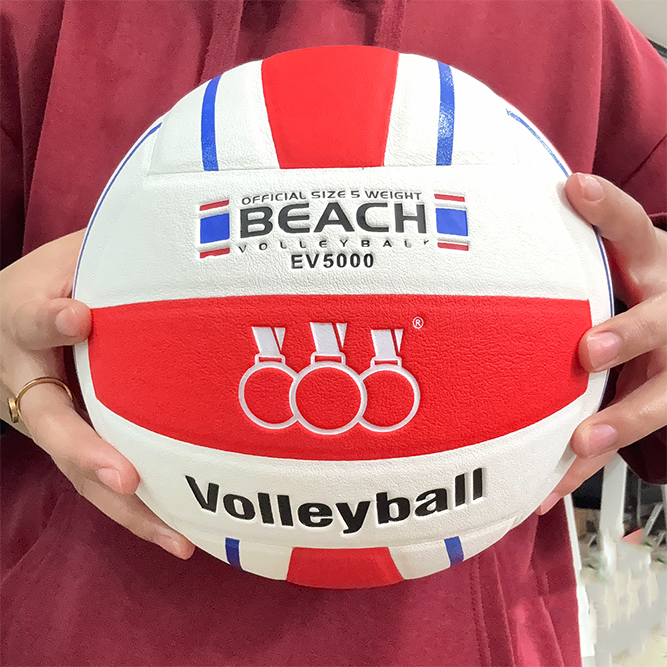
Every serious volleyball player, coach, and equipment manager has felt the difference between a perfectly inflated volleyball ball and one that simply doesn't perform. The moment a volleyball ball leaves a player's fingertips during a set, or connects with a forearm during a dig, its internal air pressure determines almost everything about that interaction — the feel, the control, the speed, and the accuracy. Yet despite how foundational this detail is, ball pressure is frequently overlooked in practice environments, recreational leagues, and even some competitive settings.
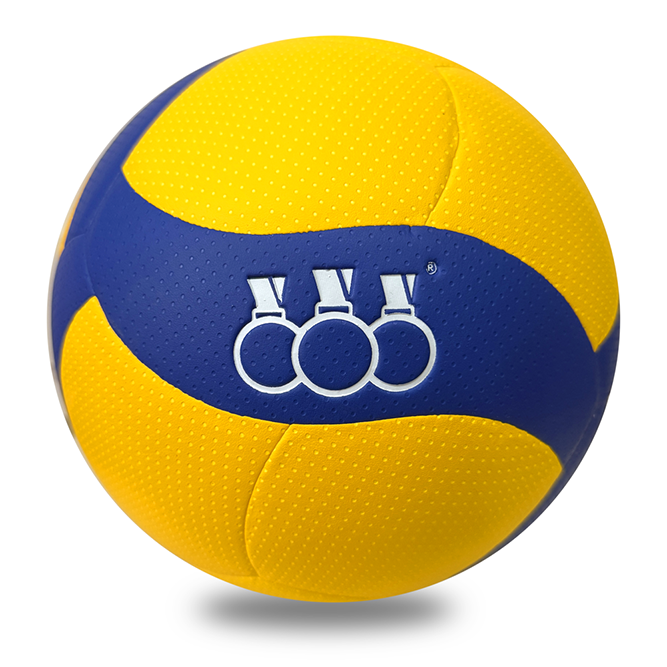
Understanding why volleyball ball pressure matters is not just a technical exercise — it directly shapes player experience, athletic performance, and even injury outcomes. Whether you are sourcing equipment for a professional club, managing inventory for a school sports program, or simply trying to get the most out of your training sessions, getting the pressure right on every volleyball ball in your collection is a decision worth taking seriously. This article explores the science, the practical implications, and the selection considerations that make pressure such a critical variable in the sport.
The Science Behind Volleyball Ball Pressure
How Pressure Affects Ball Behavior
The internal air pressure of a volleyball ball directly governs its physical properties — specifically its bounce response, elasticity, and deformation under impact. When a player contacts the ball, the outer panel structure compresses momentarily and then rebounds. This rebound speed and consistency are entirely dependent on the pressure inside the volleyball ball. A properly pressurized ball returns to its round shape almost instantaneously, giving players predictable feedback and making skill execution far more reliable.
Standard regulations from major governing bodies recommend an internal pressure range for a volleyball ball, typically between 0.300 and 0.325 kgf/cm² for indoor play and slightly different ranges for beach versions. These numbers exist because they represent the optimal balance between the ball being responsive enough for fast reflexes and controlled enough for technical precision. Stray outside these limits in either direction, and the characteristics of the volleyball ball shift noticeably.
The material composition of the volleyball ball — whether the panels are made from synthetic leather, microfiber, or PU compounds — also interacts with pressure levels. Stiffer materials may hold pressure differently than softer composites, which is why premium constructions are engineered to maintain pressure consistency over time and across temperature changes.
The Physics of an Overinflated or Underinflated Ball
An overinflated volleyball ball becomes excessively hard and loses the slight give that facilitates clean contact. When pressure is too high, the ball tends to deflect unpredictably off hands and forearms, making passing and setting far more difficult. Spikes may travel erratically, and players often report discomfort or even pain during high-impact plays because the volleyball ball absorbs almost none of the contact force itself.
On the opposite end, an underinflated volleyball ball becomes sluggish. It does not travel with the same velocity off a spike, setting requires more effort to achieve accurate placement, and the ball may flatten slightly on contact — creating inconsistent trajectory patterns. For recreational players, a soft volleyball ball might seem forgiving, but it trains poor muscle memory and reaction timing, which ultimately hampers skill development.
Understanding these physical realities helps coaches and players appreciate that pressure is not a minor equipment detail. It is a fundamental parameter that shapes how the game is played, how skills are learned, and how consistently athletes perform under pressure.
How Pressure Directly Impacts Player Performance
Passing, Setting, and Serving Precision
In volleyball, passing is the foundation of every offensive sequence. A libero receiving a powerful serve relies on the predictable rebound of a correctly pressurized volleyball ball to direct it accurately to the setter. If the volleyball ball is overinflated, the contact window shrinks — the ball is off the arms in a fraction of a second, giving the passer less time to redirect force. If it is underinflated, the ball sticks to the forearms slightly longer, creating a different kind of imprecision.
For setters, the touch and feel of a volleyball ball is essential. Setting requires fine motor control and fingertip sensitivity. A properly pressurized volleyball ball has the ideal combination of firmness and elasticity to allow a setter to feel where it is going before releasing it. Overinflation removes this tactile feedback, making the skill less intuitive, especially for younger or developing players.
Serving — whether a float serve or a topspin jump serve — also depends on ball pressure. The spin imparted, the trajectory achieved, and the speed generated are all partly a function of how the volleyball ball responds to a striking hand. Coaches who track serve statistics in practice should account for ball pressure as a variable when evaluating performance data.
Spiking Power and Blocking Dynamics
A powerful spike is one of the most exciting plays in volleyball, and a great deal of its effectiveness comes from the interaction between a player's hand and the surface of the volleyball ball. With correct pressure, the volleyball ball compresses slightly on contact, concentrating the energy of the strike before releasing it in the direction of the hit. This compression-and-release dynamic is what allows players to generate both speed and accuracy on attack shots.
An overinflated volleyball ball reduces this energy transfer dynamic. The minimal compression means the energy disperses less efficiently, and players may actually feel more resistance — leading to reduced power output or altered swing mechanics over time. Blockers also benefit from proper pressure, as a correctly inflated volleyball ball offers more predictable redirection when contacted at the net.
Coaches working with elite attackers understand that consistent ball pressure across all training volleyballs is essential for developing reliable muscle memory. If players regularly practice with balls at inconsistent pressure levels, their bodies adapt to multiple different contact dynamics, which can negatively affect their consistency during match play.
Pressure Consistency Across Ball Collections
Why Multiple Balls in a Set Must Match
In team training environments, it is common to practice with a cart of twelve or more volleyball balls simultaneously. If those balls are at different pressure levels — which happens easily without regular maintenance — players experience different sensations on every contact. This variability might seem minor, but over the course of a training session, the brain and body are trying to adapt to multiple different ball behaviors at once, which dilutes the specificity of skill training.
Sports scientists and elite conditioning coaches emphasize the importance of training specificity: practicing under conditions that closely replicate match-day conditions. Every volleyball ball in a training session should be pressurized to the same standard to ensure that the motor patterns being reinforced will translate directly to competitive play.
For sports brands and equipment managers supplying volleyball balls to clubs, schools, or national programs, this consistency requirement also has implications for product quality. Balls that lose pressure quickly due to inferior bladder construction or poor seam sealing undermine training quality and require constant maintenance — increasing operational costs and reducing athlete satisfaction.
Temperature, Altitude, and Environmental Factors
Ball pressure is not static. Temperature has a direct relationship with air pressure inside any closed chamber, and a volleyball ball is no exception. A ball inflated indoors at room temperature will read slightly lower pressure if taken to a cold outdoor environment — and slightly higher if placed in a hot storage room or left in direct sunlight. Coaches working across different training locations should account for these changes and re-check pressure regularly.
Altitude also plays a role. At higher elevations, atmospheric pressure is lower, which means the differential between internal and external pressure for a volleyball ball changes. A ball that feels correctly pressurized at sea level may feel harder at altitude, because the surrounding air is less dense. High-altitude training programs and international competitions in mountainous venues need to account for this by adjusting inflation guidelines accordingly.
Storage practices matter too. Volleyball balls stored in very cold conditions for extended periods can experience pressure drops, and the panel materials themselves can stiffen — temporarily altering the feel even after re-inflation. Understanding these environmental variables helps equipment managers maintain consistent ball quality across all usage contexts.
Choosing a Volleyball Ball Built for Pressure Stability
Construction Quality and Bladder Technology
Not all volleyball balls hold pressure equally well. The quality of the internal bladder — typically made from butyl rubber or latex — determines how well a volleyball ball retains pressure over time. Butyl bladders are generally favored for their superior air retention, making them the preferred choice for training and competition volleyballs that need to maintain consistent pressure across extended use periods.
The panel bonding method also affects pressure retention. Traditional hand-stitched volleyballs have small needle holes in the seams, which can become micro-pathways for air loss over time. Thermo-bonded volleyball balls, by contrast, use heat fusion to seal panels together without puncturing the surface — resulting in significantly better pressure retention and a more uniform surface that contributes to consistent flight dynamics.
For sports brands sourcing volleyball balls for clients, understanding these construction differences is essential to meeting quality expectations. Clubs and schools that invest in higher-quality construction benefit from lower maintenance overhead, more consistent player experience, and longer useful life for each volleyball ball in their inventory.
Matching Ball Type to Playing Environment
Indoor and beach volleyball balls have different standard pressure ranges because they are designed for different playing surfaces and contact dynamics. An indoor volleyball ball is designed for hard court play, where the floor does not compress under the ball, so the ball itself must provide the appropriate cushioning and rebound. A beach volleyball ball is slightly larger and often carries a slightly lower pressure to account for outdoor air currents and different footwear conditions affecting jump and spike mechanics.
Using an indoor volleyball ball outdoors, or vice versa, will create a pressure-related performance mismatch — even if both balls are technically within their respective recommended pressure ranges. Selecting the right volleyball ball for the intended environment ensures that the pressure specifications set by the manufacturer align with real-world playing conditions.
Coaches, procurement managers, and athletes should understand that pressure is not a single universal number but a context-dependent specification. Working with manufacturers who clearly document pressure guidelines for each volleyball ball model helps end users maintain proper inflation across all use scenarios.
Maintenance Practices That Preserve Pressure Integrity
Regular Pressure Checks as Part of Equipment Protocols
Establishing a regular pressure-checking routine is one of the simplest and most impactful things a volleyball program can do to protect performance quality. A quality pressure gauge costs very little and can be used to verify each volleyball ball before practice and before competition. This habit ensures that players always engage with equipment that meets the correct specification, rather than unconsciously adapting their technique to a flawed tool.
Many experienced coaches recommend checking volleyball ball pressure weekly for active training programs and before every match for competition balls. Balls that consistently lose pressure between checks may have developing bladder issues or valve damage and should be flagged for replacement rather than repeatedly re-inflated. Ongoing pressure loss is a signal that the volleyball ball has reached the end of its reliable service life.
Documenting pressure checks across a ball inventory also helps equipment managers identify patterns — certain ball models or age groups of equipment that consistently underperform in pressure retention. This data informs smarter future purchasing decisions and helps programs maintain consistent standards over time.
Proper Inflation Technique to Avoid Damage
Inflating a volleyball ball incorrectly can cause as many problems as ignoring pressure entirely. The valve needle should always be moistened slightly before insertion to prevent tearing the internal valve membrane. Inflating too rapidly with a high-pressure pump can overshoot the target pressure before the gauge responds, leading to overinflation — and the explosive force required to deflate a rubber bladder can cause micro-tears over time.
Slow, steady inflation with frequent pressure checks during the process is the recommended approach. For programs managing large volleyball ball inventories, investing in a floor pump with a built-in gauge rather than relying on hand pumps alone dramatically improves both accuracy and efficiency. Needle quality also matters — cheap or worn needles can damage valve membranes and introduce pressure instability.
Proper inflation technique, like pressure monitoring, is a professional habit that separates well-managed programs from those that treat equipment as an afterthought. The cumulative impact of these habits on player development and competitive performance should not be underestimated.
FAQ
What is the standard pressure range for an indoor volleyball ball?
The standard recommended pressure range for an indoor volleyball ball as specified by major international governing bodies is typically between 0.300 and 0.325 kgf/cm² (approximately 4.26 to 4.61 psi). This range is designed to ensure optimal bounce, feel, and flight characteristics for indoor hard court play. Always consult the specific guidelines provided with your volleyball ball model, as slight variations may exist between manufacturers and competition levels.
How often should you check the pressure of a volleyball ball during a season?
For active training programs, checking each volleyball ball at least once per week is a widely recommended practice. For competition-level volleyballs, pressure should be verified before every match. Environmental factors such as temperature changes, storage conditions, and frequency of use all affect how quickly a volleyball ball loses pressure, so more frequent checks during periods of intensive use or significant climate changes are advisable.
Does the panel construction type affect how a volleyball ball holds pressure?
Yes, significantly. Thermo-bonded volleyball balls tend to hold pressure better than traditional hand-stitched versions because the heat-fused seams eliminate the micro-perforations left by stitching needles, which can be sources of gradual air loss. The quality of the internal bladder material — butyl versus latex — also plays a major role, with butyl bladders generally offering superior pressure retention over extended use periods.
Can playing with an improperly pressurized volleyball ball cause injury?
Yes, there is a meaningful injury risk associated with incorrect volleyball ball pressure, particularly overinflation. An overinflated volleyball ball transfers more impact force to the hands, wrists, and forearms during contact because the ball does not compress to absorb energy. Repeated contact with an excessively hard volleyball ball can contribute to repetitive strain injuries, finger sprains, and forearm bruising. Correct pressure is therefore not just a performance consideration but also a player safety concern.