
 EN
EN




Volleyball is one of the most widely played team sports in the world, enjoyed by millions of athletes and recreational players across indoor courts, outdoor beaches, and school gymnasiums alike. Whether you are watching a high-level competition or stepping onto the court for the first time, understanding what volleyball is and how it works gives you a much deeper appreciation for the speed, strategy, and athleticism the game demands. At its core, volleyball is a sport built on coordination, communication, and controlled power — qualities that make it both accessible to beginners and endlessly challenging for elite competitors.
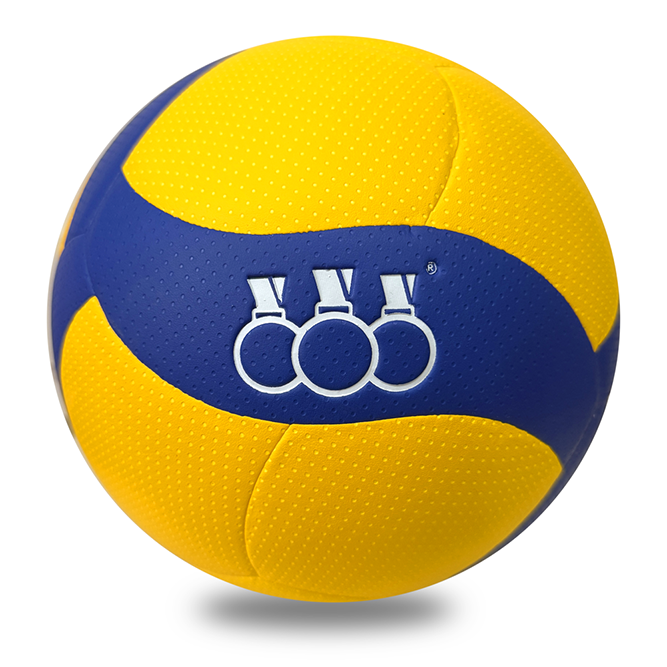
The sport has evolved significantly since its invention in the late nineteenth century, growing from a simple recreational activity into a globally recognized competitive discipline featured in the Olympic Games. Today, volleyball is played in professional leagues, school programs, community clubs, and international tournaments, making it one of the most versatile and inclusive sports available. This article explains what volleyball is, how the game is structured, and what actually happens on the court during play.
The Definition and Origins of Volleyball
What Volleyball Actually Is
Volleyball is a team sport in which two teams of six players each compete on opposite sides of a raised net, attempting to send a ball over the net and land it within the opposing team's court while preventing the ball from touching their own side. The game is played in sets, and points are scored every time the ball hits the floor on the opponent's side, goes out of bounds off an opponent's touch, or when the opposing team commits a fault. Unlike many other sports, volleyball does not use a clock — the game continues until one team reaches the required number of points in each set.
The objective sounds straightforward, but the execution requires precise timing, positional awareness, and seamless teamwork. Each team is allowed a maximum of three consecutive touches to return the ball over the net, and no single player may touch the ball twice in a row. This three-touch rule is central to how volleyball is played and shapes the entire tactical structure of the game.
A Brief History of the Sport
Volleyball was invented in 1895 by William G. Morgan, a physical education director in Massachusetts, USA. Morgan designed the game as a less physically demanding alternative to basketball, intended for older members of his fitness classes. He called the original version 'mintonette,' but the name was quickly changed to volleyball after observers noted how players were volleying the ball back and forth across the net.
The sport spread rapidly through YMCA networks across North America and then internationally through military personnel during the First and Second World Wars. Volleyball was officially introduced to the Olympic Games in 1964 in Tokyo, cementing its status as a premier international sport. Beach volleyball, a two-player variant played on sand, was added to the Olympics in 1996 and has since grown into a major discipline in its own right.
The Court, Equipment, and Basic Setup
Court Dimensions and Layout
An indoor volleyball court measures 18 meters long and 9 meters wide, divided into two equal halves by a center line beneath the net. Each team occupies one half of the court, which is further divided by an attack line drawn 3 meters from the center line. This attack line separates the front row positions from the back row positions and governs which players are permitted to attack the ball above the height of the net.
The net itself is positioned at the center of the court and is set at a height of 2.43 meters for men's competition and 2.24 meters for women's competition. Antenna rods are attached to the edges of the net above the sidelines to help officials and players judge whether the ball has crossed within the legal playing zone. The court surface in professional indoor volleyball is typically made of hardwood, which provides the right balance of grip and cushioning for the explosive movements the sport demands.
The Volleyball and Other Equipment
The volleyball itself is a spherical ball with a circumference of 65 to 67 centimeters and a weight of 260 to 280 grams. It is constructed with a rubber or bladder interior and a leather or synthetic leather outer panel, designed to be light enough for precise control yet firm enough to travel at high speed when struck with force. The panels of a volleyball are typically arranged in a distinctive pattern, and the ball is inflated to a pressure that allows it to rebound consistently from player contact.
Players wear lightweight athletic shoes with non-marking soles designed for lateral movement and jumping. Knee pads are standard protective gear, particularly for defensive players who frequently dive to the floor. Libero players, a specialized defensive role, wear a contrasting jersey color to distinguish themselves from their teammates, as they operate under different substitution rules than other positions.
How Volleyball Is Played on the Court
The Serve and Rally System
Every point in volleyball begins with a serve. The serving player stands behind the end line of their court and strikes the volleyball over the net into the opponent's court. A legal serve must clear the net and land within the boundaries of the receiving team's court. Servers may use an underhand or overhand technique, and advanced players often employ jump serves or float serves to make the ball difficult to receive.
Once the serve is in play, a rally begins. The receiving team attempts to control the ball using their three allowed touches — typically a pass, a set, and an attack — before sending it back over the net. The rally continues until the ball hits the floor, goes out of bounds, or a fault is committed. Under the rally scoring system used in modern volleyball, a point is awarded on every rally regardless of which team served, meaning every single exchange matters.
The Three-Touch Sequence
The three-touch sequence is the tactical backbone of how volleyball is played. The first touch is typically a pass or reception, where a player uses their forearms or hands to redirect the incoming ball toward a teammate in a controlled manner. This first contact is critical because a poor pass limits the team's ability to run an effective offense.
The second touch is the set, usually performed by a specialized player called the setter. The setter uses their fingertips to precisely direct the ball to an attacking position near the net, giving a hitter the best possible opportunity to strike. The quality of the set determines the angle, height, and timing of the attack, making the setter one of the most strategically important roles in volleyball.
The third touch is the attack or spike, where a front-row player jumps and strikes the ball downward into the opponent's court with maximum force and angle. A well-executed spike in volleyball is one of the most powerful actions in team sports, with elite players generating ball speeds exceeding 100 kilometers per hour. The opposing team's blockers attempt to intercept the spike at the net, while back-row defenders position themselves to dig any ball that gets through.
Rotation and Player Positions
Volleyball uses a rotation system that ensures all six players cycle through every position on the court. Each time a team wins back the serve from the opponent, all six players rotate one position clockwise. This means every player must be capable of performing both front-row and back-row duties at different points in the game, though specialized roles and substitution rules allow teams to optimize their lineups strategically.
The six standard positions in volleyball are the outside hitter, opposite hitter, middle blocker, setter, libero, and serving specialist. Each role carries distinct responsibilities. Middle blockers focus on stopping attacks at the net and delivering quick sets in offense. The libero is a back-row defensive specialist who cannot attack above the net height and wears a different jersey to signal their unique substitution status. Understanding these roles helps explain why volleyball requires such a high level of positional discipline and team coordination.
Scoring, Sets, and Match Format
How Points and Sets Are Counted
A standard volleyball match is played as a best-of-five sets format in most competitive contexts. Each of the first four sets is played to 25 points, with a team needing to win by a margin of at least two points. If the match reaches a fifth and deciding set, that set is played to only 15 points, again requiring a two-point winning margin. This format means a volleyball match can be relatively short or extend into a lengthy, high-pressure contest depending on how evenly matched the teams are.
Rally scoring, which has been the standard in international volleyball since 1999, means that every rally produces a point for one team. Previously, only the serving team could score, which made matches longer and sometimes less dynamic. The shift to rally scoring increased the pace of the game and made every defensive play and every serve receive directly consequential to the scoreboard.
Faults and Rule Violations
Volleyball has a clear set of faults that result in the opposing team winning the point. Common faults include touching the net during play, stepping over the center line into the opponent's court, a player touching the ball twice consecutively, carrying or lifting the ball rather than striking it cleanly, and back-row players attacking the ball above net height from in front of the attack line. These rules enforce the clean, dynamic style of play that defines volleyball at every level.
Referees in volleyball include a first referee positioned on an elevated stand at the net, a second referee on the opposite side of the court, line judges at each corner, and a scorer. This officiating structure ensures that the fast-paced nature of volleyball is managed accurately, even when plays happen in fractions of a second.
Why Volleyball Remains a Globally Popular Sport
Accessibility and Versatility
One of the reasons volleyball has maintained such broad global appeal is its accessibility. The sport requires minimal equipment — a net, a ball, and a flat surface — making it playable in schools, parks, beaches, and community centers around the world. The rules are straightforward enough for beginners to grasp quickly, yet the tactical depth of high-level volleyball keeps experienced players engaged for years.
Volleyball is also one of the few major team sports with near-equal global participation across genders. Women's volleyball has historically been as prominent as men's volleyball in many countries, and international competitions draw large audiences for both. This inclusivity has helped volleyball grow into one of the most participated sports worldwide, with an estimated 800 million players globally.
Physical and Mental Benefits
Playing volleyball develops a wide range of physical attributes, including explosive jumping power, upper body strength, hand-eye coordination, and cardiovascular endurance. The constant movement, rapid direction changes, and repeated jumping involved in volleyball make it an excellent full-body workout. At the same time, the sport demands sharp mental focus, quick decision-making, and strong communication skills, as players must constantly read the game and respond to rapidly changing situations.
For younger athletes, volleyball provides an excellent foundation in teamwork and spatial awareness. For adult recreational players, it offers a social, competitive outlet that is lower in contact risk than many other team sports. These combined physical and social benefits have made volleyball a staple in physical education programs and community sports leagues across the globe.
FAQ
How many players are on a volleyball team during a match?
Each team fields six players on the court at one time during an indoor volleyball match. Teams typically have a full roster of twelve players, allowing for substitutions throughout the match. The libero position has special substitution rules and can be replaced freely without counting against the team's substitution limit.
What is the difference between indoor volleyball and beach volleyball?
Indoor volleyball is played on a hard court with six players per team, while beach volleyball is played on sand with two players per team. The rules differ in several ways, including scoring formats, net heights, and the absence of a libero in beach volleyball. The sand surface in beach volleyball significantly affects movement and requires different physical conditioning compared to the indoor version of the sport.
How long does a typical volleyball match last?
A volleyball match can last anywhere from 60 minutes to over two hours depending on the number of sets played and the competitiveness of each set. A straight three-set match tends to conclude in around 60 to 75 minutes, while a full five-set match can extend well beyond 90 minutes. Unlike sports with fixed time limits, volleyball matches are determined entirely by points scored.
Can back-row players attack the ball in volleyball?
Yes, back-row players can attack the ball in volleyball, but only under specific conditions. A back-row player must take off from behind the attack line, which is positioned 3 meters from the net, before jumping to strike the ball. If a back-row player jumps from in front of the attack line and contacts the ball above the height of the net, it is ruled a fault and the opposing team wins the point.